1First Grade

    Hopping by tens on the chart

    Big, bigger, gigantic

    Practice pages

    0 of 180 days complete · Saved on this device

    View all 180 days

    Math

    Hopping by tens on the chart

    I can add tens by hopping down the hundred chart.

    Standards: 1.NBT.C.4, 1.NBT.C.5

    Number practice (no timer)
    Adding tens: 3 tens + 4 tens
    Builds on
    Week 19 Day 3 (10 more is one row down on the chart). One-minute check: "On the chart, what is one row down from 46?" (56)

    New words

    • hop: move a token one step on the chart

    You need

    • Hundred chart to 120: printed, or drawn as 12 rows of 10 boxes (1 to 10 in the top row, 111 to 120 in the bottom row)
    • 2 small toys or buttons
    • 1 die
    • 6 tens cards made from paper squares: +10, +10, +20, +20, +30, +30
    • Notebook and pencil
    1. Warm-Up · 5 min

      Fluency: adding tens. "2 tens + 6 tens?" (80) "30 + 30?" (60) Spaced review from Week 2: "Count back by 1s from 31 to 25." (30, 29, 28, 27, 26, 25)

    2. Mini-Lesson · 10 min

      Say: "On the chart, one row down is 10 more. So we can add tens by hopping down." Put a toy on 27. Say: "Let us add 40. That is 4 tens, so 4 hops down." Hop while your child says each number: "37, 47, 57, 67." Ask: "Where did we land?" (67) Write 27 + 40 = 67. Ask: "How many hops?" (4) "Why 4?" (40 is 4 tens. Each hop is 10.) "What stayed the same?" (The 7 ones. We stayed in the same column.)

    3. Guided Practice · 10 min

      Your child hops on the chart, says each number, and writes the equation. 1) 14 + 30 (24, 34, 44; 44) 2) 52 + 40 (62, 72, 82, 92; 92) 3) 9 + 60 (19, 29, 39, 49, 59, 69; 69) 4) 35 + 50 (85) 5) 61 + 20 (81) After two of them, ask your child to explain: "I started at 14. I hopped down 3 rows because 30 is 3 tens." If stuck, say: "Put your finger on the start. Say 10 more out loud each time you hop down one box."

    4. Play · 10 min

      Climb Down the Chart. Each player rolls the die and puts a toy on that number in the top row (1 to 6). Mix the tens cards face down. On your turn, flip a card, say the equation (such as 4 + 30 = 34), then hop to check. Put the card back and mix after every turn. You may move only if you stay at 100 or less. If the card would take you past 100, stay where you are. The first player to land in the row from 91 to 100 wins. Play 2 games.

    5. Exit Ticket · 3-5 min

      Put the objects to one side but leave them on the table. Read each question aloud. Your child answers out loud, with objects or with a quick drawing. Check each answer together right away.

    Exit ticket

    1. Start at 33. Hop down 3 rows. Where do you land? Say the equation.
    2. What is 48 + 20? Use the chart or your head.
    3. How many rows do you hop down to add 50?
    Answers
    1. 63. 33 + 30 = 63.
    2. 68
    3. 5
    Watch for, and help or stretch
    Watch for
    Hopping across the row instead of down, which adds ones.
    Try
    Say: "Tens go down. Ones go across." Trace straight down the column first.
    Extra help
    Add only 10 or 20 at first. Your child says "10 more" on every hop.
    Stretch
    Cover the chart and solve 38 + 40 in your head. (78) Then check on the chart.

    At home (optional): Your child shows a family member how to add 30 to a number by hopping down the chart, and explains the hops.
    Reading & Writing

    Big, bigger, gigantic

    I can tell the difference between words like big and gigantic.

    Standards: L.1.5.d, L.1.1.f, L.1.5

    Phonics
    r-controlled review (ar, or, er, ir, ur) and word sorts
    Sight words
    time, look, more, write, number
    Reading
    "My Shadow" by Robert Louis Stevenson (public domain)
    Writing
    Narrative and poem: describing with adjectives · Handwriting: illustrated poem copy
    Builds on
    Describing words (Day 2). One-minute check: your child says two describing words for the sock.

    New words

    • tiny: very, very small
    • huge: very big
    • gigantic: very, very big, bigger than huge

    You need

    • 5 word ladder strips you write and read aloud: small, tiny, big, huge, gigantic
    • A paper ladder: draw a ladder with 3 rungs on a sheet of paper
    • 3 small toys or objects of different sizes
    • Sight word cards: time, look, more, write, number
    • Printed "Bert and the Dark Shape" (from Day 1)
    • Lined handwriting paper
    1. Phonics & Word Work · 15 min

      r-controlled words with blends. I do: read start, storm, spurt: blend, then team, then end: st-ar-t. We do: smart, sport, swirl, sharp. You do: your child reads chart, scarf, snort, twirl, blurt, stork, starch, sparks, thorns, shirts. Read: "A stork sat on a short barn." "Turn the scarf and tug it." Dictation: start, storm, scarf, twirl. If stuck, cover the end and read the blend with the team first: sc-ar, then add f.

    2. Sight Words · 5 min

      Review: time, look, more, write, number. Hop and Read: lay the cards on the floor. Your child hops to the card you name and reads it, then names a card for you.

    3. Read-Aloud & Shared Reading · 15 min

      Say: "Some words mean almost the same thing, but one is stronger." Ladder 1: show small and tiny (you read them). Your child shows small with fingers, then tiny with fingers almost touching. Ask: "Which is smaller: small or tiny?" (tiny) Ladder 2: show big, huge and gigantic. Your child places them on the paper ladder from bottom to top and shows each size with arms. (big, then huge, then gigantic) Ask: "What could be gigantic?" (Answers vary. Look for: something very, very big, such as a whale or a mountain.) Ask: "Would you call a cat big, huge or gigantic? Why?" (Answers vary. Look for: big, with a reason: a cat is not very, very big.) If stuck, put two toys side by side and ask which word fits each. Then your child reads "Bert and the Dark Shape". When the story says big (once, in "A big dark shape was on the shed."), your child stops and says a stronger word for it (huge or gigantic).

    4. Writing & Handwriting · 15 min

      Your child writes "The ant is small." (copying small from the ladder strip) and "The ___ is big." by sounds, then adds a third sentence about something huge, copying the word huge from the ladder strip. (Answers vary. Look for: a sensible size word for each thing.) Your child draws all three things in size order. Handwriting (4 min): round letters a, d, g, o and q all start like c, at the top of the circle. Your child writes each letter 3 times, then copies A dog and a frog.

    5. Exit Ticket · 5 min

      Oral answers.

    Exit ticket

    1. Show me with your hands: big, then gigantic.
    2. Put these in order from smallest to biggest: huge, small, big.
    3. Read this: a big barn. Say it again with a stronger word for big.
    Answers
    1. Your child's hands are wider for gigantic.
    2. small, big, huge
    3. Answers vary. Look for: a huge barn or a gigantic barn.
    Watch for, and help or stretch
    Watch for
    Thinking that a stronger word names a different thing, not more of the same thing.
    Try
    Use your hands: "Big is this wide. Huge is wider. Gigantic is as wide as your arms can go."
    Extra help
    Use only big and gigantic, with two toys of very different sizes.
    Stretch
    Make a ladder for hot: warm, hot, boiling (you read them). Your child puts them in order and names something for each.

    At home (optional): Your child finds one tiny thing and one huge thing at home or outside and tells you.

    Social Studies

    Plan a family interview

    I can make questions to ask an older person about when they were young.

    Standards: D2.His.4.K-2, D1.5.K-2

    Builds on
    Then and now: toys and school (Day 1). One-minute check: ask "Name one thing about school that has changed." (Answers vary: buses, computers, more rooms.)

    New words

    • interview: asking a person questions and listening to learn from them
    • source: a person, picture, writing or object we can learn from
    • question: something you ask to find out

    You need

    • Interview page: a sheet of paper with the title "My Interview," a line for the person's name, and 5 numbered lines for questions with space under each for answers
    • 3 source cards (draw or write): "Ask an older family member or friend," "Look at a book about dinosaurs," "Look at old family photos"
    • Pencil
    • A phone or video call plan, if the person lives far away
    1. Warm-Up / Wonder · 5 min

      Spaced review: ask: "In a one-room school, how many teachers were there?" (one) Wonder question: "How could we find out what life was like when someone in our family was six?"

    2. Explore · 10–15 min

      Choosing a source (about 4 minutes). Say: "Our big question is: What was life like when an older person we know was a child? Let's figure out which sources would help us answer it." Show the 3 source cards. Ask about each: "Would this help us answer our question?" Ask an older family member or friend (yes; they were there). Old family photos (yes; they show what things looked like). A book about dinosaurs (no; it is about a different time and does not tell about our family). Say: "A person who lived then is one of the best sources. We can ask them questions in an interview." Choose who to interview: a grandparent, a great-aunt, an older neighbor or family friend, or another grown-up who was a child long ago. Writing questions (about 8 minutes). Your child thinks of questions and you write them on the Interview page. Help them include these kinds: 1) Games: "What games did you play?" 2) School: "What was school like?" 3) Home: "What did your home have, or not have?" 4) What they thought: "What did you think was most important when you were six?" 5) A question your child picks. Say: "Question number 4 helps us learn how people thought back then, so we can compare it with how you think now." Practice asking with good manners: say hello, ask if it is a good time, listen without interrupting and say thank you. If stuck thinking of questions, start with a question word: who, what, where, when, why or how.

    3. Talk & Record · 5–10 min

      Your child draws the person they will interview. Sentence frame: "I will ask ___ about ___." Set a day and time for the interview before Day 5.

    4. Exit Ticket · 3–5 min

      Ask the three questions aloud. Your child answers by talking or drawing.

    Exit ticket

    1. You want to know what games your neighbor played as a child. What is a good source?
    2. Name one question you could ask in an interview about long ago.
    3. What should you do while the person is answering?
    Answers
    1. Ask the neighbor (an interview), or look at their old photos.
    2. Answers vary. Look for: a real question about the past, such as "What did you eat for lunch at school?"
    3. Listen and do not interrupt (and maybe write or draw notes).
    Watch for, and help or stretch
    Watch for
    Asking yes or no questions only, such as "Did you have toys?"
    Try
    Change it to start with "What" or "How": "What toys did you have?" Ask: "Which one gets a longer answer?"
    Extra help
    Write 3 questions instead of 5, and the grown-up reads them during the interview.
    Stretch
    Your child adds a sixth question about something that was hard when the person was young.

    At home (optional): Your child calls or tells the person they will interview, asks if it is a good time this week, and sets a time.

    Practice

    Read each direction aloud. Your child works on the page; answers are in the grown-up view.

    Warm-up

    Remember?

    Math

    1. What is 10 more than 23?
    2. Write the number one hundred nine.

    Reading & Writing

    1. will, if, so
    2. Jay can stay and play.

    Math · Week 20 Day 3

    I can add tens by hopping down the hundred chart.

    Look: 36 + 30 on the chart

    1. Put your finger on 36.
    2. 30 is 3 tens, so hop down 3 rows: 46, 56, 66.
    3. You land on 66. 36 + 30 = 66.

    Use the hundred chart to find where you land.

    1. 1.
      Start at 22. Hop down 4 rows. ____
    2. 2.
      Start at 7. Hop down 5 rows. ____
    3. 3.
      Start at 51. Hop down 3 rows. ____
    4. 4.
      Start at 43. Hop down 2 rows. ____

    Solve, using the chart if you want to.

    1. 5.
      To add 60, how many rows do you hop down?
      • 6
      • 60
      • 1
    2. 6.
      75 + 20 = ____
    3. 7.
      16 + 40 = ____

    Challenge (optional)

    Start at 4. Hop down 9 rows. Where do you land? Write the equation.

    You need: Hundred chart to 120, A button or small toy to hop, Pencil

    Reading & Writing · Week 20 Day 3

    I can tell the difference between words like big and gigantic.

    Look: big, huge, gigantic

    1. Big is a size word.
    2. Huge is more than big.
    3. Gigantic is the most of all: very, very big.

    The Big Barn

    Mark has a big dog. The dog sits by the barn. The barn is big, big, big! By the barn, the dog is not so big.

    I say tiny or gigantic. Circle the number of the picture that fits the word.

    1. 1.
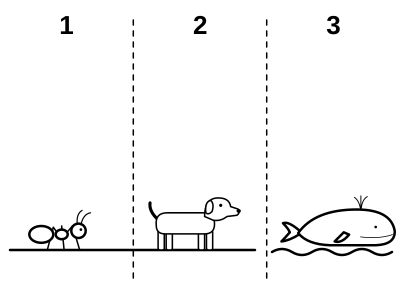
      1 an ant, 2 a dog, 3 a whale.
      • 1
      • 2
      • 3
    2. 2.
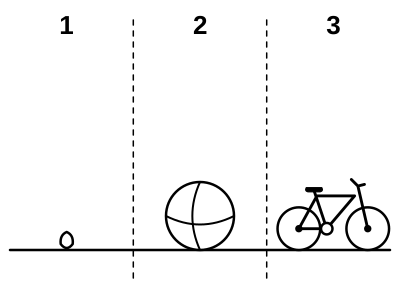
      1 a seed, 2 a ball, 3 a bike.
      • 1
      • 2
      • 3
    3. 3.
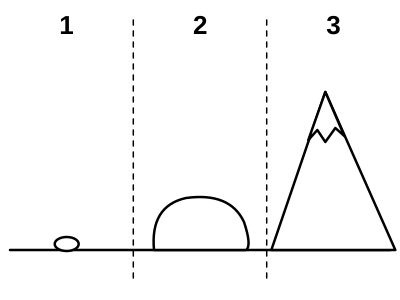
      1 a pebble, 2 a rock, 3 a mountain.
      • 1
      • 2
      • 3
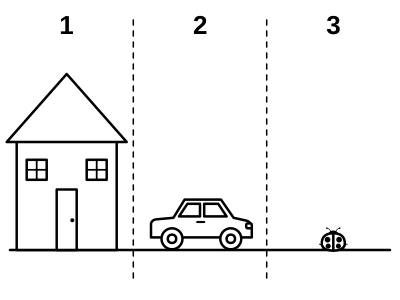
    4. 4.
      1 a house, 2 a car, 3 a bug.
      • 1
      • 2
      • 3

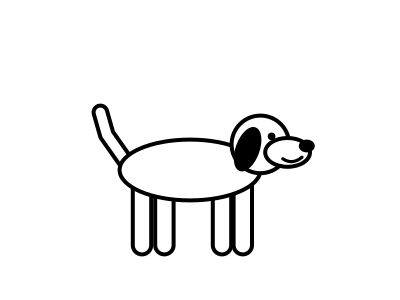
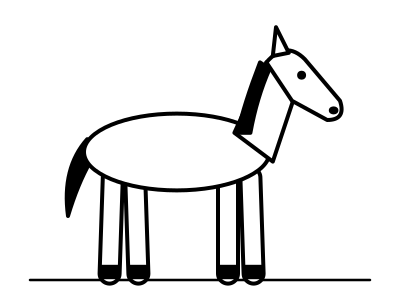
    I say big, huge and gigantic. Write 1 for the big thing, 2 for the huge thing and 3 for the gigantic thing.

    1. 5.
      A dog.
    2. 6.
      A horse.
    3. 7.
      A whale.

    Challenge (optional)

    A ____ is big, big, big!

    Social Studies · Week 20 Day 3

    I can make questions to ask an older person about when they were young.

    Look: planning good questions

    1. Our big question: "What was life like when an older person we know was a child?"
    2. A person who lived then is a great source. We can ask them questions in an interview.
    3. Start each question with a question word: who, what, where, when, why or how.

    Listen. Circle yes if the source would help us learn what life was like when Grandma was six.

    1. 1.
      Grandma herself
      • yes
      • no
    2. 2.
      old family photos of Grandma as a girl
      • yes
      • no
    3. 3.
      a book about space rockets
      • yes
      • no
    4. 4.
      Grandma's old school report card
      • yes
      • no
    5. 5.
      a cartoon about talking cars
      • yes
      • no

    Ask each question. Write what your child says.

    1. 6.
      Make a question about the games people played long ago. Start with "What."
    2. 7.
      Make a question about home long ago.
    3. 8.
      What do you say before you start the interview?

    Challenge (optional)

    Make one question that starts with "Why."