This week's lessons
Math and reading every day; science and social studies take turns
- Day 1 · Monday
- MathMaking a new tenI can trade 10 ones for a ten when I add.
- Reading & WritingSense words in a storyI can find words in a story that help me see and hear.
- Social StudiesWho made it, when and where?I can find clues in a source that tell who made it, when and where.
- Day 2 · Tuesday
- MathNew tens in quick picturesI can circle 10 ones in my drawing to make a new ten.
- Reading & WritingWords and their real usesI can tell real-life places and times where I would use a word.
- ScienceBean watchI can observe bean sprouts and tell how they are alike and how they are different.
- Day 3 · Wednesday
- MathDo I need a new ten?I can tell if adding will make a new ten.
- Reading & WritingTelling my momentI can describe an event with details so a listener can picture it.
- Social StudiesWonder questions about a sourceI can ask questions about a source to learn about the past.
- Day 4 · Thursday
- MathExplain my addingI can write my adding steps and explain them.
- Reading & WritingWrite my momentI can write a small moment with sense words and an ending.
- Science · CheckLeaf huntI can compare leaves from one plant and tell what is the same and what is different.
- Day 5 · Friday
- Math · CheckLesson + weekly check: making a new tenI can add and make a new ten when I need to.
- Reading & Writing · CheckShare and check: oi and oyI can read oi and oy words and share my story.
- Social Studies · CheckTwo people, two storiesI can compare two people's stories about the same event.
This week's checks
Short checks on the last day each subject meets this week
Science · Day 4
- I can observe bean sprouts and tell how they are alike and how they are different.
- I can compare leaves from one plant and tell what is the same and what is different.
Secure when: 6 of 8 correct, including items 2 and 3 (one alike and one different) and item 4 or 5 (finds the other plant's leaf).
Open the checkMath · Day 5
- I can add when no new ten is made.
- I can make a new ten when I add.
- I can explain my adding.
Secure when: 6 or 7 of the 7 items right.
Open the checkReading & Writing · Day 5
- I can read oi and oy words and share my story.
- I can find words that help me see and hear, and tell where I use a word.
- I can write a small moment with end marks and an ending.
Secure when: 8 of 10 words in items 1-2, 4 of 5 sight words, a story read with two events in order (item 4), and 4 of 6 on items 5-10.
Open the checkSocial Studies · Day 5
- I can find clues in a source that tell who made it, when and where.
- I can ask questions about a source to learn about the past.
- I can compare two people's stories about the same event.
Secure when: 6 of 8 correct, with at least one right on each goal
Open the check
Reading About Our World: A Library of Clues
Read it aloud. Your child reads the sentences marked with a star. Builds social studies knowledge.
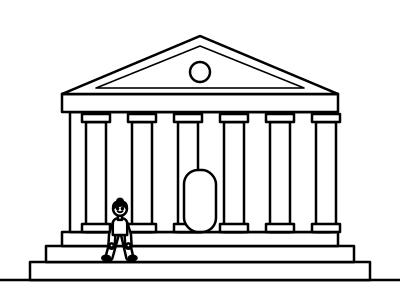
Clues From Long Ago
How do we learn about the past? We look at sources. A photo, a letter, a map and an old toy are all sources.
A Very Big Library
The Library of Congress is in Washington, D.C. It is one of the biggest libraries in the world. It keeps books, photos, letters and maps from long ago. It keeps old maps.
Asking Questions
When we look at a source, we ask questions. Who made it? When was it made? Where was it made? The answers help us understand the past.
Words to know
- past: the time that already happened
- source: something that gives us facts
- library: a place that keeps books and other things for people to use
Talk about it
- Name two kinds of sources.
- In what city is the Library of Congress?
- Why does a library keep old letters and photos safe?
Home Connection
Five-minute ideas for the whole family, with things you already have
Math
When the ones add up to 10 or more, we make a new ten.
Do: Show 28 with 2 cups of ten beans and 8 loose beans. Add 5 more loose beans. Trade 10 loose beans for a new cup of ten. How many now?
Talk: How do you know when you need to make a new ten?
Reading & Writing
Writers tell a small moment with details.
Do: Your child tells about a small moment from today: what they saw, heard and felt. Write coin, soil, boy, toy and join for your child to read.
Talk: What is one detail that makes your moment come alive?
Science
Plants of the same kind are alike, but not exactly the same.
Do: Collect 3 leaves that have fallen from one tree or bush. Lay them side by side and compare.
Talk: How are your leaves alike? How are they different?
Social Studies
We can ask who made a source, when and where.
Do: Pick an old family photo, recipe card or postcard and ask: who made it, when and where?
Talk: What question would you ask the person who made it?
This week's words: been, call, find, long, day
Celebrate a new ten, a small moment told with details and three leaves compared.
Math catch-up: Ten Loose Ones Make a Bundle
10 minutes, if this week's math check was not secure · 1.NBT.C.4
When the ones add to more than 9, children often write all the ones in one place (37 + 5 = 312). Trading 10 loose straws for a bundle shows why a new ten is made.
You need: 70 straws or craft sticks, 7 rubber bands, paper and a pencil
- Build 46. Add 7 loose straws. Count the loose ones: 13. Ask: "Can we make a new bundle?" (Yes.)
- Your child bundles 10 loose straws. Now there are 5 bundles and 3 loose: 53. Write 46 + 7 = 53.
- Build 58 and add 4. Before trading, ask: "Do we have 10 loose ones?" (Yes, 12.) Bundle and count: 62.
- Build 21 and add 5. Ask the same question. (No, only 6.) No trade is needed: 26.
Try again
- 36 + 7 = ___
- 38 + 4 = ___
- 52 + 5 = ___ Do you need a new ten?
Specials This Week
Weeks 19–24 unit • ~90 min/week per subject
Manipulative Skills (Kicking and Dribbling)
Developing kicking skills (stationary and moving ball), dribbling with hands (bouncing) and feet (soccer style).
Value and Self-Expression
Light and dark (value), creating form and shadow, using art to express feelings, drawing self-portraits.
Form and Timbre
Identifying repeating sections (ABA, AABB format), recognizing different instrument sounds (timbre), classifying instruments (strings, woodwinds, brass).
For guiding principles and full standards reference, visit How to use this curriculum
As an Amazon Associate, we earn from qualifying purchases. Book and supply links on this page are affiliate links — using them supports this curriculum at no extra cost to you.