1First Grade

    Do I need a new ten?

    Telling my moment

    Practice pages

    0 of 180 days complete · Saved on this device

    View all 180 days

    Math

    Do I need a new ten?

    I can tell if adding will make a new ten.

    Standards: 1.NBT.C.4

    Number practice (no timer)
    Make a new ten: 8 + 5 = 13 helps 28 + 5
    Builds on
    Days 1 and 2 (making a new ten). One-minute check: "Does 8 + 5 make 10 or more?" (Yes. 13.)

    New words

    • predict: say what you think will happen before you check

    You need

    • 12 problem cards made from paper squares: 62 + 5, 62 + 9, 34 + 3, 34 + 7, 85 + 4, 85 + 6, 21 + 8, 26 + 8, 47 + 2, 47 + 3, 70 + 9, 18 + 9
    • 2 sorting labels made from paper: New ten / No new ten
    • Tens and ones kit: 9 tens and 20 ones. Use straw bundles of 10 (a rubber band around each) and loose straws, base-ten rods and unit cubes, or paper ten-strips (strips of 10 squares, cut by an adult) with beans as ones
    • Notebook and pencil
    • Beans and unit cubes are small parts: keep them away from children under 3.
    1. Warm-Up · 5 min

      Fluency: make a new ten. "7 + 6?" (13) "So 37 + 6?" (43) "4 + 5?" (9) Spaced review from Week 9: "8 + 6: make a ten." (8 + 2 = 10, 10 + 4 = 14)

    2. Mini-Lesson · 10 min

      Say: "Before we add, we can tell if there will be a new ten. Look at the ones." Write 53 + 4 and 53 + 8. Ask: "In 53 + 4, what are the ones?" (3 and 4) "3 + 4?" (7) "Is that 10 or more?" (No.) "So no new ten." (57) Ask: "In 53 + 8, what are the ones?" (3 and 8) "3 + 8?" (11) "10 or more?" (Yes.) "So there will be a new ten." (61) Say: "Add the ones digits. If you get 10 or more, you make a new ten."

    3. Guided Practice · 10 min

      Your child sorts all 12 problem cards under the two labels without solving them, saying the ones fact for each one. No new ten: 62 + 5 (2 + 5 = 7), 34 + 3 (7), 85 + 4 (9), 21 + 8 (9), 47 + 2 (9), 70 + 9 (9). New ten: 62 + 9 (2 + 9 = 11), 34 + 7 (11), 85 + 6 (11), 26 + 8 (14), 47 + 3 (10), 18 + 9 (17). Ask about 47 + 3: "Is 10 enough for a new ten?" (Yes. Exactly 10 ones make a ten, with 0 ones left: 50.) If stuck, say: "Cover the tens digits. Add only the ones. Is it 10 or more?"

    4. Play · 10 min

      Ten or No Ten? Mix the 12 cards face down. Flip one. Both players predict at the same time: thumbs up for a new ten, thumbs down for no new ten. Then the player whose turn it is solves it with the kit and says the answer. Each correct prediction earns a point. Answers: 62 + 5 = 67, 62 + 9 = 71, 34 + 3 = 37, 34 + 7 = 41, 85 + 4 = 89, 85 + 6 = 91, 21 + 8 = 29, 26 + 8 = 34, 47 + 2 = 49, 47 + 3 = 50, 70 + 9 = 79, 18 + 9 = 27.

    5. Exit Ticket · 3-5 min

      Put the objects to one side but leave them on the table. Read each question aloud. Your child answers out loud, with objects or with a quick drawing. Check each answer together right away.

    Exit ticket

    1. Will 74 + 5 make a new ten? How do you know?
    2. Will 36 + 8 make a new ten? What is 36 + 8?
    3. Solve 92 + 6.
    Answers
    1. No. 4 + 5 = 9, which is less than 10. (79)
    2. Yes. 6 + 8 = 14. 44.
    3. 98
    Watch for, and help or stretch
    Watch for
    Looking at the tens digit to decide, such as saying 85 + 4 makes a new ten because 85 is big.
    Try
    Cover the tens. Say: "Only the ones can make a new ten. 5 + 4 is 9."
    Extra help
    Sort only 6 cards (3 of each kind) and solve each one with the kit.
    Stretch
    Your child writes 2 problems that make a new ten and 2 that do not, all starting with 65.

    At home (optional): Your child writes 2 adding problems for a family member and asks: "New ten or no new ten?" Then solves them together.
    Reading & Writing

    Telling my moment

    I can describe an event with details so a listener can picture it.

    Standards: SL.1.4, SL.1.6, W.1.3

    Phonics
    Vowel sounds oi and oy (coin, soil, boy, toy)
    Sight words
    been, call, find, long, day
    Reading
    The Snowy Day (Ezra Jack Keats)
    Writing
    Narrative: a small moment with sense details and an ending · Handwriting: neat final copy
    Builds on
    The small moment plan (Day 1). One-minute check: your child tells the First, Then and Last of the plan.

    New words

    • complete sentence: a group of words that tells who or what and what happened, like Snow fell on the ground
    • listener: the person who hears a story

    You need

    • Small moment plan (from Day 1)
    • Blank paper and a pencil for your sketch
    • Sight word cards: been, call, find, long, day
    • Printed "Joy and the Snow Fort" (from Day 1)
    • Lined handwriting paper
    1. Phonics & Word Work · 15 min

      oi and oy with blends and plurals. I do: read spoil, broil: blend, then /oi/, then the end. We do: read joints, coins, toys, boys. You do: your child reads moist, hoist, foil, points, Troy, coils, coins, joints, toys, Roy's. Read: "Three boys toss the coins." "Roy can hoist the box." Dictation: moist, spoil, coins, boys. If stuck, cover the blend, read /oi/ and the end, then add the blend back.

    2. Sight Words · 5 min

      Review: been, call, find, long, day. Mystery Word: give clues; your child finds the card. "It has 3 letters and ends with y." (day) "It has 4 letters and starts with b." (been) "It ends with ng." (long) Then your child gives you a clue.

    3. Read-Aloud & Shared Reading · 15 min

      Say: "Good storytellers use complete sentences and details so a listener can picture the moment." Model: say "Snow." Then say "Snow fell on the ground, and it was cold and white." Ask: "Which one helps you picture it?" (the second) Your child tells their moment aloud from the plan in complete sentences. While your child talks, you sketch what you hear. Then show the sketch. Ask: "Did I get it right? What should I add?" (Answers vary. Look for: a detail your child adds, such as a color or a sound.) Ask: "What did you hear or feel in your moment?" (Answers vary. Look for: a sense detail.) Ask: "How did your moment end? How did you feel?" (Answers vary. Look for: an ending and a feeling.) If stuck, ask: "Who was there? What did you do first?" Then your child reads "Joy and the Snow Fort" aloud. Ask: "What detail helps you picture the fort?" (It was as big as a truck.)

    4. Writing & Handwriting · 15 min

      Your child adds labels to your sketch: 3 words, spelled by sounds, that name things in the moment. Then your child says one more complete sentence for each box of the plan. Handwriting (4 min): spacing. Your child copies Snow was on the ground. with a finger space between words.

    5. Exit Ticket · 5 min

      Oral answers.

    Exit ticket

    1. Which one is a complete sentence: "The wet dog." or "The wet dog ran home."?
    2. Tell me one detail from your moment.
    3. Read this: The boys had coins in a jar.
    Answers
    1. "The wet dog ran home."
    2. Answers vary. Look for: a detail that helps a listener picture the moment.
    3. The boys had coins in a jar.
    Watch for, and help or stretch
    Watch for
    Telling the moment in one-word pieces ("Snow. Sled. Fun.").
    Try
    Say the start of a full sentence for your child to finish: "First, I ___."
    Extra help
    Tell the moment in two parts only: First and Last.
    Stretch
    Your child retells the moment a second time with three sense details.

    At home (optional): Your child tells the moment to another family member at dinner.

    Social Studies

    Wonder questions about a source

    I can ask questions about a source to learn about the past.

    Standards: D2.His.12.K-2

    Builds on
    Who, when and where clues (Day 1). One-minute check: ask "Where can you find a date on a letter?" (at the top, or in the postmark)

    New words

    • development: a big change that happens slowly over time, like a town growing
    • question starter: a word that starts a question: who, what, when, where, why or how

    You need

    • An old photo of a town street or a school. Search the Library of Congress website (loc.gov) for your state's name and "main street" or "school," and print one photo or show it on a screen. The page under the photo often gives the date and place
    • 6 question starter cards: Who, What, When, Where, Why, How
    • A recent photo of a street or school near you (take one with a phone, or draw one)
    • Notebook and pencil
    1. Warm-Up / Wonder · 5 min

      Spaced review: ask: "What three clues do detectives look for on a source?" (who, when, where) Wonder question: "How has our town changed since long ago?"

    2. Explore · 10–15 min

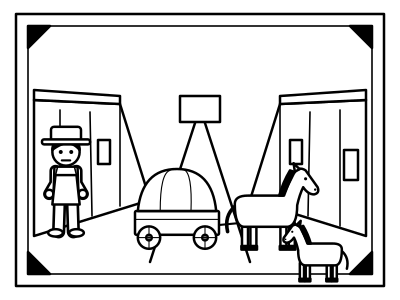
      Look closely at the old photo using I see first. Ask: "What do you see?" (Answers vary: horses or old cars, dirt roads, people in long coats, small buildings.) Then lay out the 6 question starter cards. Your child picks 3 cards and makes a question about the photo with each. You write them in the notebook. (Samples: "Who are the people on the street?" "How did people get around?" "When was this picture taken?" "Why is the road made of dirt?") Then connect to a big change: put the new photo next to the old one. Ask: "What questions does this help us ask about how towns changed?" (Sample: "Why are there no horses now?") Find one answer together: read the date and place under the photo on the website, or ask a grandparent or a local librarian. Write the answer next to the question. Say: "Good questions help historians learn about the past." If stuck making a question, give the starter and the first word: "Where ... did ...?"

    3. Talk & Record · 5–10 min

      Your child draws a star next to the question they most want answered. Sentence frame: "I wonder ___ because in the photo I see ___."

    4. Exit Ticket · 3–5 min

      Ask the three questions aloud. Your child answers by talking or drawing.

    Exit ticket

    1. Make a "why" question about an old photo of people riding horses down a street.
    2. Where could you look to find out when an old photo was taken?
    3. Which question starter asks about a place?
    Answers
    1. Answers vary. Look for: a real why question, such as "Why did people ride horses instead of cars?"
    2. Answers vary. Look for: the date on the back, the page on the library website, or asking someone who knows.
    3. Where.
    Watch for, and help or stretch
    Watch for
    Asking questions the photo can already answer by looking ("Is there a horse?").
    Try
    Say: "Yes, we can see the horse. What do you wonder about it that the photo does not tell us?"
    Extra help
    Make 2 questions with "Who" and "What" only.
    Stretch
    Your child makes a question for each of the 6 starters.

    At home (optional): Your child asks a grandparent or older neighbor one of the starred questions about how the town has changed.

    Practice

    Read each direction aloud. Your child works on the page; answers are in the grown-up view.

    Warm-up

    Remember?

    Math

    1. 32 + 6 = ?
    2. Riddle: I have 2 tens and 5 ones. What number am I?

    Reading & Writing

    1. way, people, than
    2. The goat is in the boat.

    Math · Week 22 Day 3

    I can tell if adding will make a new ten.

    Look: 45 + 3 and 45 + 6

    1. 45 + 3: add the ones. 5 + 3 = 8. That is less than 10, so no new ten. 48.
    2. 45 + 6: add the ones. 5 + 6 = 11. That is 10 or more, so there is a new ten.
    3. 45 + 6 = 51.

    Will it make a new ten? Circle yes or no.

    1. 1.
      73 + 6
      • yes
      • no
    2. 2.
      28 + 4
      • yes
      • no
    3. 3.
      51 + 9
      • yes
      • no
    4. 4.
      64 + 5
      • yes
      • no

    Solve.

    1. 5.
      37 + 2 = ____
    2. 6.
      37 + 8 = ____
    3. 7.
      86 + 4 = ____

    Challenge (optional)

    Write a one-digit number you can add to 56 that will make a new ten.

    You need: Pencil

    Reading & Writing · Week 22 Day 3

    I can describe an event with details so a listener can picture it.

    Look: a complete sentence with details

    1. Not a sentence: The big pot.
    2. A sentence: Dad and I boil corn in a big pot.
    3. Add a detail so a listener can picture it: big, hot, soft.

    Boil the Corn

    Dad and I boil corn in a big pot. The pot is hot, so I stand back. The corn is soft and yum. I get a fork. Then we eat it all!

    Look at the picture. Circle the complete sentence.

    1. 1.
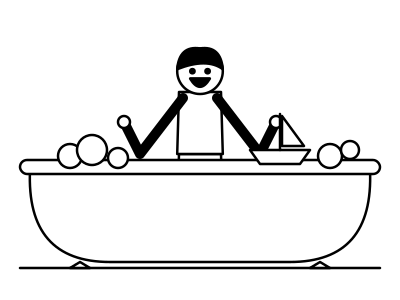
      A boy with a toy boat in a bathtub.
      • Roy and the toy.
      • Roy has a toy in the tub.
    2. 2.
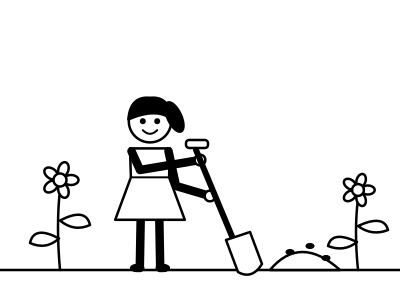
      A girl digging in a garden.
      • Kim digs in the soil.
      • Kim and the soil.
    3. 3.
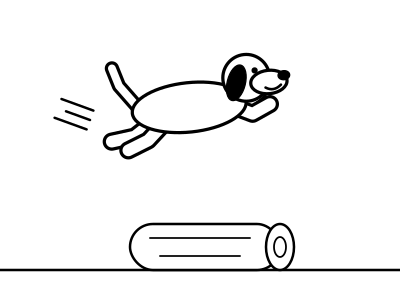
      A dog jumping over a log.
      • The big dog.
      • The dog jumps the log.

    Add a detail. Write a word that helps someone picture it.

    1. 4.
      The ____ coin fell in the soil.
    2. 5.
      Joy had a ____ hat.
    3. 6.
      The boy sat on a ____ rock.
    4. 7.
      A ____ cat sat on my lap.

    Challenge (optional)

    Last, I was ____.

    Social Studies · Week 22 Day 3

    I can ask questions about a source to learn about the past.

    Look: asking wonder questions

    1. Look closely at an old photo. Say what you see first.
    2. Pick a question word: who, what, when, where, why or how.
    3. Make a question: "How did people get around in this town?"

    An old black-and-white photo of a main street with horses, wagons, a dirt road and small shops. Listen. Your child circles the question word that fits.

    1. 1.
      You want to know the name of the man in the photo.
      • who
      • when
      • where
      • why
    2. 2.
      You want to know the year the photo was taken.
      • who
      • when
      • where
      • why
    3. 3.
      You want to know the name of the town.
      • who
      • when
      • where
      • why
    4. 4.
      You want to know the reason the road is dirt.
      • who
      • when
      • where
      • why

    Talk about the photo. Write what your child says.

    1. 5.
      Make a "how" question about this photo.
    2. 6.
      Who could you ask to help answer your question?
    3. 7.
      Tell the question you most want answered.

    Challenge (optional)

    Look at a new photo of a street near you. Make one question about how the town changed.