Math
Making a new ten
I can trade 10 ones for a ten when I add.
Standards: 1.NBT.C.4
- Number practice (no timer)
- Make a new ten: 8 + 5 = 13 helps 28 + 5
- Builds on
- Week 21 (adding ones with no new ten) and Week 14 (10 ones make 1 ten). One-minute check: "How many loose straws do you need to make a bundle?" (10)
New words
- trade: swap 10 ones for 1 ten
- new ten: a ten you make when you have 10 or more ones
You need
- Tens and ones kit: 9 tens and 20 ones. Use straw bundles of 10 (a rubber band around each) and loose straws, base-ten rods and unit cubes, or paper ten-strips (strips of 10 squares, cut by an adult) with beans as ones. If you use straws, have 4 extra rubber bands ready for the new bundles
- 8 problem cards made from paper squares: 26 + 7, 48 + 5, 34 + 9, 67 + 4, 15 + 8, 78 + 6, 53 + 9, 89 + 3
- Notebook and pencil
- Beans and unit cubes are small parts: keep them away from children under 3.
Warm-Up · 5 min
Fluency: make a new ten. "8 + 5?" (13) Say: "Hold on to 8 + 5 = 13. Today it helps with bigger numbers." "7 + 4?" (11) "How many tens and ones in 11?" (1 ten and 1 one) Spaced review from Week 21: "62 + 5?" (67)
Mini-Lesson · 10 min
Say: "Sometimes when we add ones, we get so many ones that we can make a new ten." Build 37: 3 bundles and 7 loose. Add 5 loose ones. Ask: "How many loose ones now?" (12) "Can we make a bundle?" (Yes. We have 10 or more.) Count out 10 loose ones and bundle them. Say: "Trade!" Ask: "How many bundles now?" (4) "How many loose?" (2) "What number?" (42) Write 37 + 5 = 42. Show the steps: 7 + 5 = 12, and 30 + 12 = 42. Say: "7 + 5 made 12 ones. That is 1 ten and 2 ones, so the tens went up by one."
Guided Practice · 10 min
Your child builds each one, adds the ones, trades when there are 10 or more loose ones, and writes the equation. 1) 28 + 4 (8 + 4 = 12; trade; 32) 2) 45 + 7 (5 + 7 = 12; trade; 52) 3) 19 + 6 (9 + 6 = 15; trade; 25) 4) 56 + 8 (6 + 8 = 14; trade; 64) 5) 69 + 3 (9 + 3 = 12; trade; 72) If stuck, say: "Count the loose ones. If there are 10 or more, bundle 10 of them."
Play · 10 min
Bundle It! Mix the 8 problem cards face down. On your turn, flip a card, build the first number, add the ones and say "Trade!" when you bundle a new ten. Say the new number and write the equation. The other player checks by counting tens and ones. Take turns until the cards are gone. Answers: 26 + 7 = 33, 48 + 5 = 53, 34 + 9 = 43, 67 + 4 = 71, 15 + 8 = 23, 78 + 6 = 84, 53 + 9 = 62, 89 + 3 = 92. Unbundle the new tens after each card so the kit stays ready.
Exit Ticket · 3-5 min
Put the objects to one side but leave them on the table. Read each question aloud. Your child answers out loud, with objects or with a quick drawing. Check each answer together right away.
Exit ticket
- Solve 38 + 6. You may use a quick picture.
- When you add 7 to 35, do you get enough ones to make a new ten? What is 35 + 7?
- Solve 27 + 5.
Answers
- 44
- Yes. 5 + 7 = 12 ones, which is 1 ten and 2 ones. 42.
- 32
Watch for, and help or stretch
- Watch for
- Writing 12 ones in the ones place, such as 37 + 5 = 312.
- Try
- Build it. Ask: "Can a number have 12 loose ones?" Bundle 10 and count again.
- Extra help
- Start with numbers ending in 8 or 9 so that only a few ones are needed to make the new ten.
- Stretch
- Ask: "What number can you add to 46 to land exactly on 50?" (4) "On 55?" (9)
At home (optional): With coins: start with 2 dimes and 8 pennies (28 cents). Add 5 pennies. Trade 10 pennies for a dime. How many cents? (33)
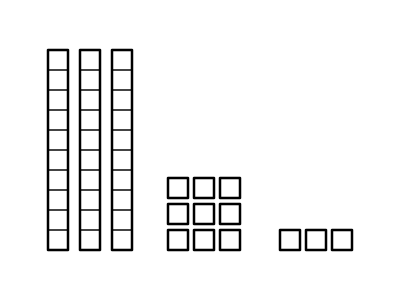 Circle 10 ones to make a new ten. The number is ____.
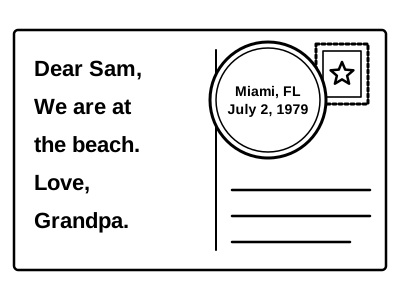 Who wrote it?