1First Grade

    Compare with a string

    Context clues

    Practice pages

    0 of 180 days complete · Saved on this device

    View all 180 days

    Math

    Compare with a string

    I can use a string to compare two things that cannot touch.

    Standards: 1.MD.A.1

    Number practice (no timer)
    Facts within 10 using measurement stories
    Builds on
    Day 2 (ordering three by length). One-minute check: "If a pencil is shorter than a spoon, which is longer?" (The spoon)

    New words

    • compare: find out which is longer or shorter
    • helper: a third thing, like a string, that carries one length to another place

    You need

    • A ball of string or yarn (about as long as 3 tables)
    • Child-safe scissors (an adult helps cut)
    • Notebook and crayons
    • Safety: keep string away from necks, and put it away after the lesson.
    1. Warm-Up · 5 min

      Fluency: facts within 10 using measurement stories. "A caterpillar is 6 beans long. It grows 2 beans longer. How long is it now?" (8 beans) Spaced review from Week 22: "28 + 5?" (33)

    2. Mini-Lesson · 10 min

      Say: "How can we compare two things that cannot be moved next to each other, like the table and the door?" (Answers vary.) Say: "We use a string as a helper." Hold the string along the long side of the table, end to end. The adult cuts it to match. Ask: "Is this string the same length as the table?" (Yes.) Carry the string to the door and hold it across the doorway, one end touching the side of the frame. Ask: "Is the string longer or shorter than the door is wide?" (Answers vary by home.) Say: "The string is as long as the table. So if the string is longer than the door is wide, the table is longer too." Say the sentence that matches your home.

    3. Guided Practice · 10 min

      Your child uses the string helper to compare. Cut a new string for each pair. 1) the width of a window and the width of a door 2) the length of the couch and the length of a bed 3) the height of a chair seat from the floor and the height of the table from the floor For each pair, your child says: "The string is as long as the ___. The string is longer (or shorter) than the ___. So the ___ is longer." Answers vary. Look for: the string matched end to end on the first object, and lined up at one end on the second. If stuck, say: "Hold one end of the string still. Stretch it to the other end. That is the length we carry."

    4. Play · 10 min

      String Me. Your child lies down on the floor. The adult cuts a string as long as your child is tall, from heels to the top of the head. Your child walks around the house and finds 2 things longer than they are tall and 2 things shorter (such as a rug, a couch or a bed). For each, your child holds the string along it and says the sentence. Draw the results in the notebook: "Longer than me" and "Shorter than me." Then put the string away.

    5. Exit Ticket · 3-5 min

      Put the objects to one side but leave them on the table. Read each question aloud. Your child answers out loud, with objects or with a quick drawing. Check each answer together right away.

    Exit ticket

    1. A string is as long as the table. The string is longer than the rug. Which is longer, the table or the rug?
    2. Why do we need a string to compare the front door and the fridge?
    Answers
    1. The table
    2. Answers vary. Look for: we cannot move them next to each other, so the string carries one length to the other.
    Watch for, and help or stretch
    Watch for
    Not starting the string at the very end of the object, so the string is too short.
    Try
    Ask your child to pinch the string at the end of the object while you check the start.
    Extra help
    Compare things in the same room first, such as two windows, and use a long string you hold together.
    Stretch
    Use one string to compare three things, and put them in order. (Answers vary.)

    At home (optional): Your child cuts (with help) a string as long as their bed and finds one thing in the house that is longer and one that is shorter.
    Reading & Writing

    Context clues

    I can use the other words in a sentence to figure out a new word.

    Standards: L.1.4.a, L.1.4, RI.1.4

    Phonics
    Syllables: every syllable has a vowel sound; compound words (sunset, cupcake)
    Sight words
    year, back, most, very, things
    Reading
    Original nonfiction "The Sun and the Moon" (ties to the sky science unit)
    Writing
    Shared research: choosing a question to answer · Handwriting: neat note-taking
    Builds on
    Asking about word meanings in nonfiction (Unit 2). One-minute check: your child tells what to do when they meet a new word (ask, look at the picture, reread).

    New words

    • context clue: the other words in a sentence that help you figure out a new word
    • orbit: the path one thing takes around another in space
    • crescent: a thin, curved shape, like a slice of moon
    • crater: a round hole made when a rock crashes into the ground

    You need

    • Three context sentences you write and read aloud (in the lesson)
    • 12 compound word part cards (index cards): sun, set, cup, cake, back, pack, bed, time, hill, top, sand, box
    • Sight word cards: year, back, most, very, things
    • Printed "The Sun and the Moon" (from Day 1)
    • Paper and crayons for picture checks; lined paper
    1. Phonics & Word Work · 15 min

      Compound words. I do: put sun next to set and read sunset. Say: "A compound word is two small words joined to make a new word." We do: join cup + cake and back + pack. You do: your child joins the rest and reads each: bedtime, hilltop, sandbox. Then your child reads pigpen, bathtub, catfish, sunlit, upset, cobweb. Read: "The cat is in the sandbox." Dictation: sandbox, backpack, bedtime. If stuck, cover one part with a finger, read the other part, then uncover it and read both together.

    2. Sight Words · 5 min

      Review: year, back, most, very, things. Word in the Bag: your child pulls a card, reads it and uses it in a sentence about the sky.

    3. Read-Aloud & Shared Reading · 15 min

      Say: "When we meet a new word, the other words in the sentence can be clues." Read each sentence aloud, then reread it and stop at the new word. Ask: "What do you think it means? Which words helped?" Sentence 1: "The moon moves in a path around Earth. This path is called an orbit." (An orbit is the path the moon takes around Earth. Clues: path, around Earth.) Sentence 2: "Some nights we see only a thin, curved slice of moon, called a crescent." (A crescent is a thin, curved shape. Clues: thin, curved slice.) Sentence 3: "The moon has many round holes called craters. Rocks from space crashed into the moon and made them." (Craters are round holes made by rocks crashing. Clues: round holes, rocks crashed.) After each one, your child checks the guess by drawing it, and you show the matching part of "The Sun and the Moon". If stuck, reread only the clue words: "path ... around Earth. What do you think?"

    4. Writing & Handwriting · 15 min

      Your child writes the three new words in a mini-glossary, copying each word from the sentence, and draws a picture next to each. Then your child copies a definition note in neat small letters: A path around Earth next to orbit. Handwriting (4 min): keep notes small and on the line.

    5. Exit Ticket · 5 min

      Oral answers.

    Exit ticket

    1. Listen: "The baby bird was so famished that it ate all the worms right away." What do you think famished means? Which words helped?
    2. Read this: The kids had cupcakes in the sandbox. Find the compound words.
    3. What is a crater?
    Answers
    1. Very hungry. Clue: it ate all the worms right away.
    2. The kids had cupcakes in the sandbox. Compound words: cupcakes, sandbox.
    3. A round hole made when a rock crashes into the ground (like on the moon).
    Watch for, and help or stretch
    Watch for
    Guessing a meaning from the word's sound only ("orbit sounds like a rabbit").
    Try
    Say: "Let's not guess yet. Reread the sentence. What words are around it?"
    Extra help
    Do two sentences today and draw the picture together.
    Stretch
    Your child makes up a context sentence for a new word you choose, such as enormous.

    At home (optional): Your child teaches a family member the words orbit and crescent with a drawing.

    Science

    Shadow stick

    I can trace a shadow and see how it changes during the day.

    Standards: 1-ESS1-1

    Builds on
    The sun's position changes during the day (Day 1). One-minute check: ask "Where was the sun at midday: high or low?" (high)

    New words

    • trace: to draw around the edge of something
    • shadow: a dark shape made when something blocks light

    You need

    • An unsharpened pencil or a craft stick
    • A ball of play dough about as big as a walnut
    • 1 sheet of paper
    • Tape
    • A plastic or metal baking tray, or a flat piece of cardboard, to hold the paper
    • Chalk (to trace around the tray on the ground so you can put it back in the same spot) or a sunny windowsill
    • 3 crayons: one for morning, one for midday, one for afternoon
    • A clock
    • Sky Journal
    1. Warm-Up / Wonder · 5 min

      Spaced review: ask: "In the morning, was the sun low or high?" (low) Wonder question: "If the sun's spot changes, what happens to shadows?" Safety: never look straight at the sun, even for a moment. Sunglasses do not make it safe. To find the sun, stand with your back to it and look at your shadow, or hold your hand up so it blocks the sun, and look at your hand.

    2. Explore · 10–15 min

      Like Day 1, this happens in 3 short visits on one sunny day. Make the shadow stick: tape the paper to the tray. Push the pencil straight up into the play dough and press the dough onto the middle of the paper. Visit 1 (morning, about 9 o'clock): set the tray outside on flat ground in the sun or on a sunny windowsill. Trace around the tray with chalk so you can put it back in exactly the same spot. Your child traces the pencil's shadow with the morning crayon and writes the time at the end of it. Ask: "Is the shadow long or short?" (long) "Which way does it point: toward the sun or away from it?" (away from the sun) Bring the tray inside. Visit 2 (midday): put the tray back inside the chalk outline, facing the same way. Your child traces the shadow with the midday crayon. Ask: "What changed?" (The shadow is shorter and points a different way.) Visit 3 (afternoon, about 3 o'clock): trace again with the third crayon. (The shadow is long again and points another way.) Look at the paper. Ask: "When was the shadow shortest?" (at midday) "Why do you think it changed?" (The sun was in a different spot.) Say: "When the sun is low, shadows are long. When the sun is high at midday, shadows are short. Shadows point away from the sun." If stuck because a shadow is hard to see, ask your child to trace their own shadow instead: they stand on a chalk X while you trace around their feet and shadow on the sidewalk, 3 times a day.

    3. Talk & Record · 5–10 min

      Your child copies the 3 shadow lines into the Sky Journal and draws a small sun on the opposite side of each one. Sentence frame: "The shadow was long in the ___ and short at ___."

    4. Exit Ticket · 3–5 min

      Ask the three questions aloud. Your child answers by talking or drawing.

    Exit ticket

    1. If the sun is on your left, which way does your shadow point?
    2. At what time of day is a shadow the shortest?
    3. Why did the pencil's shadow change during the day?
    Answers
    1. To your right, away from the sun.
    2. Around midday, when the sun is highest.
    3. Because the sun was in a different spot in the sky each time.
    Watch for, and help or stretch
    Watch for
    Moving the tray between tracings.
    Try
    Use the chalk outline and say: "If the tray moves, we can't tell whether the sun or the tray made the change."
    Extra help
    Trace the shadow 2 times only: morning and afternoon, and compare the lengths.
    Stretch
    Your child predicts where the 4 o'clock shadow will be, draws a dotted line, then checks it.

    At home (optional): Your child tells a family member when shadows are long and when they are short, and shows the shadow paper.

    Practice

    Read each direction aloud. Your child works on the page; answers are in the grown-up view.

    Warm-up

    Remember?

    Math

    1. 60 - 10 = ? Think: 6 tens take away 1 ten.
    2. 9 + 6 = ? Make a ten first.

    Reading & Writing

    1. chirp, south, oink, barn

    Math · Week 25 Day 3

    I can use a string to compare two things that cannot touch.

    Look: the table and the door

    1. The table and the door cannot be moved next to each other.
    2. Cut a string as long as the table. Carry the string to the door.
    3. The string is longer than the door is wide, so the table is longer than the door is wide.

    Use the string clue to circle the longer one.

    1. 1.
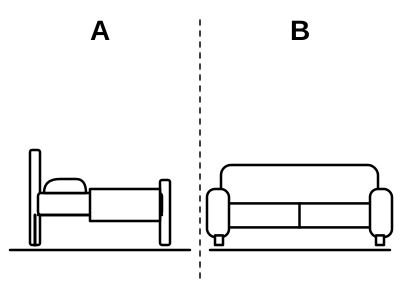
      A is a bed and B is a couch. The string is as long as the bed. The string is shorter than the couch.
      • A
      • B
    2. 2.
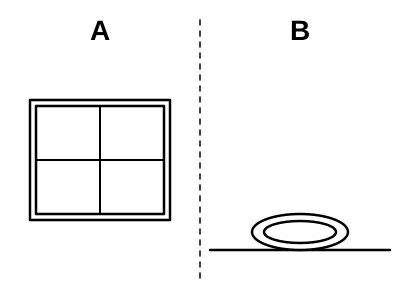
      A is a window and B is a rug. The string is as long as the window. The string is longer than the rug.
      • A
      • B
    3. 3.
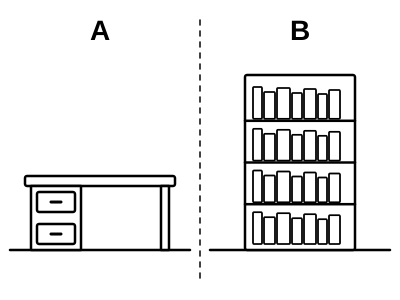
      A is a desk and B is a bookshelf. The string is as long as the desk. The string is shorter than the bookshelf.
      • A
      • B

    Look at each picture and circle the answer.

    1. 4.
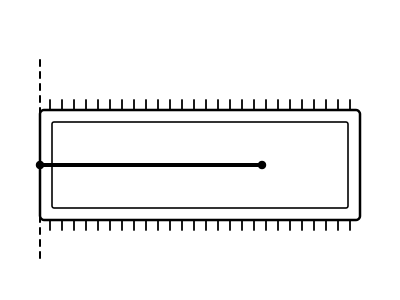
      A string that is as long as a table, now laid along a rug with their left ends lined up. The rug sticks out past the end of the string. Circle the longer one: A is the table, B is the rug.
      • A
      • B
    2. 5.
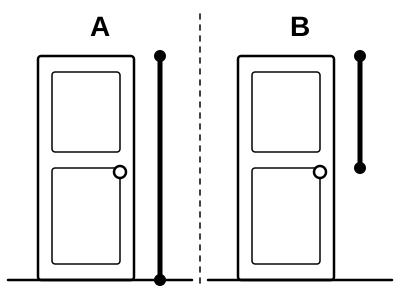
      Picture A: a string held along a door with one end at the bottom of the door; picture B: a string held along a door starting in the middle of the door. Which way is fair?
      • A
      • B
    3. 6.
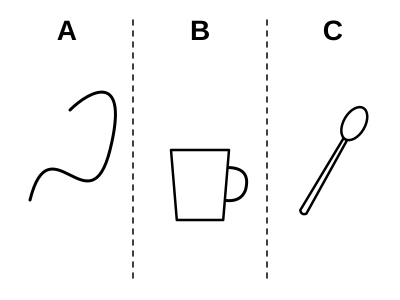
      A is a string, B is a cup, C is a spoon. Circle the helper you can use to compare a door and a rug.
      • A
      • B
      • C

    Challenge (optional)

    How could you find out if your bed is longer than your rug? Tell your plan.

    You need: Pencil

    Reading & Writing · Week 25 Day 3

    I can use the other words in a sentence to figure out a new word.

    Look: clues in the sentence

    1. Read: The rag was damp. It was not dry, but it was not very wet.
    2. Ask: What does damp mean? The other words are clues: not dry, not very wet.
    3. So damp means a little wet.

    The Fox

    A fox can dig a den. A den is a hole in the ground where a fox can rest and hide. In the den, the fox is snug and safe. At night, the fox will hunt for bugs and frogs.

    Read the lines. Use the clues to pick what the word means.

    1. 1.
      The pup is plump. It is fat and round. Plump means ____.
      • fat and round
      • thin
    2. 2.
      Dad will mend the rip in my coat. Mend means ____.
      • fix
      • rip
    3. 3.
      We had a feast with corn, ham and cake! A feast is ____.
      • a big meal
      • a nap
    4. 4.
      A den is a hole where a fox can rest. A den is a ____.
      • home
      • hat

    Read the line. Write the compound word.

    1. 5.
      Max had a hotcake.
    2. 6.
      I see a cobweb in the shed.
    3. 7.
      Pam put on her raincoat.

    Challenge (optional)

    The frog will leap. It can jump far! What does leap mean?

    Science · Week 25 Day 3

    I can trace a shadow and see how it changes during the day.

    Look: Long shadow, short shadow

    1. In the morning the sun is low, so a pencil's shadow is long.
    2. At midday the sun is high, so the shadow is short.
    3. A shadow always points away from the sun.

    Circle long or short.

    1. 1.
      The sun is low in the morning. Is a flagpole's shadow long or short?
      • long
      • short
    2. 2.
      The sun is high at midday. Is your shadow long or short?
      • long
      • short
    3. 3.
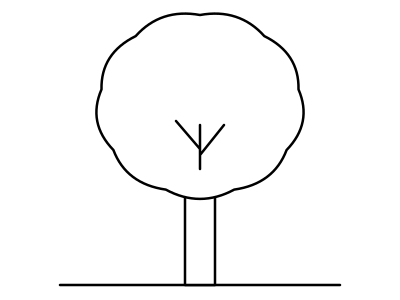
      The sun is low in the late afternoon. Is a tree's shadow long or short?
      • long
      • short

    Circle or draw.

    1. 4.
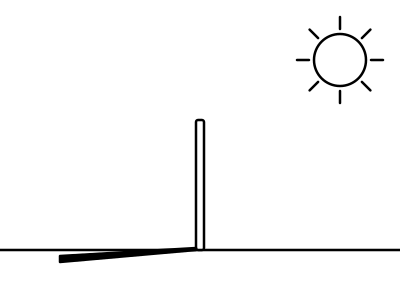
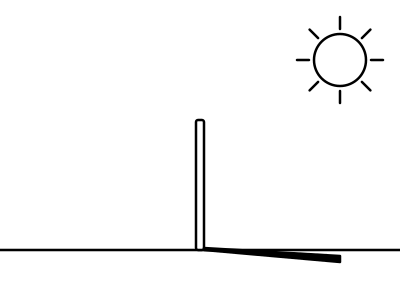
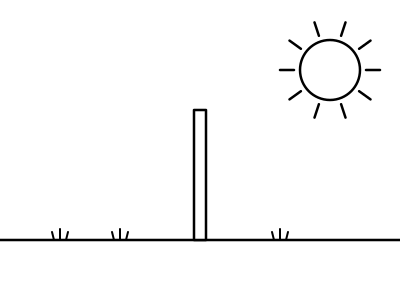
      A stick in the ground with the sun on the right. Circle where the shadow goes.
      • The shadow on the left side, away from the sun.
      • The shadow on the right side, toward the sun.
    2. 5.
      What changes its spot in the sky and makes your shadow change?
      • A tree.
      • The sun.
    3. 6.
      Draw the pencil and its shadow at midday.

    Challenge (optional)

    Would a shadow be longer at 8 o'clock in the morning or at 12 o'clock midday?

    You need: crayons