1First Grade

    If A is longer than B ...

    Our research question

    Practice pages

    0 of 180 days complete · Saved on this device

    View all 180 days

    Math

    If A is longer than B ...

    I can use clues to tell which is longest.

    Standards: 1.MD.A.1

    Number practice (no timer)
    Facts within 10 using measurement stories
    Builds on
    Day 3 (using a string to compare) and Day 2 (ordering three lengths). One-minute check: "Order these from shortest to longest: a paper clip, a shoe, a car." (paper clip, shoe, car)

    New words

    • clue: a hint that helps you find an answer
    • prove: show that your answer is right

    You need

    • 6 paper strips cut by an adult and colored with crayon: red (as long as the long side of a sheet of paper), blue (about as long as a pencil), green (about as long as a crayon), and yellow, orange and purple strips of 3 other clearly different lengths
    • Notebook and crayons
    1. Warm-Up · 5 min

      Fluency: facts within 10 using measurement stories. "A stick is 9 blocks long. Another is 6 blocks long. How many blocks longer is the first?" (3) Spaced review from Week 21: "72 + 5?" (77)

    2. Mini-Lesson · 10 min

      Keep the red, blue and green strips hidden. Say: "I have clues. Red is longer than blue. Blue is longer than green." Draw a picture as you talk: a long red line, a shorter blue line under it, and a shorter green line under that, with the left ends lined up. Ask: "Which is the shortest?" (Green) "Which is the longest?" (Red) Ask: "We never compared red and green. Is red longer than green?" (Yes. Red is longer than blue, and blue is longer than green, so red is longer than green.) Now take out the strips and line them up at the table edge to prove it.

    3. Guided Practice · 10 min

      Read each set of clues twice. Your child draws lines with lined-up ends to show the clues, then answers. 1) "The rope is longer than the belt. The belt is longer than the shoelace. Which is the longest?" (The rope) 2) "The pink worm is shorter than the brown worm. The brown worm is shorter than the black worm. Which is the shortest?" (The pink worm) 3) "Ana's scarf is longer than Sam's scarf. Leo's scarf is shorter than Sam's scarf. Put them in order from longest to shortest." (Ana's, Sam's, Leo's) If stuck, say: "Draw the first two from the first clue. Then read the next clue and add the third line."

    4. Play · 10 min

      Clue Maker. Your child secretly lines up the yellow, orange and purple strips in order behind a book. Your child gives you 2 clues, such as "Yellow is longer than orange. Orange is longer than purple." You draw the order and say which is longest and shortest. Your child reveals the strips to check. Swap: you make the clues and your child solves. Play 4 rounds, mixing the strips each time.

    5. Exit Ticket · 3-5 min

      Put the objects to one side but leave them on the table. Read each question aloud. Your child answers out loud, with objects or with a quick drawing. Check each answer together right away.

    Exit ticket

    1. The gray string is longer than the white string. The white string is longer than the gold string. Which string is the shortest?
    2. Is the gray string longer or shorter than the gold string?
    Answers
    1. The gold string
    2. Longer
    Watch for, and help or stretch
    Watch for
    Guessing from the first clue only.
    Try
    Draw a line for each clue, one at a time, and point to the picture before answering.
    Extra help
    Use the real strips for every clue and let your child line them up while you read.
    Stretch
    Read clues out of order: "Blue is shorter than red. Green is shorter than blue." Which is longest? (Red)

    At home (optional): Your child gives a family member 2 clues about 3 things at home and asks which is longest.
    Reading & Writing

    Our research question

    I can help choose a question and find where to look for answers.

    Standards: W.1.8, W.1.7, SL.1.1.a

    Phonics
    Syllables: every syllable has a vowel sound; compound words (sunset, cupcake)
    Sight words
    year, back, most, very, things
    Reading
    Original nonfiction "The Sun and the Moon" (ties to the sky science unit)
    Writing
    Shared research: choosing a question to answer · Handwriting: neat note-taking
    Builds on
    Shared research in Unit 2 (W.1.7) and the Sky Wonders chart (Days 1 and 2). One-minute check: your child reads one question from the We Wonder column.

    New words

    • research: looking for facts to answer a question
    • source: a place where we find information, such as a book, a person or a website

    You need

    • The Sky Wonders chart (from Days 1 and 2)
    • A Question chart: a sheet with our question at the top and two boxes: What we have seen and Where to look
    • Books about the sky (from home or the library), if you have them
    • Sight word cards: year, back, most, very, things (two sets: 10 cards for Memory Match)
    • Printed "The Sun and the Moon" and "Sunset on the Hilltop" (from Day 1)
    • Lined handwriting paper
    1. Phonics & Word Work · 15 min

      Compound words and syllables review. I do: read sunlit and daytime by parts. We do: read nighttime, cupcake, bathtub. You do: your child reads hilltop, backpack, sunset, pigpen, catfish, bedtime, sandbox, inlet and claps each one. Read: "At sunset, Jen had a cupcake on the hilltop." Dictation: daytime, sunlit, pigpen. If stuck, find the two vowel sounds first, then split between them.

    2. Sight Words · 5 min

      Review: year, back, most, very, things. Memory Match with 10 cards: turn two over and read both. A match is kept.

    3. Read-Aloud & Shared Reading · 15 min

      Say: "Good researchers talk together. We take turns, listen carefully and speak one at a time." Agree on two talk rules and say them aloud. Then look at the We Wonder column together and choose our research question: "Why does the moon look different?" Write it at the top of the Question chart. Ask: "What have you already seen when you look at the moon?" (Answers vary. Look for: a real memory, such as a round moon, a thin moon, or the moon in the daytime.) Write your child's answers in the What we have seen box. Ask: "Where could we look for the answer?" (Answers vary. Look for: our texts, a library book, asking a librarian or a science teacher, or a trusted science website with a grown-up, such as NASA's.) Write them in the Where to look box. Ask: "Which source do you trust most? Why?" (Answers vary. Look for: a reason, such as a science book is written by experts.) If stuck, reread the Moon part of "The Sun and the Moon" and ask: "Did this text show the moon in different shapes?"

    4. Writing & Handwriting · 15 min

      Your child copies the research question neatly onto the top of a clean page for the research folder: Why does the moon look different? (Copy the words moon and different from the chart; Why does the and look can be read and spelled by your child.) Then your child writes one sentence about what they have seen: "I can see a big, round moon." or their own sentence. Handwriting (4 min): the question mark sits on the line.

    5. Exit Ticket · 5 min

      Oral answers.

    Exit ticket

    1. What is our research question?
    2. Name one place where we can look for an answer.
    3. What is one rule for talking together?
    Answers
    1. Why does the moon look different?
    2. Answers vary. Look for: a real source, such as a book, a librarian or a trusted website with an adult.
    3. Answers vary. Look for: take turns, listen carefully, or speak one at a time.
    Watch for, and help or stretch
    Watch for
    Choosing a question that can be answered with yes or no ("Is the moon round?").
    Try
    Say: "A good research question starts with why or how so we can learn a lot."
    Extra help
    Your child tells what they have seen while you write; your child copies one word.
    Stretch
    Your child adds a second question we might research later, such as "Why is the sun hot?"

    At home (optional): Tonight (or the next clear night), look at the moon with your child and draw its shape. If the moon is not up in the evening this week, look for it in the morning sky. Note the day. Keep the drawing for Week 26.

    Social StudiesWeekly check

    Not enough for everyone

    I can explain why we must choose when there is not enough.

    Standards: D2.Eco.1.K-2

    Builds on
    Needs and wants (Day 2). One-minute check: ask "Is water a need or a want?" (a need)

    New words

    • scarce: when there is not enough for everyone who wants it
    • choice: picking one thing instead of another

    You need

    • 5 stickers (or 5 crackers or 5 crayons)
    • 3 people (or 2 people and a stuffed animal) who each want 2 stickers
    • 3 choice cards: Share, Take turns, Each gets 1 and save the rest
    • Week 25 social studies check page (given separately)
    • Pencil
    1. Warm-Up / Wonder · 5 min

      Spaced review: ask: "Name one need and one want." (Answers vary.) Wonder question: "What happens when there is not enough for everyone?"

    2. Review Game · 10 min

      Play "Not Enough." Put 5 stickers on the table. Say: "There are 3 of us, and each of us wants 2 stickers." Ask: "How many stickers do we need so everyone gets 2?" (Count by 2s together: 2, 4, 6. We need 6.) "How many do we have?" (5) "Is there enough?" (No. We are 1 short.) Say: "When there is not enough for everyone, it is scarce, and we have to make a choice." Lay out the 3 choice cards and talk about each. Share: two people get 2 each and one gets 1 (2 + 2 + 1 = 5). Take turns: one person gets fewer today and more next time. Each gets 1 and save the rest: everyone gets 1, and 2 stay saved for later. Ask: "Which choice seems fair? Why?" (Answers vary.) Say: "Families, towns and countries have to make choices like this every day, because there is not always enough money, time or things for everything." If stuck counting, give each person 1 sticker at a time until they run out.

    3. Check · 10 min

      Give the Week 25 social studies check. The check items are on the Week 25 check page; do not show them ahead of time. Read each part aloud. Your child answers by talking, pointing, showing with the real materials or drawing. You write down their words exactly. It is not timed; stop and finish later if your child is tired. Make a check mark next to each part your child shows on their own. The printed check has 8 items. It covers these goals: (1) I can sort things into needs and wants; (2) I can explain why we must choose when there is not enough. This week the check is an oral scarcity task. Look for: your child explains that when there is not enough for everyone (scarcity), people have to choose, and names one fair way to choose. If stuck on a part, set out real objects again and ask: "Is there enough for everyone? So what do we have to do?" Secure: 6 of 8 correct, with at least one right on each goal. If the check is not yet secure, use the reteach step on the check page that matches the items missed.

    4. Exit Ticket · 3–5 min

      Ask the three questions aloud. Your child answers by talking or drawing.

    Exit ticket

    1. There are 4 cookies and 5 people. Can each person have one?
    2. What does scarce mean?
    3. Name one way to choose when there is not enough.
    Answers
    1. No. There is 1 cookie short.
    2. There is not enough for everyone who wants it.
    3. Answers vary. Look for: share, take turns, save some, or decide who needs it most.
    Watch for, and help or stretch
    Watch for
    Thinking that being scarce means someone is being mean.
    Try
    Say: "Nobody is being unkind. There just is not enough. That is why we choose."
    Extra help
    Use 3 stickers and 2 people who each want 2.
    Stretch
    Your child thinks of something scarce in your family (time on a weekend, seats in the car) and tells a fair choice.

    At home (optional): Your child notices one time this week when there was not enough of something and tells how the family chose.

    Practice

    Read each direction aloud. Your child works on the page; answers are in the grown-up view.

    Warm-up

    Remember?

    Math

    1. 65 + 8 = ?
    2. 4 buses are at the stop. 5 more pull in. How many buses in all?

    Reading & Writing

    1. coil, soy, broil
    2. live, put

    Math · Week 25 Day 4

    I can use clues to tell which is longest.

    Look: clues about ribbons

    1. Clues: The red ribbon is longer than the green ribbon. The green ribbon is longer than the gold ribbon.
    2. Draw them with the ends lined up: red longest, green shorter, gold shortest.
    3. So the red ribbon is longer than the gold ribbon too.

    Listen to the clues and circle the answer.

    1. 1.
      Line A is longer than line B. Line B is longer than line C. Which line is the longest?
      • A
      • B
      • C
    2. 2.
      Line D is shorter than line E. Line E is shorter than line F. Which line is the shortest?
      • D
      • E
      • F
    3. 3.
      Rope G is longer than rope H. Rope H is longer than rope J. Is rope G longer than rope J?
      • yes
      • no

    Draw the clues, then answer.

    1. 4.
      Line M is longer than line N. Line N is longer than line P. Draw all 3 lines with the left ends lined up.
    2. 5.
      Use your drawing. Circle the shortest line.
      • M
      • N
      • P
    3. 6.
      Stick R is longer than stick S. Stick T is shorter than stick S. Circle the order from shortest to longest.
      • T, S, R
      • R, S, T
      • S, T, R

    Challenge (optional)

    A is longer than B. C is longer than A. Which is the longest?

    You need: Pencil

    Reading & Writing · Week 25 Day 4

    I can help choose a question and find where to look for answers.

    Look: a research question

    1. A question asks something we want to find out. It ends with a question mark.
    2. Our question: Why does the moon look different?
    3. Then we pick good places to look: a book about the moon, a librarian, a science website with a grown-up.

    We Will Find Out

    At night, I look up at the sky. Some nights I see a big, round light. Some nights it is thin. Why? We will find out!

    Write the word I say. It is two small words.

    1. 1.
      ____
    2. 2.
      ____
    3. 3.
      ____

    Where can we find the answer to our moon question? Circle the number of the better place.

    1. 4.
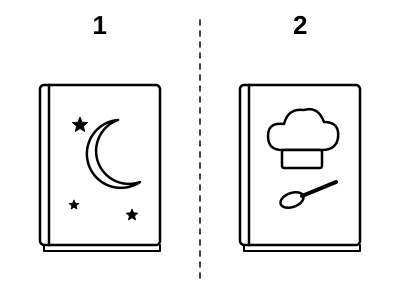
      1 a book with a moon on the cover, 2 a cookbook.
      • 1
      • 2
    2. 5.
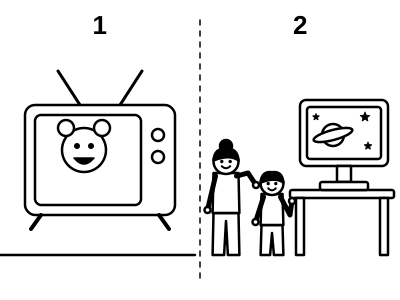
      1 a cartoon on a TV, 2 a grown-up and a child looking at a space website.
      • 1
      • 2
    3. 6.
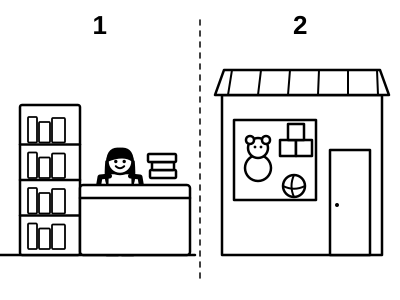
      1 a librarian at a library desk, 2 a toy store.
      • 1
      • 2

    Challenge (optional)

    Why ____?

    Social Studies · Week 25 check

    Weekly check

    How to give it: Read every question and choice aloud, and point to each picture as you name it. This week the check is an oral scarcity task. Your child answers by talking, pointing, circling, acting it out or drawing; write their words exactly on the line. It is not timed; stop and finish later if your child is tired. Do not show the page ahead of time. If stuck on items 4 to 7, set out real objects again and ask "Is there enough for everyone? So what do we have to do?" Make a check mark next to each part your child shows on their own.

    Secure when: 6 of 8 correct, with at least one right on each goal

    • I can sort things into needs and wants.
    • I can explain why we must choose when there is not enough.
    1. 1.
      Is a pair of shoes a need?
      • yes
      • no
    2. 2.
      Is a toy robot a need?
      • yes
      • no
    3. 3.
      Tell one need everyone has and one want you have.
    4. 4.
      There are 6 apples and 8 children. Can each child have one apple? How many apples short?
    5. 5.
      There are 3 crayons and 3 children. Is there enough for each child to get one?
      • yes
      • no
    6. 6.
      When there is not enough for everyone, what do people have to do?
    7. 7.
      There are only 2 swings and 5 children. Name one fair way to choose.
    8. 8.
      When there is not enough for everyone who wants it, we say it is ____.