1First Grade

    Lesson + weekly check: comparing lengths

    Share and check: syllables

    Practice pages

    0 of 180 days complete · Saved on this device

    View all 180 days

    MathWeekly check

    Lesson + weekly check: comparing lengths

    I can order three things and compare two using a third.

    Standards: 1.MD.A.1

    Number practice (no timer)
    Facts within 10 using measurement stories
    Builds on
    Days 1 to 4: comparing two lengths, ordering three, using a string to compare, and clue stories. One-minute check: "Red is longer than blue. Which is shorter?" (Blue)

    New words

    • scavenger hunt: a game where you look for things on a list

    You need

    • String and child-safe scissors (an adult helps cut)
    • 3 household objects for the check: a spoon, a pencil and a book
    • Scavenger hunt list written on paper: something shorter than a spoon, something longer than a pencil, something as long as your hand, something longer than a book
    • The stored Week 25 check and its answer key
    • Notebook and pencil
    1. Warm-Up · 5 min

      Fluency: facts within 10 using measurement stories. "A line is 7 steps long. Another line is 2 steps longer. How long is it?" (9 steps) Spaced review from Week 20: "36 + 40?" (76)

    2. Short Lesson: Review Game · 10 min

      Measurement Scavenger Hunt. Read the list. Your child walks around the house and finds one thing for each line, then proves each one at the table by lining up the ends. Answers vary. Look for: lined-up ends and a correct sentence, such as "The key is shorter than the spoon." Then order the 4 found things from shortest to longest. If stuck, say: "Bring the spoon (or pencil, or book) with you and hold it next to things as you walk."

    3. Weekly Check · 15 min

      Give the stored Week 25 check. The printed check has 6 items. It covers these goals: (1) I can put three things in order by length; (2) I can use a string to compare two things; (3) I can use clues to tell which is longest. Read each item aloud. There is no time limit. If your child is stuck, say only: "Line up the ends." Do not give the answer. Score it with the answer key. Secure: 5 or 6 of the 6 items right. If the check is secure, start Week 26. If it is not, first do the reteach step on the check page for each group of items missed, then start Week 26.

    4. Exit Ticket · 3-5 min

      After the check, ask these two questions. Then go over any missed check items together.

    Exit ticket

    1. A ribbon is longer than a pencil. A pencil is longer than a paper clip. Which is the longest?
    2. To compare a rug and a bed, what helper could you use?
    Answers
    1. The ribbon
    2. A string (or yarn) cut to the length of one of them
    Watch for, and help or stretch
    Watch for
    Forgetting to line up the ends during the check.
    Try
    Before each item, ask: "Where do the ends go?" (At the same starting place.)
    Extra help
    Let your child hold the objects and line them up for every check item, and note it on the check.
    Stretch
    After the check, your child writes 2 clues about 3 family members' shoes for you to solve.

    At home (optional): Your child shows a family member how to use a string to compare two things that cannot be moved.
    Reading & WritingWeekly check

    Share and check: syllables

    I can count syllables and read compound words.

    Standards: RF.1.3.d, RF.1.3.e, RF.1.3.g

    Phonics
    Syllables: every syllable has a vowel sound; compound words (sunset, cupcake)
    Sight words
    year, back, most, very, things
    Reading
    Original nonfiction "The Sun and the Moon" (ties to the sky science unit)
    Writing
    Shared research: choosing a question to answer · Handwriting: neat note-taking
    Builds on
    This week's syllables and compound words. One-minute check: warm up by clapping sunset, cat, bedtime.

    New words

    • compound word: two small words joined to make one new word

    You need

    • Word cards: 8 words for counting syllables and 6 compound words (written in step 4)
    • 8 game cards (index cards): sun, sunset, cake, cupcake, bed, bedtime, hill, hilltop
    • Sight word cards: year, back, most, very, things, sound, only, little, work, place
    • Recording sheet
    • The Question chart and research page (from Day 4)
    • Lined handwriting paper
    1. Review Game · 10 min

      Syllable Jump: lay 8 cards on the floor: sun, sunset, cake, cupcake, bed, bedtime, hill, hilltop. Your child reads a card and jumps once for each syllable. If stuck on a word during the game (not during the check), cover all but the first sound, say it together, then uncover the rest and blend.

    2. Sight Words · 5 min

      Review: year, back, most, very, things, sound, only, little, work, place. Mystery Word: "It has 6 letters and ends with s." (things) "It has 4 letters and starts with v." (very) "It has 4 letters and ends with ck." (back) Then your child gives you a clue.

    3. Weekly Check · 15 min

      The printed check has 9 items. It covers these goals: (1) I can count syllables and read compound words; (2) I can tell what a nonfiction text is about and use clues to figure out a new word; (3) I can help choose a question to answer. Give no hints. Record each answer. Secure: 6 of 8 syllable counts in items 1-2, 5 of 6 compound words in items 3-4, 4 of 5 sight words, and 3 of 4 on items 6-9. For any part that is not yet secure, use the matching reteach step on the check page next week.

    4. Share & Listen · 10 min

      Your child reads the research question and their sentence about the moon to a listener. The listener tells one thing they have seen when looking at the moon.

    5. Handwriting · 5 min

      Your child copies sunset, bedtime, hilltop with a small line between the two parts of each word. Circle the best word.

    6. Exit Ticket · 5 min

      Talk about the week.

    Exit ticket

    1. How many syllables are in your first name? How do you know?
    2. Read a compound word and tell the two small words in it.
    Answers
    1. Answers vary. Look for: a count that matches the vowel sounds.
    2. Answers vary. Look for: a correct read and its two parts, such as sandbox: sand and box.
    Watch for, and help or stretch
    Watch for
    Counting a silent e or a vowel team as two syllables.
    Try
    Before the check (not during it), review: "Count the vowel sounds you hear, not the vowel letters you see."
    Extra help
    Let your child clap each word before counting in items 1 and 2 (clapping is allowed).
    Stretch
    Your child reads 3 bonus words: sunshine, cobweb, inlet and counts their syllables. Do not score them.

    At home (optional): Your child looks at the moon again tonight (with an adult) and draws its shape on the moon page.

    ScienceWeekly check

    Predict the sun

    I can predict where the sun will be later in the day.

    Standards: 1-ESS1-1

    Builds on
    Sun position (Day 1) and shadow stick (Day 3). One-minute check: ask "When is a shadow shortest?" (around midday)

    New words

    • sunrise: the time in the morning when the sun comes up
    • sunset: the time in the evening when the sun goes down

    You need

    • 4 sun cards drawn on index cards: sun coming up at the edge of the land, sun low in the morning, sun high at midday, sun going down at the edge of the land
    • Sky Journal and shadow paper from Days 1 and 3
    • Week 25 science check page (given separately)
    • Pencil
    1. Warm-Up / Wonder · 5 min

      Spaced review: ask: "Which way does a shadow point?" (away from the sun) Wonder question: "Where will the sun be when we eat dinner?" Safety: never look straight at the sun, even for a moment. Sunglasses do not make it safe. To find the sun, stand with your back to it and look at your shadow, or hold your hand up so it blocks the sun, and look at your hand.

    2. Review Game · 10 min

      Play "Sun Stretch." Your child is the sun. Say "Sunrise!" and your child crouches low on one side of the room. Say "Morning!" and they rise a little. Say "Midday!" and they stretch tall in the middle. Say "Afternoon!" and they lower a bit on the other side. Say "Sunset!" and they crouch low on the far side. Do it twice. Then mix the 4 sun cards. Your child puts them in order and tells the sun's story using first, next, then and last. Ask: "Is it the same every day?" (Yes. The sun follows the same pattern each day.) If stuck ordering the cards, lay out the Sky Journal page from Day 1 and ask: "Which card matches your morning drawing?"

    3. Check · 10 min

      Give the Week 25 science check. The check items are on the Week 25 check page; do not show them ahead of time. Read each part aloud. Your child answers by talking, pointing, showing with the real materials or drawing. You write down their words exactly. It is not timed; stop and finish later if your child is tired. Make a check mark next to each part your child shows on their own. The printed check has 7 items. It covers these goals: (1) I can tell where the sun is in the morning, at noon and in the afternoon; (2) I can trace a shadow and see how it changes during the day; (3) I can predict where the sun will be later in the day. This week the check is a picture-order task plus a prediction. Look for: the sun cards in the right order (comes up, high at midday, goes down) and a prediction for dinnertime that fits: low in the sky on the side where it sets, or already gone down. If stuck on a part, let your child do the Sun Stretch again and then point to the card that matches each pose. Secure: 5 of 7 correct, including item 1 (the cards in order) and item 3 (a prediction that fits: low on the sunset side, or set). If the check is not yet secure, use the reteach step on the check page that matches the items missed.

    4. Exit Ticket · 3–5 min

      Ask the three questions aloud. Your child answers by talking or drawing.

    Exit ticket

    1. At bedtime, where is the sun?
    2. At breakfast, is the sun low or high in the sky?
    3. What will the sun do tomorrow morning?
    Answers
    1. It has gone down (set), so we cannot see it. (If bedtime is very early, it may be just setting, low on the sunset side.)
    2. Answers vary. Look for: low on the morning side, or not up yet if breakfast is very early.
    3. It will come up (rise) again.
    Watch for, and help or stretch
    Watch for
    Saying the sun is highest in the morning because it is bright.
    Try
    Look at the shadow paper. Ask: "When was the shadow shortest?" (midday) Say: "Short shadow means a high sun."
    Extra help
    Use 3 cards only: coming up, high, going down.
    Stretch
    Your child predicts the sun's spot at 2 o'clock and checks it with the hand-block method.

    At home (optional): Your child tells a family member at dinner where the sun is right now and checks which side of the sky is bright and which way shadows point, never looking toward the sun.

    Practice

    Read each direction aloud. Your child works on the page; answers are in the grown-up view.

    Warm-up

    Remember?

    Math

    1. 40 - 30 = ? Think: 4 tens take away 3 tens.
    2. 26 + 30 = ?

    Reading & Writing

    Math · Week 25 check

    Weekly check

    How to give it: Read every item aloud. It is untimed. You may also lay out 3 real objects for items 1 to 3 if your child wants to line them up. If your child is stuck, say only: "Line up the ends." Do not give the answer. 5 or 6 right: start Week 26. 3 or 4 right: redo the Guided Practice from Day 2, Day 3 or Day 4 for the part that was missed before Week 26. 2 or fewer right: redo Day 1 and Day 2 before Week 26.

    Secure when: 5 or 6 of the 6 items right.

    • I can put three things in order by length.
    • I can use a string to compare two things.
    • I can use clues to tell which is longest.
    1. 1.
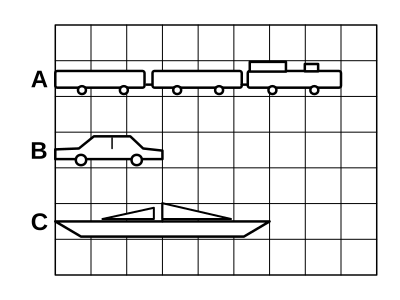
      3 toys in a row with left ends lined up: A is a toy train 8 squares long, B is a toy car 3 squares long, C is a toy boat 6 squares long. Write 1 under the shortest, 2 under the middle one and 3 under the longest. A ____ B ____ C ____
    2. 2.
      The same 3 toys. Circle the shortest toy.
      • A
      • B
      • C
    3. 3.
      The same 3 toys. Circle the longest toy.
      • A
      • B
      • C
    4. 4.
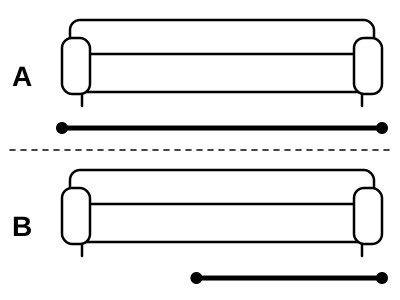
      Picture A: a string laid along a couch from one end to the other; picture B: a string laid along a couch starting partway along it. You want a string as long as the couch. Circle the right way.
      • A
      • B
    5. 5.
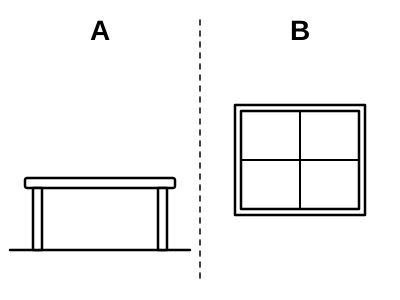
      A is a table and B is a window. The string is as long as the table. The string is longer than the window. Circle the longer one.
      • A
      • B
    6. 6.
      Rope R is longer than rope S. Rope S is longer than rope T. Which rope is the shortest?
      • R
      • S
      • T

    Reading & Writing · Week 25 check

    Weekly check

    How to give it: Give it in one sitting, untimed. Read each direction aloud. For items 1-2, your child reads each word, then writes or says how many syllables it has and tells how they know (count the vowel sounds). For items 3-5, your child reads each word aloud and you tick the ones read right; give no hints. Your child reads Bats aloud, with help on any word, before items 6-8; for item 8, say: Use the other words to figure out snag. For item 9, say: Circle the line that asks.

    Secure when: 6 of 8 syllable counts in items 1-2, 5 of 6 compound words in items 3-4, 4 of 5 sight words, and 3 of 4 on items 6-9.

    • I can count syllables and read compound words.
    • I can tell what a nonfiction text is about and use clues to figure out a new word.
    • I can help choose a question to answer.

    Bats

    A bat can fly at night. In the day, a bat hangs up and rests. At night, a bat can snag a bug and eat it. A bat can eat lots and lots of bugs! A bat is not a bird. It has fur.

    1. 1.
      sail sailboat bed bedbug
    2. 2.
      hat hatbox rose rosebud
    3. 3.
      popcorn sunfish windmill
    4. 4.
      treetop nutshell gumdrop
    5. 5.
      year back most very things
    6. 6.
      It is about ____.
      • bats
      • birds
      • bugs
    7. 7.
      When does a bat rest?
      • in the day
      • at night
    8. 8.
      A bat can snag a bug and eat it. Snag means ____.
      • grab
      • drop
    9. 9.
      Which one asks?
      • A bat can fly at night.
      • Why can a bat fly at night?

    Science · Week 25 check

    Weekly check

    How to give it: Read every direction, question and choice aloud. It is not timed; stop and finish later if your child is tired. Your child answers by talking, pointing, showing with the real materials or drawing, and you write their words exactly. Have the 4 sun cards and the Sky Journal. Never look straight at the sun, even with sunglasses. If stuck, let your child do the Sun Stretch again first.

    Secure when: 5 of 7 correct, including item 1 (the cards in order) and item 3 (a prediction that fits: low on the sunset side, or set).

    • I can tell where the sun is in the morning, at noon and in the afternoon.
    • I can trace a shadow and see how it changes during the day.
    • I can predict where the sun will be later in the day.
    1. 1.
      Put the 4 sun cards in order. Make a mark when they are in order.
    2. 2.
      Tell the sun's story with first, next, then and last. Your grown-up writes it.
    3. 3.
      Predict: where will the sun be when you eat dinner tonight? Your grown-up writes it.
    4. 4.
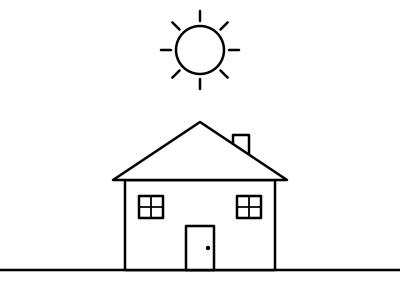
      The sun high in the sky over a house. Is it morning or midday?
      • morning
      • midday
    5. 5.
      At sunrise, is the sun low or high?
      • low
      • high
    6. 6.
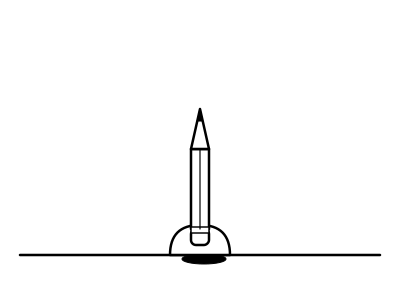
      A pencil standing in play dough with a very short shadow. When was this shadow traced?
      • morning
      • midday
    7. 7.
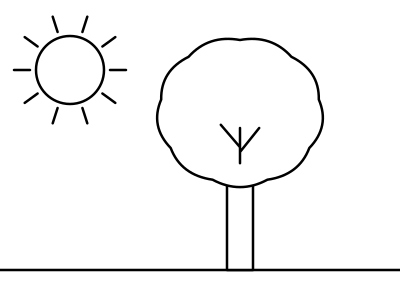
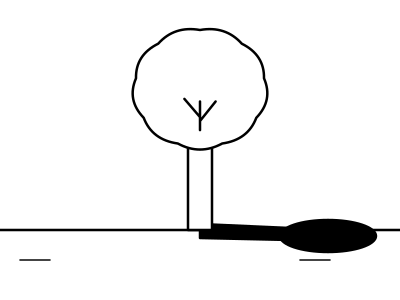
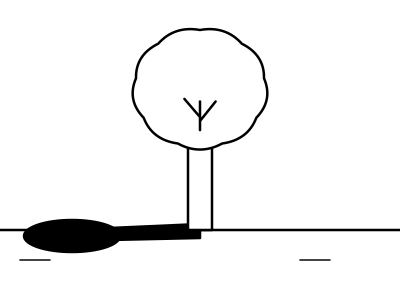
      A tree with the sun on the left. Circle the tree's shadow.
      • A shadow on the right side of the tree.
      • A shadow on the left side of the tree.