Math
No gaps, no overlaps
I can measure with no gaps and no overlaps.
Standards: 1.MD.A.2
- Number practice (no timer)
- Adding lengths: how many more clips?
- Builds on
- Day 1 (measuring with paper clips end to end). One-minute check: "When you measure, where does the first clip go?" (At the very end of the object)
New words
- gap: a space between two things
- overlap: when one thing lies on top of another
You need
- 25 paper clips, all the same size
- 30 linking cubes or same-size building bricks
- Objects to measure: a notebook, a spoon, a toothbrush, a sock and a crayon
- Notebook and pencil
- Paper clips, beans and cubes are small parts: keep them away from children under 3.
Warm-Up · 5 min
Fluency: adding lengths. "A spoon is 5 clips long. A fork is 1 clip longer. How long is the fork?" (6 clips) "A sock is 8 clips long and a shoe is 6. How many clips longer is the sock?" (2) Spaced review from Week 19: "10 less than 83?" (73)
Mini-Lesson · 10 min
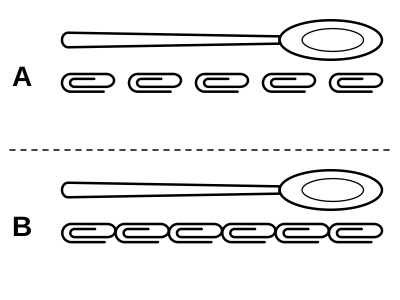
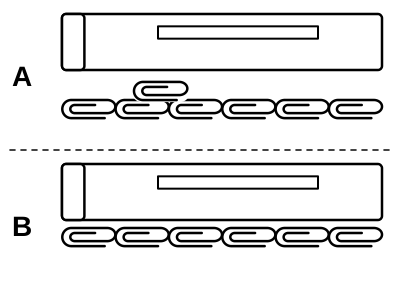
Say: "I am going to measure the notebook, and I will make mistakes on purpose. Catch me." Mistake 1: lay clips along the notebook with big spaces between them. Count them out loud. Ask: "Is that right?" (No. There are gaps.) Ask: "Are there too few or too many clips?" (Too few. The gaps are not counted.) Mistake 2: lay clips so they lie on top of each other. Ask: "What is wrong?" (They overlap.) "Too few or too many?" (Too many. Some length is counted twice.) Say: "The rule is no gaps, no overlaps." Your child measures the notebook the right way. Write: "The notebook is ___ paper clips long."
Guided Practice · 10 min
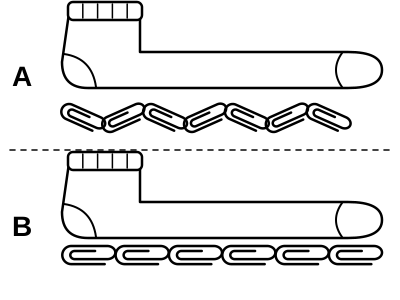
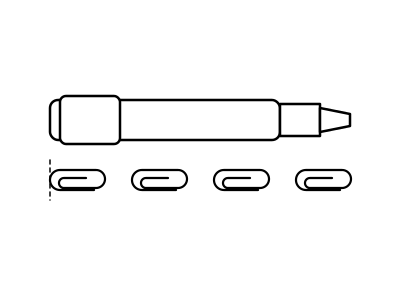
Fix My Measure. Set up each one for your child to fix and remeasure. 1) Clips along the spoon with 2 gaps. (Fix: push them together.) 2) Clips along the toothbrush with one clip on top of another. (Fix: take out the overlap.) 3) Clips along the sock in a crooked zigzag. (Fix: make a straight line along the sock.) 4) Clips along the crayon that start in the middle of it. (Fix: start at the end.) After each fix, your child counts and says the length. Answers vary. Look for: touching clips in a straight line from end to end. If stuck, say: "Run your finger along the clips. Do you feel any spaces or bumps?"
Play · 10 min
Cube Trains. Your child snaps cubes into a train as long as each object: the spoon, the toothbrush and the sock. Lay the train next to the object with the ends lined up and check that it is not too long or too short. Count the cubes and write: "The ___ is ___ cubes long." Then you make a train for one object and leave a gap in it on purpose (two cubes not snapped and spread apart). Your child finds the gap, fixes it and counts again.
Exit Ticket · 3-5 min
Before asking, draw a line on paper exactly as long as a train of 6 cubes (lay the train down and trace it). Read each question aloud. Your child answers out loud or with the cubes. Check each answer together right away.
Exit ticket
- I measured a pencil with clips and left spaces between them. Is my number too big or too small?
- What do overlaps do to a measure?
- Measure the line I drew with cubes. How long is it?
Answers
- Too small
- They make the number too big (some length is counted twice).
- 6 cubes
Watch for, and help or stretch
- Watch for
- Saying a measure with gaps is fine because the clips still reach the end.
- Try
- Push the clips together. Ask: "Do they still reach the end?" (No.) "So the spaces were hiding length."
- Extra help
- Fix one mistake at a time and measure only short things.
- Stretch
- Measure the notebook with clips and with cubes, and say both sentences. (Answers vary.) Ask: "Are both measures right?" (Yes, if there are no gaps or overlaps. They use different units.)
At home (optional): Your child measures a spoon with same-size crackers or coins, and tells a family member the rule: no gaps, no overlaps.
 The gaps are not counted.
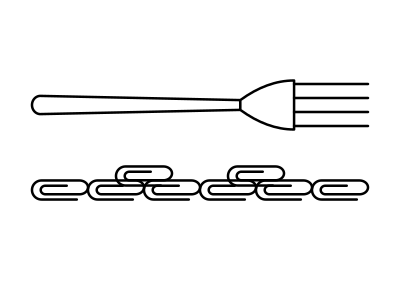 Some length is counted twice.
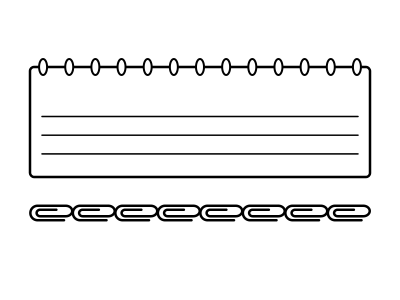 The notebook is ____ paper clips long.
 Is this side east or west?
 Is this side east or west?