1First Grade

    Same-size units

    Gather from sources

    Practice pages

    0 of 180 days complete · Saved on this device

    View all 180 days

    Math

    Same-size units

    I can explain why my units must all be the same size.

    Standards: 1.MD.A.2

    Number practice (no timer)
    Adding lengths: how many more clips?
    Builds on
    Days 1 and 2 (measuring end to end with no gaps and no overlaps). One-minute check: "What is wrong if the clips lie on top of each other?" (They overlap.)

    New words

    • same size: all exactly as big as each other
    • trust: believe something is right

    You need

    • 20 small paper clips and 15 large paper clips. If you have only one size, use 20 paper clips and 30 linking cubes as the two kinds of units.
    • A book and a placemat (or a cutting board)
    • Notebook and pencil
    • Paper clips, beans and cubes are small parts: keep them away from children under 3.
    1. Warm-Up · 5 min

      Fluency: adding lengths. "A book is 7 clips long. A placemat is 3 clips longer. How long is the placemat?" (10 clips) Spaced review from Week 22: "56 + 8?" (64)

    2. Mini-Lesson · 10 min

      Say: "Can we measure with any mix of things? Let us test it." Your child measures the book with only small clips. Write: "small clips only: ___." Then you measure the book again with a mix: some big clips and some small clips, end to end. Write: "mix: ___." Then your child measures it with a different mix, more big clips this time. Write: "mix 2: ___." Ask: "The book did not change. Did the numbers change?" (The two mixes gave different numbers.) Measure again with small clips only. Ask: "Did we get the same number as before?" (Yes.) Say: "When the units are all the same size, the number stays the same, so we can trust it. A mix gives a number we cannot trust."

    3. Guided Practice · 10 min

      Your child measures the placemat twice with small clips only, and checks that both counts match. Then twice with a mix of big and small clips that you hand over one at a time in a different order each time. Your child writes all 4 numbers and circles the ones we can trust. (The two small-clip counts match; the mixed counts may not.) Ask: "Which measure would you tell a friend?" (The small clips only.) Ask: "Could we measure with only the big clips instead?" (Yes. All the same size works too.) If stuck, say: "Look at the clips in the line. Are they all the same size? If not, we cannot count them as one unit."

    4. Play · 10 min

      Trust It or Not? You make 4 measuring lines along things in the room while your child closes their eyes: 1) the book with all small clips; 2) a spoon with 2 big and 2 small clips; 3) the short side of the placemat with all big clips; 4) a crayon with clips that have a gap. Your child opens their eyes, checks each line and says "Trust it" or "Do not trust it," and why. Answers: 1) Trust it. 2) Do not trust it: different sizes. 3) Trust it. 4) Do not trust it: a gap. Then your child sets up 2 lines for you to judge.

    5. Exit Ticket · 3-5 min

      Put the objects to one side but leave them on the table. Read each question aloud. Your child answers out loud, with objects or with a quick drawing. Check each answer together right away.

    Exit ticket

    1. Mia measured her shoe with 3 big clips and 4 small clips. She said it is 7 clips long. Is that a good measure? Why?
    2. Why should all the units be the same size?
    Answers
    1. No. The clips are not all the same size.
    2. Answers vary. Look for: so the number means the same thing each time and we can trust it.
    Watch for, and help or stretch
    Watch for
    Counting a big clip and a small clip as the same unit.
    Try
    Hold a big clip next to a small clip. Ask: "Are these the same size?" Only count units that match.
    Extra help
    Use two very different units (small clips and big cubes) so the mix is easy to see.
    Stretch
    Measure a spoon with small clips only. Then ask: "Your friend measured the same spoon and got a different number. What could have gone wrong?" (Answers vary: gaps, overlaps, a mix of sizes or not starting at the end.)

    At home (optional): Your child explains to a family member why we measure with same-size units, using spoons of two sizes to show it.
    Reading & Writing

    Gather from sources

    I can find facts in sources to answer our question.

    Standards: W.1.8, W.1.7, RI.1.1

    Phonics
    Two-syllable words with closed syllables (rabbit, napkin, picnic)
    Sight words
    name, good, man, say, great
    Reading
    Two original texts on the same topic: "The Moon" (a fact sheet) and "Moon Watch" (a child's journal)
    Writing
    Shared research: gathering facts from two sources to answer our question · Handwriting: fact cards
    Builds on
    The research question (Week 25) and the two moon texts (Day 1). One-minute check: your child reads the research question with you.

    New words

    • gather: to collect
    • fact card: a small card with one fact and its source

    You need

    • Printed "The Moon: A Fact Sheet" and "Moon Watch" (from Day 1)
    • 4 index cards for fact cards, and the two labeled source cards (from Day 1)
    • A word bank card you write, with a small drawing beside each word: moon, light, shape, Earth (you read moon and Earth aloud; your child copies them, not decodes them)
    • Sight word cards: name, good, man, say, great
    • Printed "The Night Picnic" (from Day 1)
    • The Question chart (from Week 25)
    1. Phonics & Word Work · 15 min

      Two-syllable words in sentences. I do: read "The insect hid in the cactus.", splitting insect and cactus. We do: "Max had a muffin at the picnic." You do: your child reads "A rabbit and a kitten sat on a blanket." and "The dentist had a magnet." and finds the two-syllable words. (rabbit, kitten, blanket; dentist, magnet) Dictation: kitten, cactus, sunset. If stuck, underline the vowels, split between the consonants and read each part.

    2. Sight Words · 5 min

      Review: name, good, man, say, great. Hide and Seek: hide the 5 cards; your child finds each, reads it and uses it in a sentence.

    3. Read-Aloud & Shared Reading · 15 min

      Say: "Researchers gather facts from sources. A fact card has one fact and tells where it came from." Reread the fact sheet. Ask: "Which fact helps answer why the moon looks different?" (Answers vary. Look for: the moon does not make its own light; sunlight shines on it; we see only the part that is lit and turned toward us.) Reread "Moon Watch". Ask: "Which fact from Moon Watch helps?" (Answers vary. Look for: the moon got fatter over the days, from a thin moon to a half moon to a full moon.) Ask: "Do the two sources agree?" (Yes: both show the moon's shape changing over the days.) If stuck, read one fact at a time and ask: "Does this help answer our question: yes or no?"

    4. Writing & Handwriting · 15 min

      Your child writes two fact cards, one from each source, in their own words. Model cards: "The moon is lit by the sun." and "It got big and round." Your child copies any word bank word they need and spells other words by sounds. Each card names its source. Handwriting (4 min): small, neat letters that fit the card.

    5. Exit Ticket · 5 min

      Oral answers.

    Exit ticket

    1. What is one fact you put on a fact card?
    2. Why do we write the source on each card?
    3. Read this: A kitten sat in the basket.
    Answers
    1. Answers vary. Look for: a true fact from one of the texts.
    2. So we know where the fact came from and can check it.
    3. A kitten sat in the basket.
    Watch for, and help or stretch
    Watch for
    Copying a whole paragraph instead of one short fact.
    Try
    Say: "One fact per card. Say it in your own words first, then write it."
    Extra help
    Your child says the facts; you write them; your child copies one card.
    Stretch
    Your child writes a third fact card from their own moon drawings.

    At home (optional): Your child reads the fact cards to a family member and tells which source each came from.

    Social Studies

    Prices at the store

    I can find and read prices on things at a store.

    Standards: D2.Eco.5.K-2

    Builds on
    Every choice has a cost (Day 1). One-minute check: ask "What do we call what you give up when you choose?" (the cost)

    New words

    • price: how much money something costs
    • cheap: costs a small amount of money
    • expensive: costs a lot of money

    You need

    • A grocery store flyer or ad (paper or on a screen), or a store visit with a grown-up
    • A crayon for circling
    • 4 coins: a penny, a nickel, a dime and a quarter
    • Notebook and pencil
    1. Warm-Up / Wonder · 5 min

      Spaced review: ask: "Name one cost of choosing the park instead of the library." (giving up the library) Wonder question: "How do we know how much something costs at a store?" Safety: coins and other small objects are a choking hazard for children under 3. Keep them away from little brothers and sisters, and coins never go in mouths.

    2. Explore · 10–15 min

      Look at the flyer or walk through a store aisle. Say: "A price tells how much money something costs. The dollar sign means dollars." Find 5 prices together. Read the dollars part with your child: "This box of cereal is 4 dollars and some cents." (Answers vary.) Ask: "Which of these 5 things costs the least? That one is the cheapest." Your child circles it. "Which costs the most? That one is the most expensive." Your child puts a star on it. Ask: "Why might something be more expensive?" (Answers vary: it is bigger, there is more of it, or it is harder to make.) Then look at the 4 coins. Say each name, and your child repeats it and tells one thing they notice. Penny: copper-colored and smooth on the edge. Nickel: silver-colored, bigger than a penny, smooth edge. Dime: the smallest coin, with tiny ridges on the edge. Quarter: the biggest of the four, with ridges on the edge. Say: "In November 2025, the U.S. Mint stopped making pennies for stores and banks to use. Pennies are still real money people can spend." Note for grown-ups: today we name the coins and read and compare prices. Counting coin values comes in Grade 2 math. If stuck finding the cheapest, cover all but 2 prices and ask: "Which number of dollars is smaller?"

    3. Talk & Record · 5–10 min

      Your child draws the cheapest and the most expensive item and writes their prices. Sentence frame: "The ___ costs more than the ___."

    4. Exit Ticket · 3–5 min

      Ask the three questions aloud. Your child answers by talking or drawing.

    Exit ticket

    1. Which costs more: a ball for 7 dollars or a book for 4 dollars?
    2. Which coin is the smallest?
    3. Where can you find the price of something at a store?
    Answers
    1. The ball (7 dollars).
    2. The dime.
    3. Answers vary. Look for: on a tag or sticker, on the shelf sign, or in a flyer.
    Watch for, and help or stretch
    Watch for
    Thinking the bigger coin is always worth more (the nickel looks bigger than the dime).
    Try
    Say: "Coin size does not tell us how much it is worth. We will learn coin values in second grade. Today we just learn their names."
    Extra help
    Compare 3 prices in whole dollars only and name 2 coins.
    Stretch
    Your child finds the price of the same item at 2 stores or in 2 flyers and tells which is cheaper.

    At home (optional): At a store, your child finds one price tag and reads the dollars to a grown-up.

    Practice

    Read each direction aloud. Your child works on the page; answers are in the grown-up view.

    Warm-up

    Remember?

    Math

    1. 23 + 5 = ?
    2. What is 10 less than 19?

    Reading & Writing

    1. year, back, most
    2. The girl has a bird with soft fur.

    Math · Week 26 Day 3

    I can explain why my units must all be the same size.

    Look: same-size units

    1. Measure a book with small clips only: 8 small clips.
    2. Measure it again with a mix of big and small clips: the number changes.
    3. Use units that are all the same size so we can trust the number.

    Circle the picture that uses units all the same size.

    1. 1.
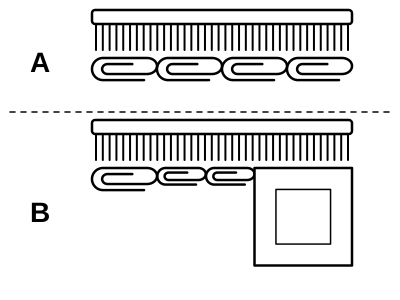
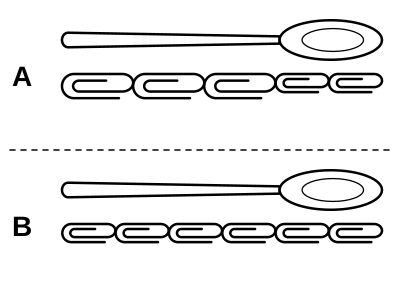
      Picture A: 3 big clips and 2 small clips under a spoon; picture B: 6 small clips under the same spoon.
      • A
      • B
    2. 2.
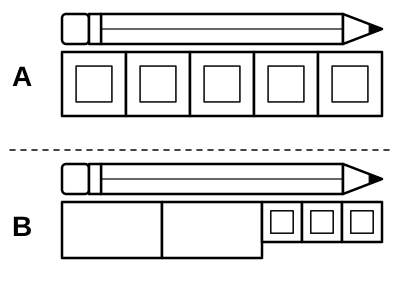
      Picture A: 5 same-size cubes under a pencil; picture B: 2 big blocks and 3 small cubes under the same pencil.
      • A
      • B
    3. 3.
      Picture A: 4 big clips under a comb; picture B: 1 big clip, 2 small clips and 1 cube under the same comb.
      • A
      • B

    Look at the pictures of the same book to write or circle.

    1. 4.
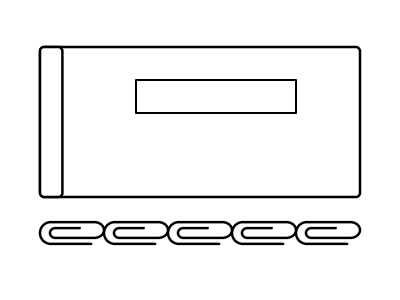
      A book with 5 big paper clips under it, end to end. How many big clips? ____
    2. 5.
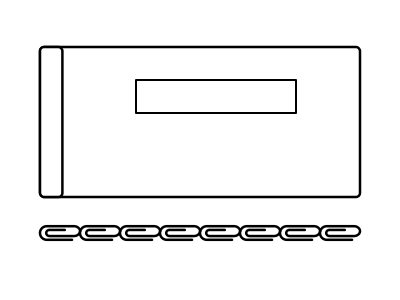
      The same book with 8 small paper clips under it, end to end. How many small clips? ____
    3. 6.
      Bo measured a cup with 2 big clips and 4 small clips. He says it is 6 clips tall. Can we trust his number?
      • yes
      • no

    Challenge (optional)

    Why do more small clips than big clips fit along the same book?

    You need: Pencil

    Reading & Writing · Week 26 Day 3

    I can find facts in sources to answer our question.

    Look: facts from a source

    1. Our question: What can a frog do?
    2. Read the source. Find a fact that answers the question.
    3. Write the fact on a card and write where it came from.

    Frogs

    A frog can jump far. It has long legs. A frog can swim in a pond. It can snap up a bug fast.

    Our question is: What can a frog do? Does the line help answer it? Circle yes or no.

    1. 1.
      A frog can jump far.
      • yes
      • no
    2. 2.
      The pond is wet.
      • yes
      • no
    3. 3.
      A frog can swim.
      • yes
      • no
    4. 4.
      Kim has a red hat.
      • yes
      • no

    Make a fact card. Write a fact from Frogs. Then write where it came from.

    1. 5.
      A frog can ____.
    2. 6.
      It has ____.
    3. 7.
      I got it from: ____

    Challenge (optional)

    A frog can not ____.

    Social Studies · Week 26 Day 3

    I can find and read prices on things at a store.

    Look: reading prices

    1. A price tells how much money something costs. The dollar sign means dollars.
    2. Compare prices: the bigger number of dollars costs more.
    3. The one that costs the least is the cheapest. The one that costs the most is the most expensive.

    Listen to the prices. Your child circles the answer.

    1. 1.
      A cap costs 5 dollars. A hat costs 8 dollars. Which costs more?
      • cap
      • hat
    2. 2.
      Milk costs 4 dollars. Jam costs 2 dollars. Which costs less?
      • milk
      • jam
    3. 3.
      A pen costs 1 dollar. A backpack costs 9 dollars. Which is more expensive?
      • pen
      • backpack
    4. 4.
      A sock costs 2 dollars, a mitten costs 6 dollars and a hat costs 7 dollars. Which is the cheapest?
      • sock
      • mitten
      • hat

    Use the 4 coins. Write what your child says.

    1. 5.
      Which coin is the biggest of the four?
    2. 6.
      Which coin is copper-colored?
    3. 7.
      Which silver-colored coin has a smooth edge?
    4. 8.
      Why might a big box of cereal cost more than a small box?

    Challenge (optional)

    Find 2 prices in a store flyer. Which costs more?

    You need: a penny, a nickel, a dime and a quarter (keep coins away from children under 3)