This week's lessons
Math and reading every day; science and social studies take turns
- Day 1 · Monday
- MathMeasure with paper clipsI can measure with paper clips in a line.
- Reading & WritingTwo texts, one topicI can tell how two texts about the same topic are alike and different.
- Social StudiesEvery choice has a costI can tell what I get and what I give up when I make a choice.
- Day 2 · Tuesday
- MathNo gaps, no overlapsI can measure with no gaps and no overlaps.
- Reading & WritingSplitting long wordsI can read two-syllable words by breaking them into parts.
- ScienceSunrise and sunsetI can observe where the sun rises and where it sets from the same spot.
- Day 3 · Wednesday
- MathSame-size unitsI can explain why my units must all be the same size.
- Reading & WritingGather from sourcesI can find facts in sources to answer our question.
- Social StudiesPrices at the storeI can find and read prices on things at a store.
- Day 4 · Thursday
- MathCompare measurementsI can measure two things and tell how many units longer.
- Reading & WritingTwo ways to show the moonI can compare how two texts show the same information.
- Science · CheckSun pattern checkI can describe the sun's daily pattern.
- Day 5 · Friday
- Math · CheckLesson + weekly check: measuring lengthI can measure length with same-size units.
- Reading & Writing · CheckShare and check: two-syllable wordsI can read two-syllable words and compare two texts.
- Social Studies · CheckPretend storeI can shop at a pretend store and choose what to buy.
This week's checks
Short checks on the last day each subject meets this week
Science · Day 4
- I can observe where the sun rises and where it sets from the same spot.
- I can describe the sun's daily pattern.
Secure when: 6 of 8 correct, including item 2 (the pattern in order) and item 3 (rises in the east tomorrow).
Open the checkMath · Day 5
- I can measure length with same-size units, with no gaps and no overlaps.
- I can explain the measuring rules.
- I can tell how many units longer one thing is.
Secure when: 5 or 6 of the 6 items right.
Open the checkReading & Writing · Day 5
- I can read two-syllable words and compare two texts.
- I can find facts in a source.
- I can split a word into two parts.
Secure when: 8 of 10 words in items 1-2, 4 of 5 sight words, one true way alike and one true difference in item 4, and 4 of 5 on items 5-9.
Open the checkSocial Studies · Day 5
- I can tell what I get and what I give up when I make a choice.
- I can find and read prices on things at a store.
- I can shop at a pretend store and choose what to buy.
Secure when: 6 of 8 correct, with at least one right on each goal
Open the check
Reading About Our World: Coins We Use
Read it aloud. Your child reads the sentences marked with a star. Builds social studies knowledge.
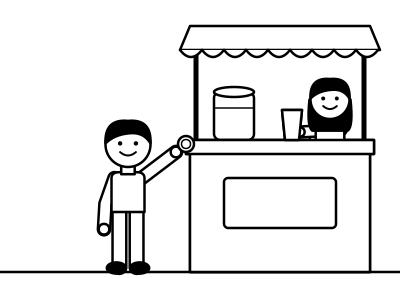
Prices
Everything in a store has a price. The price tells how much money it costs.
Four Coins
We use four common coins. A penny is worth 1 cent. A nickel is worth 5 cents. A dime is worth 10 cents. A quarter is worth 25 cents. The dime is the smallest, but it is worth more than a penny or a nickel. In November 2025, the U.S. Mint stopped making new pennies for stores and banks. Pennies are still real money people can spend.
Faces on Coins
Most of our coins show a President. The penny shows Abraham Lincoln. Most quarters show George Washington, our first President. I can get a cup with a coin.
Words to know
- price: how much money something costs
- coin: a small, flat, round piece of money
- cent: a small amount of money; 100 cents make a dollar
Talk about it
- How much is a dime worth?
- Who is on the penny?
- A nickel is bigger than a dime. Does bigger always mean worth more? How do you know?
Home Connection
Five-minute ideas for the whole family, with things you already have
Math
We measure length by laying same-size units end to end, with no gaps and no overlaps.
Do: Measure a book, a spoon and a pillow with paper clips (or same-size crayons) laid end to end.
Talk: Why must the paper clips touch, with no gaps?
Reading & Writing
We can learn about one topic from two different texts.
Do: Read two books, or a book and a short video, about the same topic. Write rabbit, napkin, picnic and basket for your child to read.
Talk: What did both texts say? What was different?
Science
The sun rises in the east and sets in the west.
Do: From a window, notice where the sun comes up in the morning and where it goes down in the evening. Never look right at the sun.
Talk: Does the sun come up and go down on the same side of the sky?
Social Studies
Every choice has a cost: when we choose one thing, we give up another.
Do: Pretend you have $10 to spend. Look at prices in an ad and choose between two things.
Talk: What did you give up when you made your choice?
This week's words: name, good, man, say, great
Celebrate a careful measurement, two texts compared and a smart choice.
Math catch-up: No Gaps, No Overlaps
10 minutes, if this week's math check was not secure · 1.MD.A.2
Children often leave spaces between paper clips, start partway along the object, or mix sizes. Sliding the units together and checking that they all match makes the count true.
You need: 20 same-size paper clips, 3 bigger paper clips, a book, a spoon and a pencil
- Lay clips along the pencil with spaces between them. Ask: "Is this a fair measure?" Slide the clips together, touching, from the very end. Count again.
- Your child measures the spoon: first clip at the very end, each clip touching the last, no clip lying on top of another.
- Swap 2 clips for big clips. Ask: "Are all the units the same size now?" (No.) Put back the same-size clips.
- Measure the book and the spoon. Ask: "How many clips longer is the book?" Line up both rows and count only the extra clips.
Try again
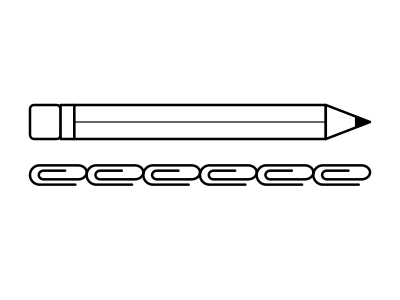 How long is the pencil?
- A shoe is 8 clips long. A cup is 3 clips long. How many clips longer is the shoe?
- Sam used 3 big clips and 2 small clips and said the shoe is 5 clips long. Is that a good measure? Tell why.
Specials This Week
Weeks 25–30 unit • ~90 min/week per subject
Fitness Components (Cardiovascular & Strength)
Understanding what makes the heart beat faster, engaging in activities that build cardiovascular endurance and muscular strength.
Art from Around the World
Exploring art forms from different cultures (e.g., African masks, Native American pottery, Japanese origami, Aboriginal dot painting).
Music and Movement/Cultural Music
Moving creatively to music, exploring dance from different cultures, listening to music from around the world.
For guiding principles and full standards reference, visit How to use this curriculum
As an Amazon Associate, we earn from qualifying purchases. Book and supply links on this page are affiliate links — using them supports this curriculum at no extra cost to you.