1First Grade

    Compare measurements

    Two ways to show the moon

    Practice pages

    0 of 180 days complete · Saved on this device

    View all 180 days

    Math

    Compare measurements

    I can measure two things and tell how many units longer.

    Standards: 1.MD.A.2, 1.OA.A.1

    Number practice (no timer)
    Adding lengths: how many more clips?
    Builds on
    Days 1 to 3 (measuring with same-size units) and Week 3 comparing stories (how many more?). One-minute check: "A pencil is 7 clips long. A crayon is 4 clips long. Which is longer?" (The pencil)

    New words

    • how much longer: the difference between two lengths

    You need

    • 40 linking cubes or same-size building bricks, enough for two trains of up to 20
    • Household objects shorter than 20 cubes: a spoon, a crayon, a toothbrush, a sock, a toy car and a marker
    • Notebook and pencil
    • Paper clips, beans and cubes are small parts: keep them away from children under 3.
    1. Warm-Up · 5 min

      Fluency: adding lengths. "A rope is 6 cubes long. Another rope is 4 cubes long. How many cubes in all if you put them end to end?" (10) Spaced review from Week 23: "90 - 50?" (40)

    2. Mini-Lesson · 10 min

      Say: "Today we measure two things and find how much longer one is." Your child builds a cube train as long as the spoon and a train as long as the crayon. Count each. Use the example numbers from your home; here we say the spoon is 8 cubes and the crayon is 4 cubes. Line up the two trains side by side with the ends together. Ask: "How many cubes stick out past the crayon train?" (4) Say: "The spoon is 4 cubes longer than the crayon." Write: 8 - 4 = 4, and also 4 + ? = 8. Ask: "How many cubes shorter is the crayon?" (4. Same difference.)

    3. Guided Practice · 10 min

      Read each problem. Your child builds both trains, lines them up and answers. 1) "A pencil is 9 cubes long. A marker is 6 cubes long. How many cubes longer is the pencil?" (3) 2) "A sock is 13 cubes long. A toothbrush is 10 cubes long. How many cubes shorter is the toothbrush?" (3) 3) "A ribbon is 5 cubes longer than a crayon. The crayon is 4 cubes long. How long is the ribbon?" (9 cubes) 4) "A belt is 15 cubes long. A scarf is 6 cubes shorter than the belt. How long is the scarf?" (9 cubes) If stuck, say: "Build both trains and line up the ends. Count only the cubes that stick out."

    4. Play · 10 min

      Longer by How Much? Each player picks a household object from the pile without showing it and builds a cube train as long as it. Line up the two trains. The player with the longer object scores the difference: if the trains are 12 and 7 cubes, the longer one scores 5 points. Say the equation: 12 - 7 = 5. Take apart the trains and play 5 rounds with new objects. Keep a running score in the notebook with tally marks.

    5. Exit Ticket · 3-5 min

      Put the objects to one side but leave them on the table. Read each question aloud. Your child answers out loud, with objects or with a quick drawing. Check each answer together right away.

    Exit ticket

    1. A ribbon is 11 cubes long. A string is 7 cubes long. How many cubes longer is the ribbon?
    2. A worm is 3 cubes long. A snake is 8 cubes longer than the worm. How long is the snake?
    Answers
    1. 4 cubes (11 - 7 = 4)
    2. 11 cubes (3 + 8 = 11)
    Watch for, and help or stretch
    Watch for
    Adding the two lengths when the question asks how much longer.
    Try
    Line up the trains. Point to the extra part. Say: "How much longer means only this part."
    Extra help
    Build every problem with the cube trains and count the extra cubes one by one.
    Stretch
    Ask: "The spoon and fork together are 17 cubes long. The spoon is 8 cubes. How long is the fork?" (9 cubes)

    At home (optional): Your child measures two family members' shoes with same-size blocks or crackers and tells how many units longer one is.
    Reading & Writing

    Two ways to show the moon

    I can compare how two texts show the same information.

    Standards: RI.1.9, RI.1.7, SL.1.5

    Phonics
    Two-syllable words with closed syllables (rabbit, napkin, picnic)
    Sight words
    name, good, man, say, great
    Reading
    Two original texts on the same topic: "The Moon" (a fact sheet) and "Moon Watch" (a child's journal)
    Writing
    Shared research: gathering facts from two sources to answer our question · Handwriting: fact cards
    Builds on
    Comparing the two moon texts (Day 1). One-minute check: your child tells one difference between the fact sheet and the journal.

    New words

    • diagram: a drawing with labels that shows how something looks or works
    • label: a word that names part of a picture

    You need

    • Printed "The Moon: A Fact Sheet" with its diagram, and "Moon Watch" (from Day 1)
    • A large sheet of paper divided into 4 boxes for a moon chart
    • A word bank card you write: new moon, crescent, half moon, full moon
    • Sight word cards: name, good, man, say, great (two sets: 10 cards for Memory Match)
    • Printed "The Night Picnic" (from Day 1)
    • Crayons (one dark color and one yellow)
    1. Phonics & Word Work · 15 min

      Two-syllable word sort. I do: read sunset (a compound word) and rabbit (not a compound: rab and bit are not words that mean anything here). We do: sort bathtub, kitten, hilltop, muffin into compound and not compound. You do: your child reads and sorts napkin, catfish, insect, sandbox, picnic, backpack. (Compound: bathtub, hilltop, catfish, sandbox, backpack. Not compound: kitten, muffin, napkin, insect, picnic.) Dictation: catfish, napkin, dentist. If stuck, split the word and ask: "Are both parts real words that make sense together?"

    2. Sight Words · 5 min

      Review: name, good, man, say, great. Memory Match with 10 cards: turn two over and read both. A match is kept.

    3. Read-Aloud & Shared Reading · 15 min

      Say: "Authors can show the same information in different ways." Put the diagram and the journal side by side. Ask: "How does the fact sheet show the moon's shapes?" (With a diagram: four circles in a row with labels.) Ask: "How does Moon Watch show them?" (With drawings for each day and sentences about what the child saw.) Ask: "Which way helps you see all the shapes at once? Which helps you know when to look?" (The diagram shows all the shapes at once; the journal tells which day each shape was seen.) If stuck, cover one text and ask: "What can you learn from just this one?" Then your child reads "The Night Picnic" once with expression.

    4. Writing & Handwriting · 15 min

      Your child makes a moon chart, using the best of both texts: draw a moon shape in each box (new moon, crescent, half moon, full moon), color the lit part yellow, and copy a label for each from the word bank. Your child adds a day number from the journal under three of the shapes (crescent: Day 1, half moon: Day 8, full moon: Day 15). Say: "Your chart is like a diagram, with days like a journal." Handwriting (4 min): labels are short and neat and go right under the picture.

    5. Exit Ticket · 5 min

      Oral answers.

    Exit ticket

    1. What is a diagram?
    2. How does your chart help someone understand the moon's shapes?
    3. Is hilltop a compound word? How do you know?
    Answers
    1. A drawing with labels that shows how something looks or works.
    2. Answers vary. Look for: it shows the shapes in order with labels.
    3. Yes: hill and top are two real words joined together.
    Watch for, and help or stretch
    Watch for
    Drawing the dark part of the moon as missing, so the moon looks broken.
    Try
    Say: "The moon is always a whole ball. Draw the whole circle, then color only the part that is lit."
    Extra help
    Draw two shapes today: crescent and full moon.
    Stretch
    Your child adds an arrow from each shape to the next and tells the order aloud.

    At home (optional): Your child shows the moon chart to a family member and explains one shape.

    ScienceWeekly check

    Sun pattern check

    I can describe the sun's daily pattern.

    Standards: 1-ESS1-1

    Builds on
    Sunrise and sunset watches (Day 2). One-minute check: ask "Where does the sun come up?" (in the east)

    New words

    • predict: to tell what you think will happen, using what you know

    You need

    • Sky Journal with the sunrise and sunset drawings
    • 4 sequence cards (sunrise, morning, midday, sunset)
    • Window arrows from Day 2
    • Week 26 science check page (given separately)
    • Pencil
    1. Warm-Up / Wonder · 5 min

      Spaced review: ask: "When are shadows longest?" (in the morning and late afternoon, when the sun is low) Wonder question: "If we know the sun's pattern, can we tell what it will do tomorrow?" Safety: never look straight at the sun, even for a moment. Sunglasses do not make it safe. To find the sun, stand with your back to it and look at your shadow, or hold your hand up so it blocks the sun, and look at your hand.

    2. Review Game · 10 min

      Play "Sun Day Story." Mix the 4 sequence cards. Your child puts them in order and tells the sun's day like a story: "First the sun rises in the east. Next it is low in the morning. Then it is high at midday. Last it sets in the west." Then flip it: you put the cards in the wrong order and your child fixes them and tells what was wrong. Look at the Sky Journal drawings. Ask: "Did the sun rise where you predicted?" (Answers vary.) "Did it set where you predicted?" (Answers vary.) Say: "When something happens the same way again and again, it is a pattern, and patterns help us predict." If stuck, stand by the window arrows and act it out with the Sun Stretch from last week.

    3. Check · 10 min

      Give the Week 26 science check. The check items are on the Week 26 check page; do not show them ahead of time. Read each part aloud. Your child answers by talking, pointing, showing with the real materials or drawing. You write down their words exactly. It is not timed; stop and finish later if your child is tired. Make a check mark next to each part your child shows on their own. The printed check has 8 items. It covers these goals: (1) I can observe where the sun rises and where it sets from the same spot; (2) I can describe the sun's daily pattern. This week the check is an oral describe-and-predict task. Look for: the sun's daily pattern told in order (rises in the east, high at midday, sets in the west) and a prediction that tomorrow the sun will rise in the east again. If stuck on a part, lay out the sequence cards and let your child point and tell. Secure: 6 of 8 correct, including item 2 (the pattern in order) and item 3 (rises in the east tomorrow). If the check is not yet secure, use the reteach step on the check page that matches the items missed.

    4. Exit Ticket · 3–5 min

      Ask the three questions aloud. Your child answers by talking or drawing.

    Exit ticket

    1. Is the sun's pattern different on Saturday than on Monday?
    2. The sky is getting light on the east side. What is about to happen?
    3. What comes right after sunset?
    Answers
    1. No. It rises, is high at midday and sets every day.
    2. The sun is about to come up (sunrise).
    3. It gets dark; night comes.
    Watch for, and help or stretch
    Watch for
    Mixing up rise and set.
    Try
    Say: "Rise is up, like rising from bed in the morning. Set is down, like setting a cup down." Act each one out.
    Extra help
    Use 3 cards only and let your child point instead of telling.
    Stretch
    Your child predicts where the sun will be at 10 o'clock and at 4 o'clock and tells how they know.

    At home (optional): Your child tells a family member the sun's daily pattern and predicts what it will do tomorrow.

    Practice

    Read each direction aloud. Your child works on the page; answers are in the grown-up view.

    Warm-up

    Remember?

    Math

    1. 90 - 50 = ? Think: 9 tens take away 5 tens.
    2. 2 + 9 + 8 = ? Find two numbers that make 10 first.

    Reading & Writing

    1. clay, beach, snow, boy
    2. bunk, rang, think

    Math · Week 26 Day 4

    I can measure two things and tell how many units longer.

    Look: a belt and a sock

    1. A belt is 12 cubes long. A sock is 7 cubes long.
    2. Line up the two cube trains. Count the cubes that stick out past the sock: 5.
    3. 12 - 7 = 5. The belt is 5 cubes longer than the sock.

    Listen to each problem and write the answer.

    1. 1.
      Fork: 8 cubes. Spoon: 6 cubes. The fork is ____ cubes longer than the spoon.
    2. 2.
      Rope: 14 cubes. String: 9 cubes. The string is ____ cubes shorter than the rope.
    3. 3.
      A stick is 4 cubes longer than a twig. The twig is 7 cubes long. How long is the stick? ____
    4. 4.
      A slide is 16 cubes long. A step is 9 cubes shorter than the slide. How long is the step? ____

    Look at the cube trains.

    1. 5.
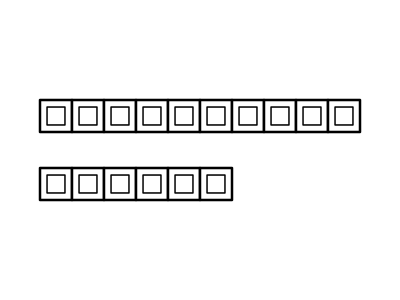
      Two cube trains with left ends lined up: the top train has 10 cubes and the bottom train has 6 cubes. How many cubes stick out? ____
    2. 6.
      The same two cube trains. Circle the equation that matches.
      • 10 - 6 = 4
      • 10 + 6 = 16
      • 6 - 4 = 2
    3. 7.
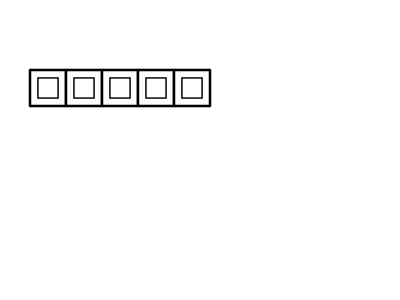
      A train of 5 cubes. Draw a train that is 3 cubes longer. Line up the ends.
    Challenge (optional)

    A worm is 5 cubes long. A snake is 9 cubes longer than the worm. A rope is 2 cubes shorter than the snake. How long is the rope?

    You need: Pencil, Cubes (optional, to build the trains), Paper clips and cubes are small parts: keep them away from children under 3.

    Reading & Writing · Week 26 Day 4

    I can compare how two texts show the same information.

    Look: two ways to show the same thing

    1. A diagram is a picture with names on the parts. It shows all the parts at once.
    2. A log tells what a kid saw, day by day.
    3. Both can tell about the same plant, in two ways.

    Plant Log by Kit

    Day 1: I put a seed in a pot. Day 3: A little stem is up! Day 6: The stem is big, and it has a bud.

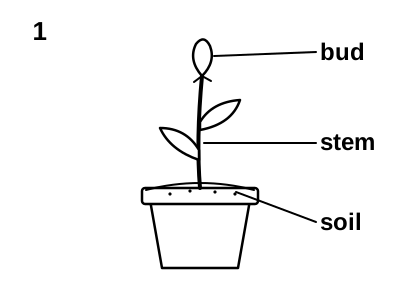
    Look at the diagram and read the log. Which one does it? Circle 1 for the diagram or 2 for the log.

    1. 1.
      1 a diagram of a plant in a pot with labels: stem, bud, soil. It shows the parts of a plant with names.
      • 1
      • 2
    2. 2.
      It tells what Kit did on each day.
      • 1
      • 2
    3. 3.
      It says: I put a seed in a pot.
      • 1
      • 2

    Is it a compound word? If yes, write the two small words. If no, write no.

    1. 4.
      sunlit
    2. 5.
      cactus
    3. 6.
      bathmat
    4. 7.
      muffin

    Challenge (optional)

    Day 9: ____.

    Science · Week 26 check

    Weekly check

    How to give it: Read every direction, question and choice aloud. It is not timed; stop and finish later if your child is tired. Your child answers by talking, pointing, showing with the real materials or drawing, and you write their words exactly. Have the Sky Journal, the 4 sequence cards and the window arrows. Never look straight at the sun, even at sunrise or sunset.

    Secure when: 6 of 8 correct, including item 2 (the pattern in order) and item 3 (rises in the east tomorrow).

    • I can observe where the sun rises and where it sets from the same spot.
    • I can describe the sun's daily pattern.
    1. 1.
      Put the 4 sequence cards in order. Make a mark when they are in order.
    2. 2.
      Tell the sun's daily pattern in order. Your grown-up writes it.
    3. 3.
      Predict: where will the sun come up tomorrow? Your grown-up writes it.
    4. 4.
      Circle the side where the sun comes up.
      • east
      • west
    5. 5.
      Circle the side where the sun goes down.
      • east
      • west
    6. 6.
      At midday, is the sun low or high?
      • low
      • high
    7. 7.
      The sky glows orange and the sun goes down behind the hills. Is this sunrise or sunset?
      • sunrise
      • sunset
    8. 8.
      Does the sun follow the same pattern every day?
      • yes
      • no