1First Grade

    Time to the half hour

    Words with -s and -es

    Practice pages

    0 of 180 days complete · Saved on this device

    View all 180 days

    Math

    Time to the half hour

    I can tell time to the half hour.

    Standards: 1.MD.B.3

    Number practice (no timer)
    Make 10 with clock numbers (keep-up practice)
    Builds on
    Week 27 (time to the hour on clocks with hands and on digital clocks). One-minute check: set the paper clock to 4:00. "What time is it? How do we write it?" (4 o'clock, 4:00)

    New words

    • half past: 30 minutes after the hour; the long hand points to 6
    • half hour: half of an hour; the time it takes the long hand to go halfway around the clock
    • minute: a short bit of time; there are 30 minutes in half an hour

    You need

    • The paper plate clock from Week 27
    • A real clock with hands, or a printed picture of one
    • Notebook and pencil
    • The paper fastener on the clock is a small part: keep it away from children under 3.
    1. Warm-Up · 5 min

      Fluency: make 10 with clock numbers. Point to 4 on the paper clock. "What clock number makes 10 with 4?" (6) Point to 7. (3) Point to 5. (5) Spaced review from Week 8: "8 + 8?" (16) "8 + 9?" (17, a near double)

    2. Mini-Lesson · 10 min

      Set the paper clock to 2:00. Say: "It is 2 o'clock. The long hand is on 12. Watch the long hand." Slowly move the long hand the way the numbers count up, from 12 to 6. Say: "In one hour, the long hand goes all the way around, back to 12. Now it has gone only halfway around. Half of an hour has gone by. We call this half past 2." As you move the long hand, nudge the short hand a little too, so it ends halfway between 2 and 3. On a paper clock you must move the short hand yourself. Say: "The short hand moves slowly. At half past 2 it is halfway between 2 and 3. It has not reached 3 yet, so the hour is still 2." Write 2:30 in the notebook. Say: "A digital clock shows half past 2 like this: 2, two dots, 30. Thirty minutes is half an hour." Ask: "Which number is the long hand on?" (6) "Which two numbers is the short hand between?" (2 and 3) "Which hour do we say?" (2, the number it just passed)

    3. Guided Practice · 10 min

      You set the paper clock. Your child says the time two ways (half past ___ and the digital way) and writes it. 1) 4:30 2) 9:30 3) 1:30 4) 12:30 (the short hand is halfway between 12 and 1, so it is half past 12) Then your child sets the clock for times you say: 5) half past 7 (short hand halfway between 7 and 8, long hand on 6) 6) half past 3 (short hand halfway between 3 and 4, long hand on 6) If stuck, say: "Look at the long hand first. Is it on 6? Then it is half past. Which number did the short hand just pass? That is the hour."

    4. Play · 10 min

      Spot the Mix-Up. You set the clock and say a time. Some are right and some are mix-ups. Your child says "Right!" or "Mix-up!" and fixes each mix-up. 1) Say "half past 8": short hand halfway between 8 and 9, long hand on 6. (Right) 2) Say "5:30": short hand pointing straight at 5, long hand on 6. (Mix-up. The short hand goes halfway between 5 and 6.) 3) Say "half past 10": short hand halfway between 10 and 11, long hand on 12. (Mix-up. The long hand goes on 6.) 4) Say "half past 4": short hand halfway between 3 and 4, long hand on 6. (Mix-up. That shows half past 3. The short hand goes halfway between 4 and 5.) 5) Say "2:30": short hand halfway between 2 and 3, long hand on 6. (Right) Then swap: your child sets 3 times and makes one mix-up on purpose for you to catch.

    5. Exit Ticket · 3-5 min

      Before asking, set the paper clock to 11:30. Read each question aloud. Your child answers out loud, with the clock or with a quick drawing. Check each answer together right away.

    Exit ticket

    1. What time does my clock show? Say it two ways.
    2. Draw a circle with 12, 3, 6 and 9. Draw the hands for 6:30.
    3. At a half-hour time, which number does the long hand point to?
    Answers
    1. Half past 11, or 11:30.
    2. Look for: a short hand halfway between 6 and 7 and a long hand pointing to 6.
    3. 6
    Watch for, and help or stretch
    Watch for
    Reading the hour as the next number, such as calling 2:30 "3:30" because the short hand is close to 3.
    Try
    Ask: "Which number did the short hand just pass? Has it reached 3 yet?" Move the hands from 2:00 to 2:30 again, slowly, while your child watches the short hand.
    Extra help
    Set the long hand on 6 for your child every time, so only the short hand has to be read or placed. Say "halfway" and put a finger on each of the two numbers.
    Stretch
    Ask: "It is 4:00. The long hand goes halfway around the clock. What time is it now?" (4:30, half past 4) "It is 9:00. The long hand goes halfway around. What time is it now?" (9:30)

    At home (optional): At one half-hour time today (such as 4:30 or 7:30), your child looks at a clock with hands and tells a family member the time two ways: "half past 4" and "4:30."
    Reading & Writing

    Words with -s and -es

    I can read words that end in -s and -es.

    Standards: RF.1.3.f, L.1.4.c, RF.1.3.g

    Phonics
    Inflectional endings -s and -es (cats, hops, wishes, boxes)
    Sight words
    too, mean, same, tell, boy
    Reading
    The Tiny Seed (Eric Carle), optional; original story "Pip the Seed"; original decodable text "A Bean Grows"
    Writing
    Shared research: new question 'What do plants need?' · Handwriting: labels and captions
    Builds on
    Plural -s (Week 19) and the prefix un- (Week 27). One-minute check: your child reads cats and dogs and tells what the s means (more than one).

    New words

    • ending: letters added to the end of a word, like -s or -es
    • root word: the main word inside a longer word, like wish in wishes
    • sprout: to start to grow: a seed sprouts when a tiny root and stem come out

    You need

    • Ending cards (index cards): -s and -es
    • Word cards (index cards): cat, hop, wish, box, dish, fox, bench, glass, mix, lunch, cup, pin
    • Sight word cards: too, mean, same, tell, boy (5 index cards)
    • Printed "A Bean Grows" (in the lesson)
    • Printed "Pip the Seed" (in the lesson), and The Tiny Seed by Eric Carle if you have it (optional)
    • A research page: a sheet of paper for our question
    • Lined handwriting paper, a pencil and crayons
    1. Phonics & Word Work · 15 min

      I do: lay down the card cat, then put the -s card after it. Say: "cat, cats. -s means more than one." Lay down wish and try -s: "wishs? That is hard to say. When a word ends in s, x, sh, ch or z, we add -es. -es adds a beat." Clap: wish (one clap), wish-es (two claps). Then hop, hops: "-s can also go on an action word: The frog hops." We do: add the right ending to box, dish and fox together and clap each one (boxes, dishes, foxes: two claps each). You do: your child adds -s or -es to bench, glass, mix, lunch, cup and pin and reads each one (benches, glasses, mixes, lunches, cups, pins). Then your child points to the root word in each and covers the ending with a finger (bench, glass, mix, lunch, cup, pin). Read: "The fox naps in the box." "The foxes nap in the boxes." Dictation: say each word; your child says the root, then the ending, and writes it: cups, wishes, boxes, fixes. If stuck, cover the ending, read the root word, then uncover the ending and add it: "wish... wish-es."

    2. Sight Words · 5 min

      Introduce this week's words with see-say-spell-write. For each card: Say: "This word is ___. Say it with me." Your child reads it, spells it aloud while tapping each letter, writes it once while saying each letter, and reads it again. Draw a small heart over any part we must learn by heart: too (t is regular; oo says /oo/ as in zoo: heart over oo); mean (ea says /ee/ as in seat, so it is regular); same (a_e, regular); tell (regular: ll makes one /l/); boy (oy says /oi/, regular). Finish by reading all five cards in mixed order twice. If stuck, cover the tricky part, read the rest together, then uncover it and say the whole word.

    3. Read-Aloud & Shared Reading · 15 min

      Say: "This week we learn how a seed grows into a plant." Read "Pip the Seed" aloud (or read The Tiny Seed if you have it; the questions work for any story about a seed's trip). Pip the Seed (an original story; you read it) Pip was a tiny dandelion seed with a fluffy white top, like a little umbrella. One windy morning, the wind blew, and away went Pip, high over the fields. Pip landed on a hard gray road. "There is no dirt here," said Pip. "I can't grow on a road!" The wind picked Pip up again. Next, Pip landed on a sunny windowsill. "Too dry," said Pip. Away Pip went again. At last Pip dropped onto soft brown dirt in a garden. Rain fell. The sun warmed the ground. Pip drank up the water and swelled. Crack! A tiny root poked down into the dirt. A green shoot poked up and opened two small leaves. All spring Pip grew, until Pip was a dandelion with a bright yellow flower. Then the flower closed and turned into a round, white puffball of seeds. One windy morning, away went the new seeds, ready for their own trip. Ask: "Where did the seed travel before it grew?" (Answers vary. Look for: places from the story, such as a road and a windowsill, then soft dirt; or places from the book you read.) Ask: "What did the seed need before it could sprout?" (Answers vary. Look for: dirt, rain or water, and sun or warmth.) Ask: "What did the plant make at the end?" (New seeds.) If stuck, turn back to the last page and reread it. Then echo-read this week's decodable text: you read a line, your child reads it back. A Bean Grows What you need: a dry bean, a plastic cup, a napkin and water. Step 1: Get the napkin wet. Press out the drips. Step 2: Put the napkin in the cup. Press it flat on the side. Step 3: Tuck the bean in next to the side of the cup, so you can see it. Step 4: Set the cup on a desk or a shelf. Step 5: Add a drip of water each day so the napkin stays wet. Step 6: Check the bean each day. Look for these things: The bean gets fat, and its skin splits. A little white tip pokes out and grows down. A stem with two green leaf tips grows up. Tip: A bean can not get big in a cup. When it has a stem, plant it in a pot of dirt next to a window. Kids can grow beans in cups, pots, tubs and boxes. It is fun! Ask: "Find a word that means more than one." (Answers vary. Look for: drips, things, beans, cups, pots, tubs or boxes.)

    4. Writing & Handwriting · 15 min

      Start our shared research. Say: "Scientists ask questions. Our new question is: What does a plant need?" Write it at the top of the research page as your child watches. Your child copies it below in their best writing: What does a plant need? Then your child draws a bean with a little stem and labels it. Your child writes bean and stem; you write root and let your child point to it. Handwriting (4 min): labels and captions are small and sit right next to the picture. Your child writes the caption A bean can grow. under the drawing. Save the page.

    5. Exit Ticket · 5 min

      Oral answers. Your child reads the words from a card you write.

    Exit ticket

    1. Read these words: brushes, nests, bunches.
    2. Does crash get -s or -es? How do you know?
    3. What is the root word in ships?
    Answers
    1. brushes, nests, bunches
    2. -es (crashes): crash ends in sh, and -es adds a beat.
    3. ship
    Watch for, and help or stretch
    Watch for
    Adding -s to every word, even fox (foxs).
    Try
    Say the word with -s out loud together. "Foxs? Can you hear the s? Let's add a beat: fox-es." Clap it.
    Extra help
    Work only with -s today (cats, cups, pins, hops). Add -es on Day 2 with the clap test.
    Stretch
    Your child finds every -s and -es word in "A Bean Grows" and sorts them into two columns. (-s: drips, things, gets, splits, pokes, grows, tips, beans, cups, pots, tubs, Kids, stays; -es: boxes)

    At home (optional): Your child reads "A Bean Grows" to a family member and points to each -s or -es word.

    Social Studies

    Where does it come from?

    I can find where things in my home were made.

    Standards: D2.Eco.15.K-2, D2.Geo.11.K-2

    Builds on
    Made here, made there (Unit 2). One-minute check: ask "What is a product?" (something people make or grow to sell) "Name one thing made in our town or state." (Answers vary.)

    New words

    • product: something people make or grow to sell
    • label: a tag or sticker that gives facts about a product
    • import: a product brought in from another country to sell here
    • export: a product made here and sent to another country to sell there

    You need

    • 6 to 8 things with "Made in" or "Product of" labels: clothes tags, a toy box, a banana sticker, a can or jar of food, a coffee or tea bag box, a shoe tag
    • A world map (paper, a library atlas or a map on a screen)
    • 8 small stickers or sticky-note flags
    • A Made Where? chart: a sheet of paper with 2 columns labeled Thing / Made in
    • Pencil
    1. Warm-Up / Wonder · 5 min

      Spaced review: ask: "Why do people save money?" (Answers vary: for something big, for later, to help others.) Wonder question: "Was your shirt made in our country or far away?" Let your child guess.

    2. Explore · 10–15 min

      Say: "Labels tell us where things were made or grown. Let's be label detectives." Pick up each thing. Help your child find the label and read the country name together ("Made in Vietnam," "Product of Guatemala," "Made in USA"). Write each thing and its country on the chart. Find each country on the world map and your child puts a sticker on it. Ask: "How many things came from our own country?" "How many came from other countries?" (Answers vary.) Say: "Things made in another country and brought here to sell are called imports." Then flip it. Say: "Our country also makes and grows things and sells them to other countries. Those are exports. The United States sends airplanes, soybeans, corn, wheat and cars to people in other countries." Ask: "If a farmer in our country grows wheat and a bakery in another country buys it, is the wheat an import or an export for us?" (an export) Ask: "When we buy bananas from Guatemala, who are we connected to?" (Answers vary. Look for: the farmers and workers far away who grew and packed them.) Say: "Every time we buy something from far away, we are connected to people in that place." If stuck finding a label, look inside the collar of a shirt or on the bottom of a box; a grown-up reads the tiny print.

    3. Talk & Record · 5–10 min

      Your child draws one thing on the map next to its sticker and draws a line to our country. Sentence frame: "My ___ came from ___. That connects me to people in ___."

    4. Exit Ticket · 3–5 min

      Ask the three questions aloud. Your child answers by talking or drawing.

    Exit ticket

    1. A toy says "Made in Mexico." Is it an import or an export for us?
    2. Name one product our country sells to other countries.
    3. How does buying a banana connect you to people far away?
    Answers
    1. An import.
    2. Answers vary. Look for: airplanes, soybeans, corn, wheat or cars.
    3. Answers vary. Look for: people in another country grew, packed or shipped it.
    Watch for, and help or stretch
    Watch for
    Thinking that everything sold in our stores is made in our country.
    Try
    Hold up a label that says another country. Ask: "Where does it say it was made?"
    Extra help
    Use 4 things and point to each country on the map together.
    Stretch
    Your child checks 5 more labels in the kitchen and adds them to the chart.

    At home (optional): Your child finds 3 more labels at home and tells a family member where each thing was made.

    Practice

    Read each direction aloud. Your child works on the page; answers are in the grown-up view.

    Warm-up

    Remember?

    Math

    1. What is 10 less than 58?
    2. What is 10 more than 39?

    Reading & Writing

    1. inside, rainbow, sunshine

    Math · Week 28 Day 1

    I can tell time to the half hour.

    Look: half past 5

    1. The long hand has gone halfway around, from 12 to 6. Half an hour has gone by.
    2. The short hand has passed 5 but has not reached 6. It is halfway between 5 and 6.
    3. It is half past 5. We write 5:30.

    Write the time.

    1. 1.
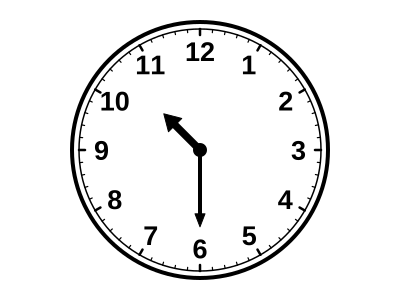
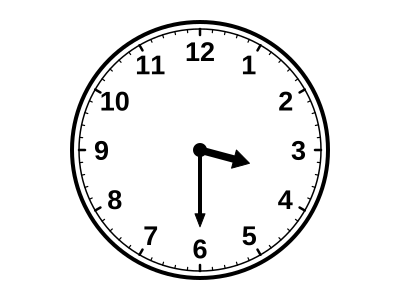
      A clock with the short hand halfway between 8 and 9 and the long hand on 6. ____
    2. 2.
      A clock with the short hand halfway between 10 and 11 and the long hand on 6. ____
    3. 3.
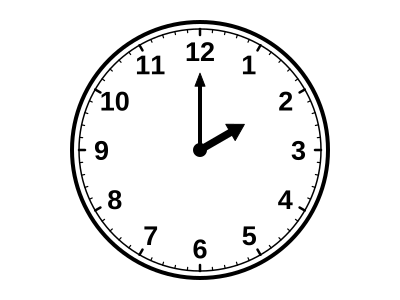
      A clock with the short hand on 2 and the long hand on 12. ____
    4. 4.
      A clock with the short hand halfway between 3 and 4 and the long hand on 6. Circle the time.
      • 3:30
      • 4:30
      • 6:30

    Draw the hands.

    1. 5.
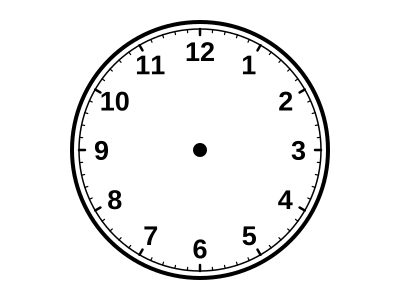
      A blank clock face with the numbers 1 to 12. Draw the hands for half past 2.
    2. 6.
      A blank clock face with the numbers 1 to 12. Draw the hands for half past 10.
    3. 7.
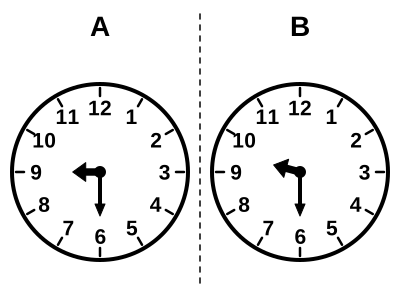
      Picture A: short hand on 9, long hand on 6; picture B: short hand halfway between 9 and 10, long hand on 6. Circle the clock that shows half past 9.
      • A
      • B

    Challenge (optional)

    It is 4:00. In half an hour, what time will it be? Draw the hands.

    You need: Pencil

    Reading & Writing · Week 28 Day 1

    I can read words that end in -s and -es.

    Look: -s and -es

    1. cat + s = cats. -s means more than one.
    2. dish + es = dishes. When a word ends in s, x, sh, ch or z, add -es. Clap it: dish-es, two beats.
    3. To find the root word, cover the ending: dishes, dish.

    Jen and the Boxes

    Jen has six dishes. She packs the dishes in two boxes. Then her cat jumps in a box! The cat rests on the dishes. Jen tells the cat to get out.

    Add -s or -es. Write the new word.

    1. 1.
      dress ____
    2. 2.
      wax ____
    3. 3.
      tent ____
    4. 4.
      peach ____

    Read the word. Write the root word.

    1. 5.
      passes ____
    2. 6.
      flashes ____
    3. 7.
      jumps ____
    4. 8.
      beaches ____

    Challenge (optional)

    Two ____ sat on the box.

    Social Studies · Week 28 Day 1

    I can find where things in my home were made.

    Look: reading a label

    1. Find the label. Look for the words "Made in" or "Product of."
    2. Read the country name and find it on the map.
    3. Made in another country and sold here is an import. Made here and sold to another country is an export.

    Listen. Your child circles import or export.

    1. 1.
      A bike made in Taiwan is sold in our town.
      • import
      • export
    2. 2.
      Corn grown in Iowa is sold to people in Japan.
      • import
      • export
    3. 3.
      Shoes made in Vietnam are sold at our store.
      • import
      • export
    4. 4.
      An airplane built in our country is sold to a country far away.
      • import
      • export

    Look at labels. Write what your child says.

    1. 5.
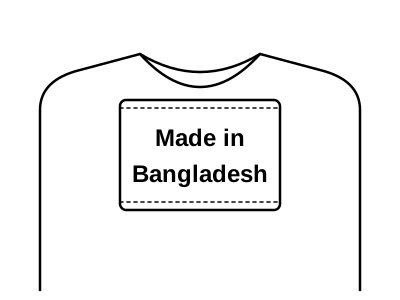
      A clothing tag that says "Made in Bangladesh". Where was this shirt made?
    2. 6.
      Find a label on something at home. Where was it made?
    3. 7.
      How many things on our Made Where? chart came from other countries? How many from our country?

    Challenge (optional)

    Find one food in the kitchen that was grown or made in our own country.

    You need: things with "Made in" labels