1First Grade

    My day schedule

    Research: what plants need

    Practice pages

    0 of 180 days complete · Saved on this device

    View all 180 days

    Math

    My day schedule

    I can show times from my day on a clock.

    Standards: 1.MD.B.3

    Number practice (no timer)
    Make 10 with clock numbers (keep-up practice)
    Builds on
    Day 3 (matching analog and digital clocks). One-minute check: "Show half past 9 on the paper clock." (Short hand halfway between 9 and 10, long hand on 6)

    New words

    • morning: the part of the day from when we wake up until 12:00
    • noon: 12:00 in the middle of the day; both hands point straight up

    You need

    • The paper plate clock from Week 27
    • Notebook and pencil
    • Crayons
    • The paper fastener on the clock is a small part: keep it away from children under 3.
    1. Warm-Up · 5 min

      Fluency: make 10 with clock numbers. "3?" (7) "8?" (2) Spaced review from Week 25: "A pencil is longer than a crayon. The crayon is longer than an eraser. Which is shortest?" (The eraser)

    2. Mini-Lesson · 10 min

      Say: "A schedule tells what happens at what time. Let's make one for a school day." Write 3 lines in the notebook: Breakfast 7:30; Math 9:00; Lunch 12:00. For each line, set the paper clock and your child reads it. Then draw a small clock next to each line: first a circle, then 12, 3, 6 and 9, then the hands. Say while drawing 7:30: "Long hand on 6. Short hand halfway between 7 and 8. The short hand is shorter." Say at 12:00: "Noon. Both hands point straight up, so they look like one hand." Ask: "Which happens first: breakfast or math?" (Breakfast. 7:30 comes before 9:00.)

    3. Guided Practice · 10 min

      My Day. Your child makes a schedule of 4 things from a real day, using times rounded to the nearest hour or half hour, such as: wake up 7:00, park 10:30, snack 3:00, story time 7:30. For each one, your child writes the digital time, draws a clock with hands, and draws a small picture. Answers vary. Look for: :00 times with the long hand on 12, :30 times with the long hand on 6 and the short hand halfway, and the events in time order. If stuck, say: "Set the paper clock first. Then copy what the hands look like."

    4. Play · 10 min

      What Am I Doing? You set the paper clock to one time from your child's schedule. Your child reads the time and says what happens then: "It is half past 10. I am at the park." Then your child sets the clock and you answer. Then set a time that is not on the schedule, such as 6:00, and ask: "What do we usually do at this time?" (Answers vary.) Play 8 rounds in all.

    5. Exit Ticket · 3-5 min

      Before asking, set the paper clock to 9:30. Read each question aloud. Your child answers out loud or with a quick drawing. Check each answer together right away.

    Exit ticket

    1. What time does my clock show? Write it the digital way.
    2. Lunch is at 12:30. Draw a clock with the hands for 12:30.
    3. Which comes first in the morning: 8:00 or 8:30?
    Answers
    1. 9:30
    2. Look for: a short hand halfway between 12 and 1 and a long hand pointing to 6.
    3. 8:00
    Watch for, and help or stretch
    Watch for
    Drawing both hands the same length, so the clock cannot be read.
    Try
    Say: "Short word, short hand: hour." Your child traces over the hour hand to make it shorter and thicker.
    Extra help
    Your child makes a schedule of only 2 events, one at an o'clock time and one at a half-hour time, and sets the paper clock before drawing each one.
    Stretch
    Your child adds 2 more events to the schedule and puts all 6 in time order, from morning to bedtime.

    At home (optional): Post the schedule on the refrigerator. At one of the times, your child checks a real clock and says, "It is ___. Time for ___."
    Reading & Writing

    Research: what plants need

    I can gather information from books and my own observations.

    Standards: W.1.8, W.1.7, SL.1.2

    Phonics
    Inflectional endings -s and -es (cats, hops, wishes, boxes)
    Sight words
    too, mean, same, tell, boy
    Reading
    The Tiny Seed (Eric Carle), optional; original story "Pip the Seed"; original decodable text "A Bean Grows"
    Writing
    Shared research: new question 'What do plants need?' · Handwriting: labels and captions
    Builds on
    Shared research (Weeks 25 to 27). One-minute check: your child tells our new research question (What does a plant need?).

    New words

    • research: looking for facts to answer a question
    • observe: to look closely and notice
    • soil: dirt that plants grow in

    You need

    • Bean in a cup: 2 or 3 dry beans (pinto, lima or any dry bean from the store), a clear plastic cup, a paper napkin or paper towel, and water
    • Printed "A Bean Grows" (from Day 1)
    • Printed "What Do Plants Need?" (in the lesson), and any plant books from home or the library
    • 3 index cards for notes and an envelope to keep them in
    • The research page (from Day 1)
    • Sight word cards: too, mean, same, tell, boy
    • Lined handwriting paper
    1. Phonics & Word Work · 15 min

      Endings review with root words. I do: write fixes. Underline the root fix and circle -es: "The root is fix. -es tells us one person or thing does it now: Dad fixes the bike." We do: find the root in grows, splits and pokes (grow, split, poke). You do: your child reads and finds the root in rushes, tags, mashes, drops, buzzes, stems. (rush, tag, mash, drop, buzz, stem) Read: "The bean splits and a stem grows." Dictation: drops, rushes, buzzes. If stuck, cover the ending with a finger: "What word is left?"

    2. Sight Words · 5 min

      Review: too, mean, same, tell, boy. Clap and Read: you say a sentence with one of the words; your child claps when they hear it, then finds and reads the card.

    3. Read-Aloud & Shared Reading · 15 min

      Say: "Researchers learn from books and from what they see for themselves. First, let's think about plants we have seen." Ask: "Have you ever seen a plant droop when it was dry? What happened when it got water?" (Answers vary. Look for: a real memory, such as a droopy plant that stood up after watering.) Read this fact text aloud. Ask your child to listen for one thing a plant needs. What Do Plants Need? (an original fact text; you read it) Plants are living things. Like you, they need some things to live and grow. A seed needs water, air and warmth to start to grow. When it starts to grow, we say it sprouts. First a root grows. The root takes in water from the soil. Next a stem and leaves grow up toward the light. When a plant has leaves, it needs light, too. Its leaves use light to make food for the plant. Plants also need space. If plants are too crowded, they can't grow well. So a plant needs water, air, light, the right warmth and space to grow. Ask: "What does a seed need to start to grow?" (Water, air and warmth.) Ask: "When does a plant need light?" (When it has leaves; the leaves use light to make food.) Ask: "What does the root do?" (It takes in water from the soil.) If stuck, reread the sentence that answers the question and ask again. Now start a bean together, using "A Bean Grows" as the steps. Your child reads each step aloud and does it: wet the napkin, line the cup, tuck 2 or 3 beans against the side, set the cup on a shelf or desk, and add a little water. Safety: dry beans are a choking hazard for children under 3, so keep them away from little ones, and these beans are for growing, not eating.

    4. Writing & Handwriting · 15 min

      Research notes. Your child writes one fact on each of 2 index cards, one from "What Do Plants Need?" and one from your own memory of plants. You write the source at the top of each card (Source: What Do Plants Need? and Source: Me). Frames: "A plant needs ___." (Answers vary. Look for: water, light, air, warmth, space or soil.) Spelling by sounds is fine. Handwriting (4 min): your child writes the caption Day 1 on a third card and draws the bean in the cup today. Keep the cards in an envelope for next week.

    5. Exit Ticket · 5 min

      Oral answers.

    Exit ticket

    1. Tell me two things a seed needs to start to grow.
    2. Where did your two facts come from?
    3. Read this and tell me the root word: plants.
    Answers
    1. Any two of: water, air, warmth.
    2. Answers vary. Look for: one from the fact text we read and one from what I remember or saw myself.
    3. plants: the root word is plant.
    Watch for, and help or stretch
    Watch for
    Writing a fact that is not about what plants need, such as "Plants are green."
    Try
    Read the question again: "What does a plant need? Does your fact tell what it needs?"
    Extra help
    Your child dictates one fact while you write it, then traces it.
    Stretch
    Your child adds a third fact card from a plant book you have at home and tells where it came from.

    At home (optional): Your child shows the bean cup to a family member and tells what it will need to sprout.

    ScienceWeekly check

    Star viewer

    I can use a star viewer to show when we can see stars and a star pattern that comes back.

    Standards: 1-ESS1-1

    Builds on
    Stars at night (Day 2). One-minute check: ask "When can we see stars?" (at night, when the sky is dark)

    New words

    • pattern: something that happens again and again in the same way
    • Big Dipper: a group of 7 stars that people see as the shape of a big spoon

    You need

    • 1 empty paper towel tube (cardboard)
    • 1 square of black paper about 4 inches on each side
    • 1 rubber band
    • 1 push pin (grown-up only; put it away right after)
    • A lamp with its shade on (not the sun; do not look into a bare bulb up close)
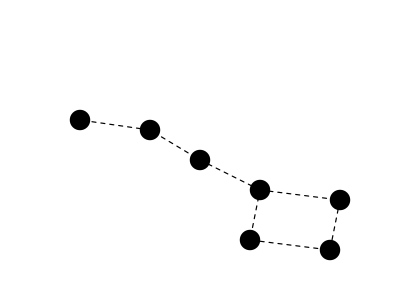
    • A Big Dipper picture: a grown-up draws 7 dots on paper, 4 dots in a box shape for the bowl and 3 dots in a bent line for the handle
    • 6 Day or Night cards made from index cards: the sun, stars, the moon, a rooster crowing at sunrise, a bat flying, a sleeping child
    • Sky Journal
    • Week 28 science check page (given separately)
    1. Warm-Up / Wonder · 5 min

      Spaced review: ask: "Why does a flashlight spot look dim in a bright room?" (All the other light makes it hard to see.) Look at the night-sky drawing from the star watch. Wonder question: "Do people see the same groups of stars again and again?"

    2. Review Game · 10 min

      Play "Day or Night?" Hold up each card. Your child says Day, Night or Both. Sun (day). Stars (We see them at night.) Moon (both: we often see it at night and sometimes in the day). Rooster at sunrise (day). Bat flying (night). Sleeping child (night). Ask: "Why do the stars go on the night side?" (The sky is dark at night, so we can see them.) Then make the star viewer. Show the Big Dipper picture. Say: "The Big Dipper is a group of 7 stars. In spring, it is high in the northern sky on clear evenings. Its stars keep the same shape night after night and year after year, so people can find it again and again. That is a pattern we can predict." Your child counts the dots (7). The grown-up lays the black square on the Big Dipper picture and pokes a hole through each dot with the push pin, then puts the pin away. Your child wraps the black square over one end of the tube and holds it with the rubber band, dots facing out. Turn on the lamp. Your child holds the open end to one eye and points the black end toward the lamp. Ask: "What do you see?" (little dots of light in the Big Dipper shape) Ask: "Why can you see the dots?" (It is dark inside the tube, and light comes through the holes.) Say: "Just like stars at night." Safety: never look straight at the sun, even for a moment, and never point a tube, a flashlight or anything else at it. Sunglasses do not make it safe. If stuck seeing the dots, move a little closer to the lamp and close the other eye.

    3. Check · 10 min

      Give the Week 28 science check. The check items are on the Week 28 check page; do not show them ahead of time. Read each part aloud. Your child answers by talking, pointing, showing with the real materials or drawing. You write down their words exactly. It is not timed; stop and finish later if your child is tired. Make a check mark next to each part your child shows on their own. The printed check has 8 items. It covers these goals: (1) I can explain when we can see stars in the sky; (2) I can use a star viewer to show when we can see stars and a star pattern that comes back. This week the check is an oral sky task with the star viewer. Look for: your child says that we see stars at night when the sky is dark, explains that stars are still there in the day but the sun makes the sky too bright, and shows the Big Dipper in the viewer. If stuck on a part, hand your child the flashlight and say: "Show me with the flashlight why we cannot see stars in the day." Secure: 6 of 8 correct, including items 3 and 4 (we see stars when it is dark; they are still there in the day) and item 1 (shows the Big Dipper). If the check is not yet secure, use the reteach step on the check page that matches the items missed.

    4. Exit Ticket · 3–5 min

      Ask the three questions aloud. Your child answers by talking or drawing.

    Exit ticket

    1. Is the sun a star?
    2. At dinnertime in the middle of summer it is still light out. Will you see many stars? Why?
    3. How many stars make the Big Dipper?
    Answers
    1. Yes. It is the star closest to us.
    2. No, not many. The sky is still too bright.
    3. 7.
    Watch for, and help or stretch
    Watch for
    Saying stars are only in the sky at night.
    Try
    Ask: "Are the stars there at lunchtime?" If your child says no, use the flashlight in the bright room again. Say: "They are there. We just cannot see them."
    Extra help
    Your child sorts only 3 cards (sun, stars, sleeping child) and answers the check by pointing to the cards.
    Stretch
    Your child makes a second viewer with a new star pattern they invent and names it.

    At home (optional): On a clear spring evening, your child and a grown-up look for the Big Dipper and compare it with the viewer.

    Practice

    Read each direction aloud. Your child works on the page; answers are in the grown-up view.

    Warm-up

    Remember?

    Math

    1. A hose is longer than a jump rope. The jump rope is longer than a shoelace. Which is the shortest?
    2. 9 + 10 = ? Use the double 9 + 9.

    Reading & Writing

    1. every, other

    Math · Week 28 Day 4

    I can show times from my day on a clock.

    Look: a school day

    1. Breakfast is at 7:00. Reading is at 9:30. Lunch is at 12:00.
    2. Draw a clock for each one. For 9:30, the long hand is on 6 and the short hand is halfway between 9 and 10.
    3. 7:00 comes before 9:30, so breakfast comes first.

    Read each clock and write the time.

    1. 1.
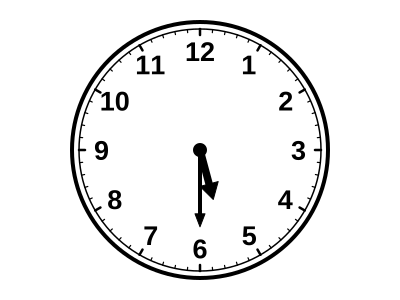
      Wake up: A clock with the short hand halfway between 6 and 7 and the long hand on 6. ____
    2. 2.
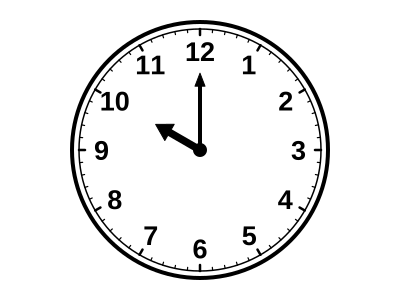
      Park: A clock with the short hand on 10 and the long hand on 12. ____
    3. 3.
      Bath: A clock with the short hand halfway between 5 and 6 and the long hand on 6. ____

    Draw or circle.

    1. 4.
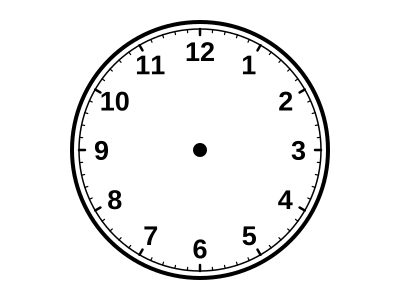
      Snack is at 3:30. A blank clock face with the numbers 1 to 12. Draw the hands.
    2. 5.
      Story time is at 8:00. A blank clock face with the numbers 1 to 12. Draw the hands.
    3. 6.
      Circle the earlier time.
      • 10:30
      • 9:30
    4. 7.
      Circle the later time.
      • 2:00
      • 4:30

    Challenge (optional)

    Tell 3 things you do in a day and the time for each one, to the hour or half hour, in order.

    You need: Pencil

    Reading & Writing · Week 28 Day 4

    I can gather information from books and my own observations.

    Look: facts from a text and from what I see

    1. Read a text and find a fact: A plant needs water.
    2. Look at your bean cup and tell what you see: The napkin is wet.
    3. Write each fact on a card and write where it came from.

    Plants Need Things

    A plant needs water. It needs light from the sun. It needs soil to grow in. A plant with no water can get weak.

    Does the text say it? Circle yes or no.

    1. 1.
      A plant needs water.
      • yes
      • no
    2. 2.
      A plant needs a hat.
      • yes
      • no
    3. 3.
      A plant needs light.
      • yes
      • no
    4. 4.
      A plant needs soil.
      • yes
      • no

    Make two fact cards: one from the text and one from what you see.

    1. 5.
      A plant needs ____.
    2. 6.
      I got it from: ____
    3. 7.
      I see that my bean ____.

    Challenge (optional)

    A plant needs water. It needs ____ too.

    Science · Week 28 check

    Weekly check

    How to give it: Read every direction, question and choice aloud. It is not timed; stop and finish later if your child is tired. Your child answers by talking, pointing, showing with the real materials or drawing, and you write their words exactly. Have the star viewer, a lamp with its shade on and the Day or Night cards. Never point the tube at the sun. If stuck, hand your child the flashlight and say "Show me with the flashlight why we cannot see stars in the day."

    Secure when: 6 of 8 correct, including items 3 and 4 (we see stars when it is dark; they are still there in the day) and item 1 (shows the Big Dipper).

    • I can explain when we can see stars in the sky.
    • I can use a star viewer to show when we can see stars and a star pattern that comes back.
    1. 1.
      Point the star viewer at the lamp (never at the sun) and look in. Make a mark when you see the dots.
    2. 2.
      Tell why you can see the dots. Your grown-up writes it.
    3. 3.
      Tell when we can see stars. Your grown-up writes it.
    4. 4.
      Where are the stars in the daytime? Your grown-up writes it.
    5. 5.
      Day or night? An owl hoots in the dark.
      • day
      • night
    6. 6.
      Day or night? Children eat lunch outside in the bright sun.
      • day
      • night
    7. 7.
      Circle the Big Dipper.
      • 7 dots: 4 in a box shape and 3 in a bent line.
      • 5 dots in a straight line.
    8. 8.
      Will the Big Dipper have the same shape next year?
      • yes
      • no