1First Grade

    Match analog and digital

    Two seed texts

    Practice pages

    0 of 180 days complete · Saved on this device

    View all 180 days

    Math

    Match analog and digital

    I can match analog and digital clocks.

    Standards: 1.MD.B.3

    Number practice (no timer)
    Make 10 with clock numbers (keep-up practice)
    Builds on
    Day 2 (reading and writing digital times). One-minute check: "A digital clock says 6:00. Where does the long hand point?" (To 12)

    New words

    • match: show the same thing; an analog clock and a digital clock match when they show the same time
    • analog clock: a clock with hands

    You need

    • The paper plate clock from Week 27
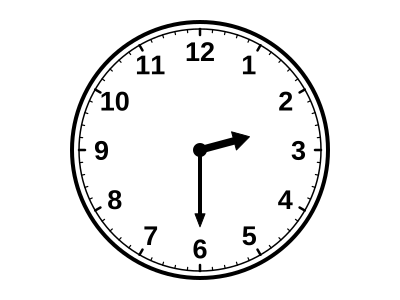
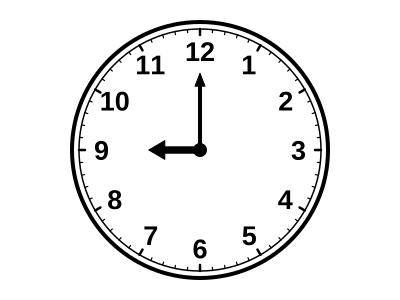
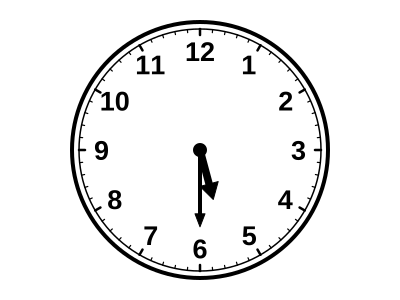
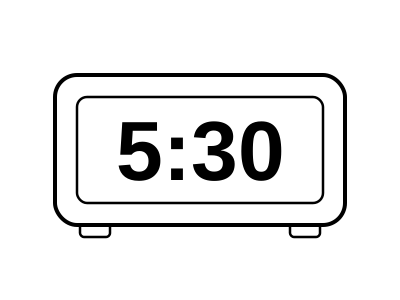
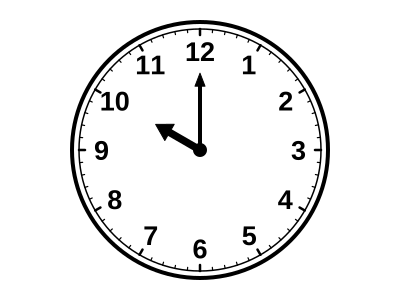
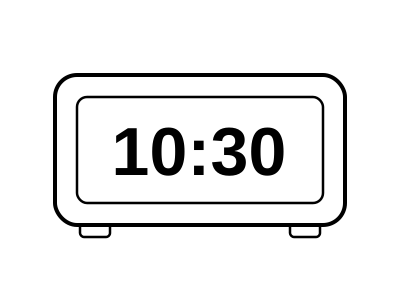
    • 12 clock cards an adult makes from index cards or paper squares (6 matching pairs). Analog cards: draw a circle with 12, 3, 6 and 9 and draw the hands for 3:00, 5:30, 8:30, 10:00, 12:30 and 7:30. For a half-hour card, draw the short hand halfway between the two numbers. Digital cards: write 3:00, 5:30, 8:30, 10:00, 12:30 and 7:30.
    • A sheet of paper with 6 blank circles, each with 12, 3, 6 and 9 written in (drawn by an adult)
    • Notebook and pencil
    • The paper fastener on the clock is a small part: keep it away from children under 3.
    1. Warm-Up · 5 min

      Fluency: make 10 with clock numbers. "1 and what make 10?" (9) "Which clock number makes 10 with itself?" (5) Spaced review from Week 12: "8 + ? = 13" (5)

    2. Mini-Lesson · 10 min

      Show the analog 8:30 card and the digital 8:30 card. Say: "These two cards show the same time in two ways. Let me check." Think out loud: "The long hand is on 6, so it is half past. The short hand is between 8 and 9. It passed 8. Half past 8. The digital card says 8:30. They match." Then show the analog 10:00 card next to the digital 12:30 card. Ask: "Do these match?" (No. The analog card shows 10:00: the long hand is on 12 and the short hand is on 10.) Ask: "What would the analog card for 12:30 look like?" (The short hand halfway between 12 and 1 and the long hand on 6)

    3. Guided Practice · 10 min

      Flip and Show. Shuffle the 12 cards face down. Your child flips 6 cards, one at a time. If it is an analog card, your child writes the digital time in the notebook. If it is a digital card, your child draws the hands on one of the blank circles. Answers are the times on the cards: 3:00, 5:30, 8:30, 10:00, 12:30 and 7:30. For each digital card, look for: the long hand on 12 for :00 or on 6 for :30, and the short hand on the hour for :00 or halfway to the next number for :30. If stuck, say: "Read the long hand first. Then find the hour the short hand just passed."

    4. Play · 10 min

      Clock Match. Lay all 12 cards face down in 3 rows of 4. Take turns flipping 2 cards. If an analog card and a digital card show the same time, say the time out loud and keep the pair. If not, turn both cards back over in the same spots. Keep playing until all 6 pairs are found. Each player counts their pairs and says one time from their pairs in words, such as "half past 5." Play a second game if there is time.

    5. Exit Ticket · 3-5 min

      Before asking, set the paper clock to 1:30. Read each question aloud. Your child answers out loud, writes, or draws. Check each answer together right away.

    Exit ticket

    1. Write the time on my clock the way a digital clock shows it.
    2. Draw a circle with 12, 3, 6 and 9. Show 11:00.
    3. A clock has the short hand on 4 and the long hand on 12. Does it match the digital time 4:30? Why?
    Answers
    1. 1:30
    2. Look for: a short hand pointing to 11 and a long hand pointing to 12.
    3. No. Long hand on 12 means 4:00. For 4:30, the long hand points to 6 and the short hand is halfway between 4 and 5.
    Watch for, and help or stretch
    Watch for
    Drawing a half-hour time with the short hand pointing straight at the hour, such as on the 7 for 7:30.
    Try
    Say: "Half past means halfway there." Put one finger on 7 and one on 8. Your child draws the short hand between your fingers.
    Extra help
    Play Clock Match with only 4 pairs (8 cards): the 3:00, 10:00, 5:30 and 8:30 pairs.
    Stretch
    Your child makes 2 new pairs of cards (one o'clock time and one half-hour time) and adds them to the Clock Match game.

    At home (optional): Your child plays Clock Match with a family member, using the 12 cards.
    Reading & Writing

    Two seed texts

    I can compare two texts about how plants grow.

    Standards: RI.1.9, RL.1.5, RI.1.10

    Phonics
    Inflectional endings -s and -es (cats, hops, wishes, boxes)
    Sight words
    too, mean, same, tell, boy
    Reading
    The Tiny Seed (Eric Carle), optional; original story "Pip the Seed"; original decodable text "A Bean Grows"
    Writing
    Shared research: new question 'What do plants need?' · Handwriting: labels and captions
    Builds on
    Story or information (Week 7) and comparing two texts (Week 26). One-minute check: your child tells one way a story is different from a fact book.

    New words

    • steps: things to do, in order, one after another
    • character: a person or animal in a story
    • same: alike in some way

    You need

    • Printed "Pip the Seed" and "A Bean Grows" (from Day 1), and The Tiny Seed if you have it
    • A two-column chart on paper: Pip the Seed and A Bean Grows, with rows Same and Different
    • Word cards (index cards): fishes, buzzes, tents, rocks, kisses, mixes, plums, inches, dresses, bugs
    • Sight word cards: too, mean, same, tell, boy
    • Lined handwriting paper
    1. Phonics & Word Work · 15 min

      -s or -es sort. I do: read tents (one beat: -s) and fishes (two beats: -es). Put them at the top of two piles. We do: sort rocks and buzzes together. Clap each one. You do: your child reads and sorts kisses, mixes, plums, inches, dresses, bugs. (-s: tents, rocks, plums, bugs. -es: fishes, buzzes, kisses, mixes, inches, dresses.) Read: "Ben fishes from the rocks." (Here fishes is an action word: Ben fishes.) Dictation: plums, inches, dresses. If stuck, ask: "Does the root end in s, x, sh, ch or z? Then it gets -es."

    2. Sight Words · 5 min

      Review: too, mean, same, tell, boy. Sight Word Toss: put the 5 cards on the floor. Your child tosses a sock onto a card, reads it and says it in a sentence.

    3. Read-Aloud & Shared Reading · 15 min

      Say: "Today we compare two texts about how plants grow. One tells a story. One tells you what to do." Reread "Pip the Seed" aloud; your child reads "A Bean Grows". Fill the chart together. Ask: "Which one is a story? How do you know?" (Pip the Seed: it has a character, Pip, who talks and has an adventure, with a beginning, middle and end.) Ask: "Which one gives steps? How do you know?" (A Bean Grows: it has a list of what you need and numbered steps that tell you what to do.) Ask: "What is the same in both?" (Answers vary. Look for: both are about a seed that grows; in both a root grows down and a stem grows up; both seeds need water.) Ask: "What is different?" (Answers vary. Look for: the story has a talking seed; the steps text tells real things to do; the story is a dandelion and the steps are about a bean.) If you also read The Tiny Seed, ask: "Is The Tiny Seed more like Pip the Seed or more like A Bean Grows? Why?" (Answers vary. Look for: more like Pip: it is a story about a seed's trip.) If stuck, hold up each text and ask: "Does this one tell me what to do?"

    4. Writing & Handwriting · 15 min

      Your child writes two sentences with these frames: "Pip the Seed tells a ___." (story or tale; tale is easier to spell by sounds: t-a-l-e) "A Bean Grows tells ___." (Answers vary. Look for: steps, or what to do to grow a bean.) Your child adds one more sentence that tells what is the same, such as "In each one, a seed grows." Spelling by sounds is fine for new words. Handwriting (4 min): your child copies Step 1 from "A Bean Grows" neatly, with a capital at the start and a period at the end.

    5. Exit Ticket · 5 min

      Oral answers.

    Exit ticket

    1. If a text has a talking animal and an adventure, is it a story or a text that gives information?
    2. Read this and tell me what kind of text it is: Step 1: Get a cup. Step 2: Fill it with dirt.
    3. Tell me one thing that is the same in Pip the Seed and A Bean Grows.
    Answers
    1. A story.
    2. Step 1: Get a cup. Step 2: Fill it with dirt. It gives steps (information): it tells you what to do in order.
    3. Answers vary. Look for: both are about a seed growing, a root and stem grow in both, or both seeds need water.
    Watch for, and help or stretch
    Watch for
    Saying both texts are stories because both are about a seed.
    Try
    Ask: "Does a real bean talk? Is Pip a character? Does A Bean Grows have a character, or does it tell you what to do?"
    Extra help
    Compare one thing only: "Does it tell a story or tell me what to do?"
    Stretch
    Your child writes Step 7 for "A Bean Grows", such as Step 7: Tell a pal what you see.

    At home (optional): Your child tells a family member which text was a story and which gave steps, and why. Tonight, an adult covers 2 or 3 dry beans with water in a cup to soak overnight for tomorrow's bean cup (pour off the water in the morning). Soaking helps the beans sprout sooner.

    Social Studies

    Why countries trade

    I can tell why people in different countries trade with each other.

    Standards: D2.Eco.14.K-2

    Builds on
    Where does it come from? (Day 1). One-minute check: ask "What is an import?" (a product brought in from another country to sell here)

    New words

    • trade: to give something and get something back
    • climate: the usual weather in a place over a long time
    • skill: something a person has learned to do well

    You need

    • The world map with stickers from Day 1
    • 3 picture cards (draw them or cut them from flyers): bananas, coffee, a car
    • 1 banana with its sticker, if you have one
    • A Why Trade? chart: a sheet of paper with 2 columns labeled Different weather / Different skills
    • Pencil and crayons
    1. Warm-Up / Wonder · 5 min

      Spaced review: ask: "Name one product our country sells to other countries." (Answers vary: airplanes, soybeans, corn, wheat, cars.) Wonder question: "Why don't we grow most of our own bananas?"

    2. Explore · 10–15 min

      Hold up the banana card. Say: "Banana plants are hurt by frost and icy cold, so they grow best in warm places. The United States grows very few bananas. Most of our bananas come from countries in Central and South America, and the most come from Guatemala." Find Guatemala on the map. Ask: "Is winter cold where we live?" (Answers vary.) "So why do we buy bananas from Guatemala?" (It is warm there, so bananas grow well.) Hold up the coffee card. Say: "Coffee plants also need warm places. Some coffee grows in Hawaii, a warm U.S. state. Let's check a coffee or tea box label." Read the label from Day 1 and find the country on the map. Write bananas and coffee under Different weather. Hold up the car card. Say: "Cars are not grown; people build them. Factories in our country build cars and sell some to other countries. We also buy cars made in other countries. Each place has workers with special skills and factories that make some things very well." Write cars under Different skills. Ask: "Why do people in different countries trade?" (Answers vary. Look for: places have different weather and different skills, so each makes some things well and trades to get the things it cannot make or grow as well.) Ask: "What would breakfast be like with no trade?" (Answers vary: no bananas or no coffee for grown-ups.) If stuck, ask: "Could we grow bananas in snow?" (no) "Then how do we get them?" (We buy them from warm places.)

    3. Talk & Record · 5–10 min

      Your child draws a banana traveling from Guatemala to our country with an arrow. Sentence frame: "People trade because ___."

    4. Exit Ticket · 3–5 min

      Ask the three questions aloud. Your child answers by talking or drawing.

    Exit ticket

    1. Pineapples grow in warm places. Why might a cold country buy pineapples from a warm country?
    2. What does trade mean?
    3. Name one reason countries trade.
    Answers
    1. Because pineapples cannot grow well in the cold there.
    2. To give something and get something back.
    3. Answers vary. Look for: different weather or climate, or different skills and factories.
    Watch for, and help or stretch
    Watch for
    Thinking we buy from other countries only because we are not able to make anything ourselves.
    Try
    Remind your child of exports: say "We sell airplanes and wheat to other countries. Trade goes both ways."
    Extra help
    Use only the banana card and the map.
    Stretch
    Your child finds one more fruit label from a warm country and tells why it is grown there.

    At home (optional): Your child tells a family member why we buy bananas from warm countries.

    Practice

    Read each direction aloud. Your child works on the page; answers are in the grown-up view.

    Warm-up

    Remember?

    Math

    1. At 7 o'clock, what number does the short hand point to?
    2. 35 + 2 = ?

    Reading & Writing

    1. help, before, much
    2. The brown cow is in the town.

    Math · Week 28 Day 3

    I can match analog and digital clocks.

    Look: do they match?

    1. Read the long hand first. On 12 means :00. On 6 means :30.
    2. Then find the hour the short hand points to or just passed.
    3. Short hand halfway between 11 and 12, long hand on 6: 11:30. A digital card that says 11:30 matches.

    Circle the digital time that matches the clock.

    1. 1.
      A clock with the short hand on 6 and the long hand on 12.
      • 6:00
      • 12:30
      • 6:30
    2. 2.
      A clock with the short hand halfway between 2 and 3 and the long hand on 6.
      • 3:30
      • 2:30
      • 2:00
    3. 3.
      A clock with the short hand on 9 and the long hand on 12.
      • 12:00
      • 9:30
      • 9:00

    Do they match? Circle yes or no.

    1. 4.
      A clock with the short hand halfway between 5 and 6 and the long hand on 6. A digital clock showing 5:30.
      • yes
      • no
    2. 5.
      A clock with the short hand on 10 and the long hand on 12. A digital clock showing 10:30.
      • yes
      • no
    3. 6.
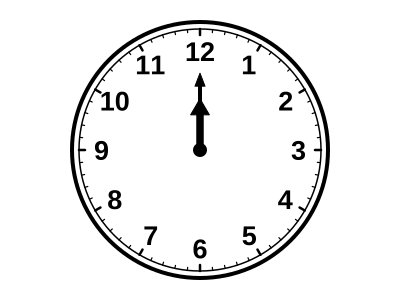
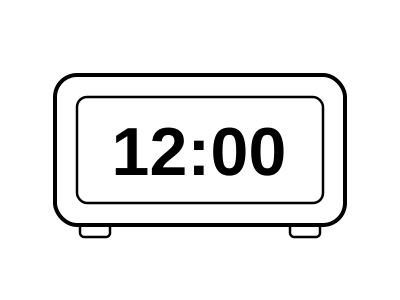
      A clock with both hands pointing straight up to 12, the short hand drawn on top of the long hand. A digital clock showing 12:00.
      • yes
      • no
    4. 7.
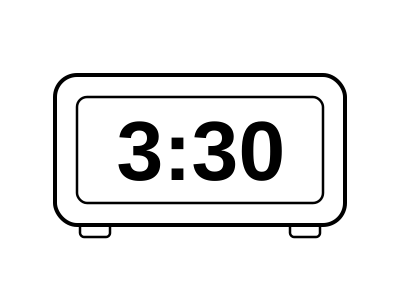
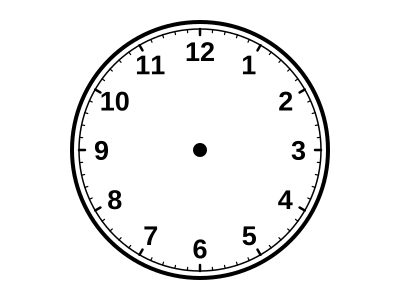
      A digital clock showing 3:30. A blank clock face with the numbers 1 to 12. Draw the hands to match.

    Challenge (optional)

    A clock has the short hand halfway between 7 and 8 and the long hand on 6. Write the digital time. Then write the time one hour later.

    You need: Pencil

    Reading & Writing · Week 28 Day 3

    I can compare two texts about how plants grow.

    Look: a tale and some steps

    1. A tale tells a story. It can have a seed that talks.
    2. Steps tell you what to do, in order: Step 1, Step 2.
    3. Both can be about seeds. Ask: What is the same? What is not the same?

    A Tale and Some Steps

    Sam the seed sat in the dirt. "I wish I had rain!" said Sam. Then rain fell, and Sam got big.

    Step 1: Fill a cup with dirt. Step 2: Put a seed in it.

    Read the line. Is it from the tale or the steps? Circle one.

    1. 1.
      It tells you what to do.
      • tale
      • steps
    2. 2.
      Sam can say things.
      • tale
      • steps
    3. 3.
      It has a 1 and a 2.
      • tale
      • steps
    4. 4.
      Then rain fell, and Sam got big.
      • tale
      • steps

    Read both. Write the answer.

    1. 5.
      What is in the tale and the steps? A ____.
    2. 6.
      What does Sam wish for?
    3. 7.
      What do you put in the cup first?

    Challenge (optional)

    The tale and the steps are the same: ____.

    Social Studies · Week 28 Day 3

    I can tell why people in different countries trade with each other.

    Look: why trade?

    1. Some things grow best in warm places, like bananas and coffee.
    2. Some places have workers and factories that make certain things very well, like cars.
    3. So places trade: each gives what it makes well and gets what it cannot make or grow as well.

    Listen. Circle yes or no.

    1. 1.
      Can banana plants grow well where it snows and freezes?
      • yes
      • no
    2. 2.
      Do coconuts grow best in warm places?
      • yes
      • no
    3. 3.
      Do countries trade to get things they cannot grow well?
      • yes
      • no
    4. 4.
      Does trade mean taking something and giving nothing back?
      • yes
      • no

    Ask each question. Write what your child says.

    1. 5.
      Name one food we get because of trade.
    2. 6.
      Workers in one country make very good bikes. Why might another country buy them?
    3. 7.
      Why is trade good for both places?

    Challenge (optional)

    Draw a fruit traveling from a warm country to our country, with an arrow.

    You need: crayons