This week's lessons
Math and reading every day; science and social studies take turns
- Day 1 · Monday
- MathTime to the half hourI can tell time to the half hour.
- Reading & WritingWords with -s and -esI can read words that end in -s and -es.
- Social StudiesWhere does it come from?I can find where things in my home were made.
- Day 2 · Tuesday
- MathDigital clocksI can read and write times on a digital clock.
- Reading & WritingOne or more?I can match nouns and verbs in sentences, like 'He hops' and 'They hop'.
- ScienceStars at nightI can explain when we can see stars in the sky.
- Day 3 · Wednesday
- MathMatch analog and digitalI can match analog and digital clocks.
- Reading & WritingTwo seed textsI can compare two texts about how plants grow.
- Social StudiesWhy countries tradeI can tell why people in different countries trade with each other.
- Day 4 · Thursday
- MathMy day scheduleI can show times from my day on a clock.
- Reading & WritingResearch: what plants needI can gather information from books and my own observations.
- Science · CheckStar viewerI can use a star viewer to show when we can see stars and a star pattern that comes back.
- Day 5 · Friday
- Math · CheckLesson + weekly check: hour and half hourI can tell and write time to the hour and half hour.
- Reading & Writing · CheckShare and check: -s and -esI can read words with -s and -es and use them in sentences.
- Social Studies · CheckFact or opinion?I can tell a fact from an opinion in an ad.
This week's checks
Short checks on the last day each subject meets this week
Science · Day 4
- I can explain when we can see stars in the sky.
- I can use a star viewer to show when we can see stars and a star pattern that comes back.
Secure when: 6 of 8 correct, including items 3 and 4 (we see stars when it is dark; they are still there in the day) and item 1 (shows the Big Dipper).
Open the checkMath · Day 5
- I can read and write time to the hour and half hour.
- I can draw the hands for a time to the hour or half hour.
Secure when: 7 or 8 of the 8 items right.
Open the checkReading & Writing · Day 5
- I can read words with -s and -es and use them in sentences.
- I can find the root word and compare two texts.
- I can gather facts from a text and from what I see.
Secure when: 8 of 10 words in items 1-2, 4 of 5 sight words, a sentence with a plural noun and a matching verb in item 4, and 4 of 6 on items 5-10.
Open the checkSocial Studies · Day 5
- I can find where things in my home were made.
- I can tell why people in different countries trade with each other.
- I can tell a fact from an opinion in an ad.
Secure when: 7 of 9 correct, with at least one right on each goal
Open the check
Reading About Our World: A Banana's Long Trip
Read it aloud. Your child reads the sentences marked with a star. Builds social studies knowledge.
Warm Places
Banana plants need warm weather all year. Frost and ice hurt them. Most places in the United States are too cold in winter to grow many bananas.
From Far Away
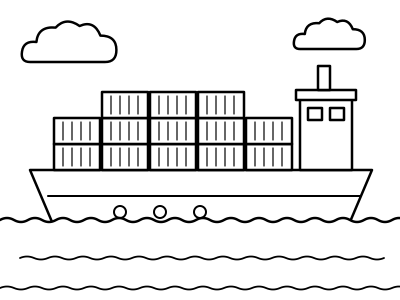
Most bananas in our stores grow in warm countries in Central America and South America. Farmers pick them while they are still green. A ship can bring them here.
Trading
Our country imports bananas. That means it buys them from those countries. Those countries buy things from us too, like wheat and machines. When countries buy and sell with each other, it is called trade. Trading helps each place get things it cannot easily make or grow.
Words to know
- trade: give something and get something back
- frost: thin ice that forms on cold nights
- import: bring in goods from another country
Talk about it
- What kind of weather do banana plants need?
- What color are bananas when farmers pick them?
- Why don't farmers pick bananas when they are already yellow?
Home Connection
Five-minute ideas for the whole family, with things you already have
Math
At half past, the long hand points to 6 and the short hand is halfway between two numbers.
Do: Make a family day schedule with 4 times on the hour or half hour, like 7:00 wake up and 12:30 lunch. Draw a clock for each time.
Talk: What does a clock look like at 4:30?
Reading & Writing
Adding -s or -es can mean more than one.
Do: Talk about what plants need to grow. Write cats, hops, wishes, boxes and dishes for your child to read.
Talk: What do plants need to grow?
Science
We see stars at night but not during the day.
Do: On a clear night, step outside with a grown-up and look at the stars.
Talk: Why can't we see stars in the daytime?
Social Studies
The things we use come from many places, and countries trade with each other.
Do: Read the "Made in" labels on 5 things at home.
Talk: Why do people in different countries trade?
This week's words: too, mean, same, tell, boy
Celebrate a half-hour schedule, -s and -es words and a night of stargazing.
Math catch-up: Halfway Between
10 minutes, if this week's math check was not secure · 1.MD.B.3
At half past, the short hand sits between two numbers, so children often read the next hour (3:30 as 4:30). Moving the hands slowly from the hour to half past shows which number was passed.
You need: a paper plate clock with numbers 1 to 12 and two hands, paper and a pencil
- Set the clock to 3:00. Slowly move the long hand around to 6 while you slide the short hand a little from 3 toward 4 (on a paper clock you move it yourself).
- Ask: "Which number has the short hand passed?" (3) "Has it reached 4?" (No.) Say: "Half past 3. We write 3:30."
- Say: "The long hand on 6 means halfway around, 30 minutes. We write 30, not 6."
- Set 2 more half-hour times. Your child names the number the short hand has passed, then writes the time.
Try again
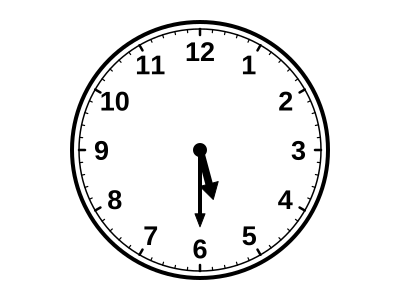 What time is it?
- Write half past 9 the way a digital clock shows it.
- A clock shows 6:30. Which number has the short hand already passed?
Specials This Week
Weeks 25–30 unit • ~90 min/week per subject
Fitness Components (Cardiovascular & Strength)
Understanding what makes the heart beat faster, engaging in activities that build cardiovascular endurance and muscular strength.
Art from Around the World
Exploring art forms from different cultures (e.g., African masks, Native American pottery, Japanese origami, Aboriginal dot painting).
Music and Movement/Cultural Music
Moving creatively to music, exploring dance from different cultures, listening to music from around the world.
For guiding principles and full standards reference, visit How to use this curriculum
As an Amazon Associate, we earn from qualifying purchases. Book and supply links on this page are affiliate links — using them supports this curriculum at no extra cost to you.