    1First Grade

    Asking questions about data

    Draft our fact page

    Practice pages

    0 of 180 days complete · Saved on this device

    View all 180 days

    Math

    Asking questions about data

    I can tell how many in all and how many more.

    Standards: 1.MD.C.4, 1.OA.A.1

    Number practice (no timer)
    Count tallies by 1s (and 5s as a shortcut)
    Builds on
    Day 3 (bar graphs) and Week 3 (comparing: how many more and how many fewer). One-minute check: "Show me the tallest bar on the crayon graph. How many?" (Blue, 8)

    New words

    • in all: the total; everything added together
    • how many more: the number of extra things one group has compared to another

    You need

    • The crayon color bar graph from Day 3 (red 5, blue 8, green 2)
    • 20 linking cubes or same-size building bricks
    • Notebook and pencil
    • Cubes are small parts: keep them away from children under 3.
    1. Warm-Up · 5 min

      Fluency: count tallies. Draw 3 bundles of 5. "How many? Count by 5s." (15) Spaced review from Week 10: "15 - 7: think addition." (8 because 7 + 8 = 15)

    2. Mini-Lesson · 10 min

      Say: "Graphs help us answer questions." Use the crayon graph. Ask 3 kinds of questions. 1) How many in one category: "How many chose red?" (5) 2) How many in all: "How many votes in all?" Show the thinking: "8 + 2 = 10, and 10 + 5 = 15." (15) 3) Compare: "How many more chose blue than red?" Build a tower of 8 cubes for blue and a tower of 5 for red. Stand them side by side with the bottoms lined up. Say: "The towers match up to 5. Blue has 3 extra." Write 8 - 5 = 3. Say: "3 more chose blue than red." Then ask: "How many fewer chose green than red?" Build towers of 2 and 5. (3 fewer: 5 - 2 = 3)

    3. Guided Practice · 10 min

      Use the fruit bar graph from Day 3 (apple 6, banana 4, grapes 3). Ask each question; your child answers and shows the equation or the towers. 1) How many chose banana? (4) 2) Which fruit got the most votes? (Apple) 3) Which got the fewest? (Grapes) 4) How many votes in all? (13: 6 + 4 + 3) 5) How many more chose apple than grapes? (3: 6 - 3) 6) How many fewer chose banana than apple? (2: 6 - 4) 7) How many more chose banana than grapes? (1) Clear the cubes after each question. If stuck, say: "Build both towers. Line up the bottoms. Count only the extra cubes."

    4. Play · 10 min

      Question Maker. Your child uses the Family Fruit Survey graph from Day 2 and asks you 3 questions: one "How many in all?", one "How many more?" and one "Which has the most?" You answer, and your child checks with the graph or the cubes. Then you ask 3 questions about the pet graph from Day 2 (dog 7, cat 5, fish 3): "How many votes in all?" (15) "How many more chose dog than fish?" (4) "How many fewer chose cat than dog?" (2)

    5. Exit Ticket · 3-5 min

      Before asking, draw a bar graph titled Animals at the Pond with 3 bars: Ducks 7, Frogs 4, Fish 9. Read each question aloud. Your child answers out loud, with cubes or a quick drawing. Check each answer together right away.

    Exit ticket

    1. How many animals are at the pond in all?
    2. How many more fish than frogs are there?
    3. How many fewer frogs than ducks are there?
    Answers
    1. 20
    2. 5
    3. 3
    Watch for, and help or stretch
    Watch for
    Answering a "how many more" question with the bigger number, such as 8 instead of 3.
    Try
    Build both towers side by side. Cover the part that matches with your hand. Ask: "How many cubes are left over?"
    Extra help
    Use the cube towers for every compare question, and say the sentence frame together: "___ has ___ more than ___."
    Stretch
    Ask: "How many more votes would grapes need to have as many as apple?" (3) "To have the most votes all by itself?" (4)

    At home (optional): At dinner, your child asks one "how many more" question about the Family Fruit Survey graph.
    Reading & Writing

    Draft our fact page

    I can write facts that answer our question about plants.

    Standards: W.1.7, W.1.8, W.1.2

    Phonics
    Inflectional ending -ed (jumped, played, landed) with no base change
    Sight words
    follow, came, want, show, also
    Reading
    Original text "From Seed to Plant" and bean observation journal
    Writing
    Shared research: drafting our plant fact page; past-tense verbs · Handwriting: journal entries
    Builds on
    Research notes (Week 28) and the bean journal (this week). One-minute check: your child reads one fact card from last week.

    New words

    • fact: something that is true and can be checked
    • draft: a first try at writing that we can fix later

    You need

    • The research page with our question, What does a plant need? (from Week 28)
    • The fact cards in the envelope (from Week 28)
    • The bean journal and the bean plant
    • Printed "What Do Plants Need?" (from Week 28)
    • Sight word cards: follow, came, want, show, also
    • Lined paper for the draft and a pencil
    1. Phonics & Word Work · 15 min

      -ed review in sentences. I do: read "The bean sprouted." and point to the root sprout and the ending -ed. We do: read "The stem curled up. The plant needed water." You do: your child reads these and points to each -ed word: "Dad filled the cup." "The bean rested in the dirt." "The pup sniffed the plant." "We checked it at sunset." Then your child reads these -ed words in a list: misted, peeked, dusted, crunched, honked, spilled. Dictation: filled, rested, peeked. If stuck, find the root, read it, then add the ending sound.

    2. Sight Words · 5 min

      Review: follow, came, want, show, also. Word in the Bag: your child pulls a card, reads it and uses it in a sentence about the bean.

    3. Read-Aloud & Shared Reading · 15 min

      Reread "What Do Plants Need?" aloud. Your child listens for facts we can use. Ask: "Which fact matches what happened to our bean?" (Answers vary. Look for: a seed needs water to start to grow, or the root grew first.) Then your child reads three pages of the bean journal aloud. Ask: "What did our bean need this week?" (Answers vary. Look for: water, and light once it had leaves.) Ask: "Which facts came from a book and which came from what we saw?" (Answers vary. Look for: book facts such as leaves use light; our own facts such as the root came out first.) If stuck, hold up each fact card and read the source at the top.

    4. Writing & Handwriting · 15 min

      Draft our fact page. Say: "Our question is: What does a plant need? We will write 3 facts that answer it." Your child picks 3 facts from the fact cards and the journal and writes each as a sentence on the draft paper. Use frames: "A plant needs ___." "Our bean ___ when ___." (Answers vary. Look for: three true facts that answer the question, at least one from a text and one from our bean, such as A plant needs water. Our bean sprouted when we added water. A plant needs light.) Your child uses at least one -ed word for something our bean did. Spelling by sounds is fine on a draft. Handwriting (4 min): leave a finger space between words so the draft is easy to read.

    5. Exit Ticket · 5 min

      Oral answers.

    Exit ticket

    1. Read one of your facts. Does it answer our question?
    2. Where did that fact come from: a book or our bean?
    3. Tell one thing our bean did, using an -ed word.
    Answers
    1. Answers vary. Look for: a fact that tells something a plant needs.
    2. Answers vary. Look for: the right source for the fact.
    3. Answers vary. Look for: a true event with -ed, such as It sprouted.
    Watch for, and help or stretch
    Watch for
    Writing what the bean looks like (It is green.) instead of what a plant needs.
    Try
    Reread the question and ask: "Does this fact tell what a plant needs? Let's find one that does."
    Extra help
    Your child writes 2 facts and dictates the third while you write.
    Stretch
    Your child writes a fourth fact that tells something a plant does not need, using the word not, such as A seed does not need dirt to sprout. (This is true: our bean sprouted on a napkin.)

    At home (optional): Your child reads the 3 draft facts to a family member and asks: "Does this answer our question?"

    Social StudiesWeekly check

    A banana's trip

    I can explain how buying something connects me to people far away.

    Standards: D2.Geo.11.K-2, D2.Geo.7.K-2

    Builds on
    Trading game (Day 2). One-minute check: ask "What makes a trade fair?" (Both say yes, nobody is tricked, both get something they want.)

    New words

    • port: a place by the water where ships load and unload
    • ship: a big boat that carries people or goods over the sea
    • goods: things people make or grow that can be bought and sold

    You need

    • 1 banana (with its sticker, if it has one)
    • A map of North and Central America or a world map
    • 7 picture cards (drawn on index cards) for the steps in the Review Game
    • A piece of yarn or string about as long as your arm, for tracing the trip on the map
    • Week 29 social studies check page (given separately)
    • Pencil
    1. Warm-Up / Wonder · 5 min

      Spaced review: ask: "Where do most of our bananas come from?" (countries in Central and South America; the most from Guatemala) Wonder question: "How did this banana get from a farm far away to our kitchen?"

    2. Review Game · 10 min

      Say: "Bananas are picked green so they can travel for weeks without getting too ripe." Read the 7 steps aloud as you lay out each card: 1, Farm: workers in Guatemala pick the bananas while they are still green. 2, Packing: workers wash the bananas and pack them in boxes. 3, Truck: a truck carries the boxes to a port by the sea. 4, Ship: a big ship carries them across the sea to a port in the United States. 5, Ripening room: workers keep the green bananas in a special ripening room until they start to turn yellow. 6, Truck to the store: a truck brings them to our grocery store. 7, Store: store workers put them out, and we buy them. Then trace the trip on the map with the yarn: from Guatemala to the sea, across the water to a U.S. port, then by road to our town. Play "Trip Mix-Up": mix the cards and your child puts them back in order, telling each step. Ask: "Why do bananas move from place to place?" (People here want bananas, and they grow far away.) "How do they move?" (by truck and by ship) Ask: "Who helped bring us this banana?" (farm workers, packers, truck drivers, the ship's crew, ripening room workers, store workers) Say: "When we buy one banana, we are connected to all these people, many of them far away." If stuck ordering, start with the farm card and the store card at the two ends, then fill in the middle.

    3. Check · 10 min

      Give the Week 29 social studies check. The check items are on the Week 29 check page; do not show them ahead of time. Read each part aloud. Your child answers by talking, pointing, showing with the real materials or drawing. You write down their words exactly. It is not timed; stop and finish later if your child is tired. Make a check mark next to each part your child shows on their own. The printed check has 8 items. It covers these goals: (1) I can trade with a friend and tell if the trade was fair; (2) I can explain how buying something connects me to people far away. This week the check is an oral sequencing task. Look for: your child tells the banana's trip in order (farm, packing, truck, ship, ripening room, truck, store), names at least 3 people who helped, tells how the bananas moved (truck, ship), and explains that buying the banana connects us to people far away. If stuck on a part, point to the next card and ask: "What happens here?" Secure: 6 of 8 correct, with at least one right on each goal. If the check is not yet secure, use the reteach step on the check page that matches the items missed.

    4. Exit Ticket · 3–5 min

      Ask the three questions aloud. Your child answers by talking or drawing.

    Exit ticket

    1. Why are bananas picked while they are still green?
    2. Name two ways bananas travel to our store.
    3. Your family buys a shirt made in another country. Who are you connected to?
    Answers
    1. So they can travel a long way without getting too ripe.
    2. By ship and by truck.
    3. Answers vary. Look for: the people in that country who made the shirt (and the people who shipped and sold it).
    Watch for, and help or stretch
    Watch for
    Thinking the store grows the bananas.
    Try
    Look at the banana sticker together. Ask: "Does it say where it was grown? Is that near our store?"
    Extra help
    Use 4 cards: farm, ship, truck, store.
    Stretch
    Your child picks another food from the Made Where? chart and draws its trip in 4 steps.

    At home (optional): Your child tells the banana's trip to a family member while eating or holding a banana, and names the people who helped.

    Practice

    Read each direction aloud. Your child works on the page; answers are in the grown-up view.

    Warm-up

    Remember?

    Math

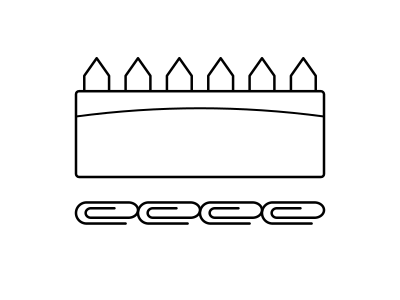
    1. A crayon box with 4 same-size paper clips laid end to end under it, no gaps. How many paper clips long is the crayon box?
    2. 2 + 7 + 7 = ? Look for a double.

    Reading & Writing

    1. insect, puppet, muffin

    Math · Week 29 Day 4

    I can tell how many in all and how many more.

    Look: a graph question

    1. Graph: red 6, blue 2, green 5. How many more chose red than green?
    2. Make towers of 6 and 5 with the bottoms lined up. They match up to 5.
    3. Red has 1 extra. 6 - 5 = 1, so 1 more chose red than green.

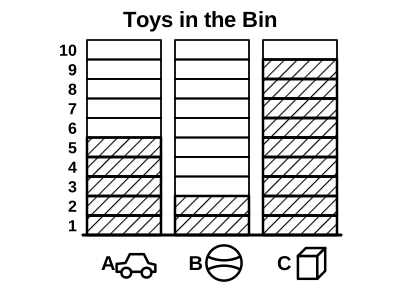
    Use the graph to answer. A bar graph titled Toys in the Bin with numbers 1 to 10 up the side. Bar A, cars: 5. Bar B, balls: 2. Bar C, blocks: 9.

    1. 1.
      How many toys are in the bin in all? ____
    2. 2.
      How many more blocks than cars? ____
    3. 3.
      How many fewer balls than blocks? ____
    4. 4.
      How many more cars than balls? ____

    Circle the answer.

    1. 5.
      Which kind of toy is there the most of?
      • A
      • B
      • C
    2. 6.
      Which equation tells how many cars and balls in all?
      • 5 + 2 = 7
      • 5 - 2 = 3
      • 9 + 2 = 11
    3. 7.
      Which equation tells how many more blocks than balls?
      • 9 + 2 = 11
      • 9 - 2 = 7
      • 9 - 5 = 4

    Challenge (optional)

    2 more balls go in the bin. Now are there more balls or more cars? How many more?

    You need: Pencil, Cubes (optional, to build towers)

    Reading & Writing · Week 29 Day 4

    I can write facts that answer our question about plants.

    Look: facts that answer our question

    1. Our question: What does a plant need?
    2. Pick facts that answer it: A plant needs water.
    3. Use an -ed word for something our bean did: Our bean got fat when we misted it.

    What Does a Plant Need?

    A plant needs water and light. Our bean got fat when we misted it. Then a tip curled down. A plant also needs soil.

    Does it tell what a plant needs? Circle yes or no.

    1. 1.
      A plant needs light.
      • yes
      • no
    2. 2.
      A plant is in a pot.
      • yes
      • no
    3. 3.
      Our bean got big when it had sun.
      • yes
      • no
    4. 4.
      My dog likes plants.
      • yes
      • no

    Write 3 facts that answer the question. Use one -ed word.

    1. 5.
      A plant needs ____.
    2. 6.
      Our bean ____.
    3. 7.
      A plant also needs ____.

    Challenge (optional)

    I got it from ____.

    Social Studies · Week 29 check

    Weekly check

    How to give it: Read every question and choice aloud, and point to each picture as you name it. This week the check is an oral sequencing task. Your child answers by talking, pointing, circling, acting it out or drawing; write their words exactly on the line. It is not timed; stop and finish later if your child is tired. Do not show the page ahead of time. Lay out the 7 banana-trip cards face down; if stuck on item 4, start with the farm card and the store card at the two ends. Make a check mark next to each part your child shows on their own.

    Secure when: 6 of 8 correct, with at least one right on each goal

    • I can trade with a friend and tell if the trade was fair.
    • I can explain how buying something connects me to people far away.
    1. 1.
      Kim trades 3 shells for 3 rocks, and both friends say yes. Is the trade fair?
      • yes
      • no
    2. 2.
      Sam tricks his friend into trading a good toy for a broken one. Is that fair?
      • yes
      • no
    3. 3.
      Someone offers you 1 sticker for all 5 of your stickers. What could you say?
    4. 4.
      Tell the banana's trip in order, from the farm to our store.
    5. 5.
      Name 3 people who helped bring us a banana.
    6. 6.
      What carries the bananas across the sea?
    7. 7.
      Why do the bananas go to a ripening room?
    8. 8.
      When we buy a banana, who are we connected to?