1First Grade

    Lesson + weekly check: data

    Share and check: -ed

    Practice pages

    0 of 180 days complete · Saved on this device

    View all 180 days

    MathWeekly check

    Lesson + weekly check: data

    I can read a graph and answer questions about it.

    Standards: 1.MD.C.4

    Number practice (no timer)
    Count tallies by 1s (and 5s as a shortcut)
    Builds on
    This week's work: tallies, picture graphs, bar graphs and questions about data. One-minute check: draw 2 bundles of 5 and 3 marks. "How many?" (13)

    New words

    • weather: what it is like outside, such as sunny, cloudy or rainy

    You need

    • Grid paper, or a grid an adult draws in the notebook: 3 columns of 10 boxes, each box about the size of a thumbnail, with the numbers 1 to 10 written up the left side
    • Crayons
    • A list of 15 days of weather (written in the lesson)
    • Notebook and pencil
    • The stored Week 29 check and its answer key
    1. Warm-Up · 5 min

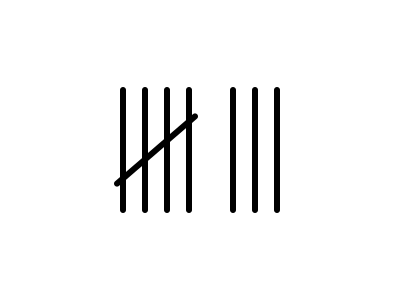
      Fluency: count tallies. Draw 1 bundle of 5 and 4 marks. (9) Spaced review from Week 22: "28 + 5?" (33)

    2. Short Lesson: Review Game · 10 min

      Weather Watch. Say: "A family wrote down the weather for 15 days." Read the list one day at a time: sunny, sunny, cloudy, rainy, sunny, cloudy, cloudy, sunny, rainy, sunny, sunny, cloudy, rainy, sunny, sunny. Your child makes a tally chart with 3 rows (Sunny, Cloudy, Rainy), then colors a bar graph. Answers: sunny 8, cloudy 4, rainy 3. Ask: "How many days in all?" (15) "Which weather happened most?" (Sunny) "How many more sunny days than cloudy days?" (4) If stuck, say: "Say the weather, find its row, make one mark." If you like, keep a real weather tally for the next 2 weeks.

    3. Weekly Check · 15 min

      Give the stored Week 29 check. The printed check has 6 items. It covers these goals: (1) I can read a bar graph; (2) I can count tally marks; (3) I can find how many in all and how many more or fewer. Read each item aloud. There is no time limit. If your child is stuck, say only: "Put your finger on the bar. Read its label." Do not give the answer. Score it with the answer key. Secure: 5 or 6 of the 6 items right. If the check is secure, start Week 30. If it is not, first do the reteach step on the check page for each group of items missed, then start Week 30.

    4. Exit Ticket · 3-5 min

      After the check, ask these two questions. Then go over any missed check items together.

    Exit ticket

    1. Show 9 with tally marks.
    2. On a bar graph, two bars are the same height. What does that tell you?
    Answers
    1. Look for: a bundle of 5 (4 marks with a line across) and 4 more marks.
    2. The two categories have the same number of votes.
    Watch for, and help or stretch
    Watch for
    Counting the tally marks in a bundle as 4 instead of 5.
    Try
    Count a bundle slowly, touching each mark, including the one across: "1, 2, 3, 4, 5."
    Extra help
    Let your child build cube towers for the check's compare question and note it on the check.
    Stretch
    Ask: "If the next 2 days are both rainy, how many rainy days will there be?" (5) "Will rainy still have the fewest?" (No. Cloudy will have the fewest, 4.)

    At home (optional): Your child keeps a weather tally for the next 5 days (sunny, cloudy or rainy) and tells a family member which weather happened most.
    Reading & WritingWeekly check

    Share and check: -ed

    I can read -ed words and tell about something that already happened.

    Standards: RF.1.3.f, L.1.1.e, RF.1.3.g

    Phonics
    Inflectional ending -ed (jumped, played, landed) with no base change
    Sight words
    follow, came, want, show, also
    Reading
    Original text "From Seed to Plant" and bean observation journal
    Writing
    Shared research: drafting our plant fact page; past-tense verbs · Handwriting: journal entries
    Builds on
    This week's -ed endings and time words. One-minute check: warm up with jumped, played, landed.

    New words

    • observation: something you noticed by looking closely

    You need

    • Word cards: 10 -ed words (written in step 4)
    • 10 game cards (index cards): hunted, picked, spilled, dusted, rocked, rained, mixed, landed, yelled, honked
    • Three header cards: /t/, /d/, /ed/
    • Sight word cards: follow, came, want, show, also, too, mean, same, tell, boy
    • Recording sheet
    • The bean plant and the bean journal; a small pot with a drainage hole (or a plastic cup with a hole an adult pokes in the bottom), potting soil and a plastic saucer
    • Lined handwriting paper
    1. Review Game · 10 min

      Sound Sort Walk: lay the 3 header cards across the room and 10 game cards face down: hunted, picked, spilled, dusted, rocked, rained, mixed, landed, yelled, honked. Your child flips a card, reads it and walks it to the header with the same ending sound. (/t/: picked, rocked, mixed, honked. /d/: spilled, rained, yelled. /ed/: hunted, dusted, landed.) If stuck on a word during the game (not during the check), cover all but the first sound, say it together, then uncover the rest and blend.

    2. Sight Words · 5 min

      Review: follow, came, want, show, also, too, mean, same, tell, boy. Flashlight Read: dim the lights; your child shines a flashlight on a card and reads it.

    3. Weekly Check · 15 min

      The printed check has 10 items. It covers these goals: (1) I can read -ed words and tell about something that already happened; (2) I can use verbs for past, now and not yet, and find the root word; (3) I can write facts that answer our question. Give no hints on items 1 to 3. Record each answer. Secure: 8 of 10 words in items 1-2, 4 of 5 sight words, a past-tense sentence in item 4, and 4 of 6 on items 5-10. For any part that is not yet secure, use the matching reteach step on the check page next week.

    4. Share & Listen · 10 min

      Your child reads the draft fact page to a listener, who asks one question, such as "How do you know a plant needs light?" Your child answers in a complete sentence and points to the fact card or journal page that shows it.

    5. Handwriting · 5 min

      Your child copies Our bean sprouted. and adds today's page to the journal with a neat date line. Circle the best word.

    6. Exit Ticket · 5 min

      Talk about the week.

    Exit ticket

    1. Read an -ed word and tell its root.
    2. Tell me something you will do tomorrow.
    Answers
    1. Answers vary. Look for: a correct read and root, such as rested, rest.
    2. Answers vary. Look for: a sentence with will, such as I will check my bean.
    Watch for, and help or stretch
    Watch for
    Telling item 4 in the present (The bean turns.) after hearing yesterday.
    Try
    Before the check (not during it), practice one yesterday sentence together with the Yesterday card in view.
    Extra help
    In item 4, your child points to a journal page first, then tells it. You may ask: "What did it do?"
    Stretch
    Your child reads 3 bonus words: printed, splashed, unlocked. Do not score them.

    At home (optional): With a family member, your child plants the sprouted bean in the pot of soil, root down and just covered, sets it by a window and waters it. (If there is no stem yet, keep the napkin damp and plant it as soon as a stem shows.) The next day, your child tells about it in the past tense.

    ScienceWeekly check

    Predict summer daylight

    I can predict if summer days will have more or less daylight.

    Standards: 1-ESS1-2

    Builds on
    Daylight graph (Day 3). One-minute check: ask "Which strip on our graph was the shortest?" (December)

    New words

    • predict: to use what you know to tell what will happen next

    You need

    • Daylight graph from Day 3
    • Daylight chart from Day 1
    • 8 Season cards on index cards: 2 each with a winter picture (snow or a coat), a spring picture (buds), a summer picture (the beach or a swimsuit), a fall picture (falling leaves)
    • Week 29 science check page (given separately)
    • Pencil and crayons
    1. Warm-Up / Wonder · 5 min

      Spaced review: ask: "When can we see stars?" (at night, when the sky is dark) "Was it dark at dinner in winter?" (Answers vary; in most places, yes.) Wonder question: "What will dinnertime be like in summer?"

    2. Review Game · 10 min

      Play "More or Less?" Mix the 8 season cards. Your child draws a card and says "more daylight" or "less daylight" compared with winter, then puts it in a pile. Winter cards (less, it is the shortest). Spring cards (more than winter). Summer cards (more, the most). Fall cards (more than winter, but less than summer). After each card, your child points to a strip on the Daylight graph that helps. Then ask: "Which month on our graph had the most daylight?" (June) If stuck, hold two strips side by side and ask: "Which is longer?"

    3. Check · 10 min

      Give the Week 29 science check. The check items are on the Week 29 check page; do not show them ahead of time. Read each part aloud. Your child answers by talking, pointing, showing with the real materials or drawing. You write down their words exactly. It is not timed; stop and finish later if your child is tired. Make a check mark next to each part your child shows on their own. The printed check has 7 items. It covers these goals: (1) I can compare how dark it is at dinner in winter and now; (2) I can make a picture graph of daylight at different times of year; (3) I can predict if summer days will have more or less daylight. This week the check is an oral prediction task with the daylight graph. Look for: your child predicts that summer will have more daylight than winter and uses the graph as evidence (for example, "The June strip is the longest, so summer has more daylight"), and names winter as the season with the least daylight. If stuck on a part, point to the December strip and the June strip and ask: "Which one is summer? Which one is longer?" Secure: 5 of 7 correct, including item 1 (predicts more daylight in summer and uses the graph as evidence) and item 3 (winter has the least). If the check is not yet secure, use the reteach step on the check page that matches the items missed.

    4. Exit Ticket · 3–5 min

      Ask the three questions aloud. Your child answers by talking or drawing.

    Exit ticket

    1. In July, will it still be light outside when you go to bed, or dark?
    2. Which has less daylight: a day in fall or a day in summer?
    3. What did you use to make your prediction?
    Answers
    1. Answers vary by place and bedtime. Look for: it is more likely to still be light because summer has more daylight.
    2. A day in fall.
    3. Answers vary. Look for: the daylight graph, the Daylight Log or what we noticed at dinner.
    Watch for, and help or stretch
    Watch for
    Predicting that summer has more daylight because it is hotter, without using the graph.
    Try
    Say: "Show me on the graph." Have your child put a finger on the June strip and tell what it shows.
    Extra help
    Use only the winter and summer cards and the December and June strips.
    Stretch
    Your child writes a prediction for the Daylight Log next December and checks it then.

    At home (optional): Your child tells a family member the prediction for summer daylight and shows the graph as proof.

    Practice

    Read each direction aloud. Your child works on the page; answers are in the grown-up view.

    Warm-up

    Remember?

    Math

    1. At 4 o'clock, what number does the long hand point to?
    2. 80 - 70 = ? Think: 8 tens take away 7 tens.

    Reading & Writing

    1. work, place

    Math · Week 29 check

    Weekly check

    How to give it: Read every item aloud, including the graph title and what each bar stands for. It is untimed. If your child is stuck, say only: "Put your finger on the bar. Read its label." Do not give the answer. 5 or 6 right: start Week 30. 4 right: redo Day 4 Guided Practice before Week 30. 3 or fewer right: redo Days 3 and 4 with cube towers before Week 30.

    Secure when: 5 or 6 of the 6 items right.

    • I can read a bar graph.
    • I can count tally marks.
    • I can find how many in all and how many more or fewer.
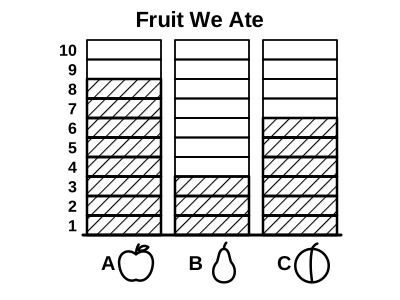
    1. 1.
      A bar graph titled Fruit We Ate with numbers 1 to 10 up the side. Bar A, apples: 8. Bar B, pears: 3. Bar C, plums: 6. How many plums? ____
    2. 2.
      Tally marks: 1 bundle of 5 (4 marks with a line across) and 3 more marks. How many does the tally show? ____
    3. 3.
      Which fruit did we eat the most of? Circle the letter.
      • A
      • B
      • C
    4. 4.
      Which fruit did we eat the fewest of? Circle the letter.
      • A
      • B
      • C
    5. 5.
      How many fruits did we eat in all? ____
    6. 6.
      How many more apples than pears? ____

    Reading & Writing · Week 29 check

    Weekly check

    How to give it: Give it in one sitting, untimed. Read each direction aloud and give no hints in items 1-3. For items 1-3, your child reads each word aloud and you tick the ones read right. For item 4, your child looks at the bean plant and the journal, then writes or tells what the bean did yesterday; write the words if your child tells it aloud. For item 5, say: Is it past, now or not yet? For item 7, say: Write the root word. For item 8, say: Circle the word that is not in the family. Your child reads Our Bean before item 9. For item 10, say the word pecked twice.

    Secure when: 8 of 10 words in items 1-2, 4 of 5 sight words, a past-tense sentence in item 4, and 4 of 6 on items 5-10.

    • I can read -ed words and tell about something that already happened.
    • I can use verbs for past, now and not yet, and find the root word.
    • I can write facts that answer our question.

    Our Bean

    Last week, we planted a bean. It rested in a wet napkin. Then it got fat, and a tip curled down. Now it has a stem!

    1. 1.
      mashed rented smelled locked honked
    2. 2.
      dented bumped chirped stayed loaded
    3. 3.
      follow came want show also
    4. 4.
      Last night, my bean ____.
    5. 5.
      Mom will dig in the soil.
      • past
      • now
      • not yet
    6. 6.
      Kim ____ the gate last night.
      • fix
      • fixed
      • will fix
    7. 7.
      missed ____
    8. 8.
      rest
      • rests
      • rested
      • rust
    9. 9.
      What did the tip do?
      • curled down
      • jumped up
    10. 10.
      Spell it: ____

    Science · Week 29 check

    Weekly check

    How to give it: Read every direction, question and choice aloud. It is not timed; stop and finish later if your child is tired. Your child answers by talking, pointing, showing with the real materials or drawing, and you write their words exactly. Have the Daylight graph and the Daylight chart. If stuck, point to the December strip and the June strip and ask "Which one is summer? Which one is longer?"

    Secure when: 5 of 7 correct, including item 1 (predicts more daylight in summer and uses the graph as evidence) and item 3 (winter has the least).

    • I can compare how dark it is at dinner in winter and now.
    • I can make a picture graph of daylight at different times of year.
    • I can predict if summer days will have more or less daylight.
    1. 1.
      Predict: will summer days have more or less daylight than winter days? Tell your evidence from the graph. Your grown-up writes it.
    2. 2.
      Point to the strip on your Daylight graph that is closest to summer.
    3. 3.
      Circle the season with the least daylight.
      • A snowy winter day.
      • A sunny summer day at the beach.
    4. 4.
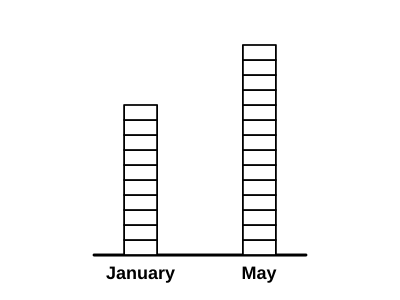
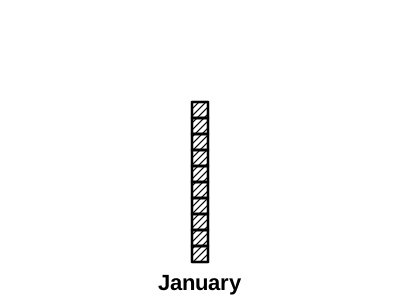
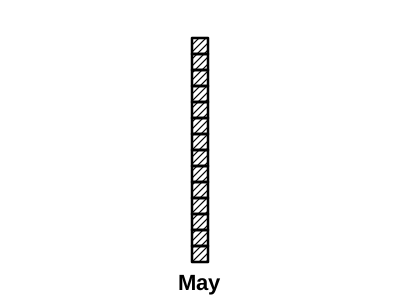
      A daylight graph: January strip 10 squares, May strip 14 squares. Which strip is longer?
      • The January strip.
      • The May strip.
    5. 5.
      Look at the same graph. How many more squares does May have than January?
      • 2
      • 4
      • 10
    6. 6.
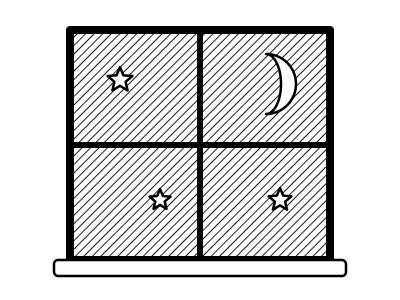
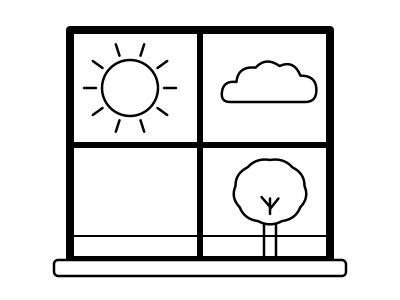
      It is summer and the family eats dinner at 6 o'clock. Circle the window.
      • A window that is dark outside.
      • A window that is light outside.
    7. 7.
      Does September have more daylight than December?
      • yes
      • no