1First Grade

    Tally charts

    -ed endings

    Practice pages

    0 of 180 days complete · Saved on this device

    View all 180 days

    Math

    Tally charts

    I can use tally marks to keep count.

    Standards: 1.MD.C.4

    Number practice (no timer)
    Count tallies by 1s (and 5s as a shortcut)
    Builds on
    Counting by 1s and by 5s (Weeks 13 and 16). One-minute check: "Count by 5s to 30." (5, 10, 15, 20, 25, 30)

    New words

    • data: information we collect, like people's answers to a question
    • survey: asking people a question and writing down their answers
    • tally mark: a short line we draw to count one answer
    • category: a group that answers are sorted into, like apple, banana or grapes

    You need

    • Notebook and pencil
    • A list of the 13 fruit votes and 15 pet votes (written in the lesson)
    1. Warm-Up · 5 min

      Fluency: count tallies by 1s and by 5s. Draw 4 tally marks. "How many?" (4) Draw 4 marks with a fifth mark across them, then 2 more marks. Say: "The line across closes a bundle of 5." "How many?" (7: 5, then 6, 7) Spaced review from Week 14: "What number is 1 ten and 6 ones?" (16)

    2. Mini-Lesson · 10 min

      Say: "When we ask people a question and keep track of the answers, we collect data." Draw a tally chart with 3 rows: Apple, Banana, Grapes. Say: "I asked 13 friends: Which fruit do you like best: apple, banana or grapes? Here are their answers." Read the votes one at a time: apple, banana, apple, grapes, apple, apple, banana, grapes, apple, banana, grapes, apple, banana. Make the first 4 marks yourself, one per vote, in the right row. Then hand the pencil to your child for the rest. When apple gets its fifth vote, say: "The fifth mark goes across the other four, like a gate. Now I can count by 5s." Count each row together. Ask: "How many chose apple?" (6) "Banana?" (4) "Grapes?" (3)

    3. Guided Practice · 10 min

      Your child makes a new tally chart with 3 rows: Dog, Cat, Fish. Read these 15 votes for "Which pet do you like best?" one at a time: dog, cat, dog, fish, dog, cat, cat, dog, fish, dog, dog, cat, dog, fish, cat. Your child makes one mark for each vote, crossing the fifth mark in each bundle. Ask: "How many chose dog? Count the bundle of 5, then count on." (7) "Cat?" (5) "Fish?" (3) If stuck, say: "Say the vote out loud, put your finger on its row, then make one mark."

    4. Play · 10 min

      Family Fruit Survey. Your child asks each person at home: "Which fruit do you like best: apple, banana or grapes?" and makes one tally mark for each answer. If only a few people are home, call a relative or ask a neighbor with an adult. Your child counts each row. Answers vary. Look for: one mark per person and a bundle of 5 crossed. Keep this tally chart for Day 2.

    5. Exit Ticket · 3-5 min

      Before asking, draw a bundle of 5 tally marks and 3 more marks in the notebook. Read each question aloud. Your child answers out loud or draws. Check each answer together right away.

    Exit ticket

    1. How many does my tally show?
    2. Show 6 with tally marks.
    3. Why do we draw the fifth mark across the other four?
    Answers
    1. 8
    2. Look for: a bundle of 5 (4 marks with a line across) and 1 more mark.
    3. So we can see groups of 5 and count by 5s.
    Watch for, and help or stretch
    Watch for
    Drawing a fifth straight mark instead of a line across, so the bundles cannot be seen.
    Try
    Count with your child: "1, 2, 3, 4, and the fifth one crosses the gate." Fix one bundle together.
    Extra help
    Read the votes more slowly and point to the row for each vote. Stop after every 5 votes to count the marks together.
    Stretch
    Ask: "How many people answered the pet question in all?" (15) "How can you check?" (Count all the marks: 7 + 5 + 3 = 15.)

    At home (optional): Your child shows the Family Fruit Survey to a family member and tells how many people chose each fruit.
    Reading & Writing

    -ed endings

    I can read words that end in -ed.

    Standards: RF.1.3.f, L.1.4.c, RF.1.3.g

    Phonics
    Inflectional ending -ed (jumped, played, landed) with no base change
    Sight words
    follow, came, want, show, also
    Reading
    Original text "From Seed to Plant" and bean observation journal
    Writing
    Shared research: drafting our plant fact page; past-tense verbs · Handwriting: journal entries
    Builds on
    -s and -es endings (Week 28). One-minute check: your child reads jumps, wishes and plants and names the root in each.

    New words

    • past: a time that already happened
    • -ed: an ending that shows something already happened, like jumped
    • journal: a book where you write what happened each day

    You need

    • Three header cards (index cards): /t/ jumped, /d/ played, /ed/ landed
    • Word cards (index cards): kicked, filled, melted, looked, rained, rested, fixed, turned, needed, wished
    • Sight word cards: follow, came, want, show, also (5 index cards)
    • Printed "From Seed to Plant" (in the lesson)
    • The bean cup (started in Week 28) and a magnifying glass if you have one (optional)
    • A bean journal: 5 sheets of paper stapled together
    • Lined handwriting paper and a pencil
    1. Phonics & Word Work · 15 min

      I do: write jump, then add -ed: jumped. Say: "-ed means it already happened. Listen: jumped. The -ed says /t/." Write play, played: "Here -ed says /d/." Write land, landed: "After t or d, -ed says /ed/ and adds a beat: land-ed." Put the three header cards in a row. We do: read kicked, filled and melted together; your child puts each under the header with the same ending sound (kicked: /t/; filled: /d/; melted: /ed/). You do: your child reads and sorts looked, rained, rested, fixed, turned, needed, wished. (/t/: looked, fixed, wished. /d/: rained, turned. /ed/: rested, needed.) Then your child covers -ed on 3 cards and reads the root word (look, rain, rest). Read: "The frog jumped and landed in the pond." Dictation: say each word; your child writes the root, then -ed: rested, kicked, played. If stuck, cover the -ed, read the root, then uncover it and say: "It already happened: jump... jumped."

    2. Sight Words · 5 min

      Introduce this week's words with see-say-spell-write. For each card: Say: "This word is ___. Say it with me." Your child reads it, spells it aloud while tapping each letter, writes it once while saying each letter, and reads it again. Draw a small heart over any part we must learn by heart: follow (fol + low: o is short in fol, and ow says long o as in snow: regular); came (a_e, regular); want (a says /o/ after w: heart over a); show (ow says long o, regular); also (al says /awl/ as in all: heart over a; the o at the end says its name: heart over o). Finish by reading all five cards in mixed order twice. If stuck, cover the tricky part, read the rest together, then uncover it and say the whole word.

    3. Read-Aloud & Shared Reading · 15 min

      Say: "This is a bean journal. A child wrote what happened each day, so it tells about the past." Echo-read the decodable: you read a line, your child reads it back. From Seed to Plant Day 1: I planted two beans in a cup. I added water to the napkin. Day 2: I checked the beans. They looked the same. Day 3: The beans got fat. Then the skin on one bean split. Day 4: A little white tip showed up. It curled down. Day 5: I wanted to see more. A stem sprouted up from the bean. Day 7: The stem had two green leaf tips. Mom and I planted it in a pot of dirt. Day 9: The plant leaned to the window. It turned its leaf tips to the light. Day 10: Dad came to see it. "It is as long as my hand!" he said. Day 12: The dirt looked dry. I filled a cup and watered the plant. Day 14: My dog likes to follow me to the window to look at it. I also want to plant a corn seed next. I will show it to Gram. Ask: "What happened on Day 3?" (The beans got fat and the skin on one bean split.) Ask: "What do you think the little white tip on Day 4 was?" (The root.) Ask: "Why did the child water the plant on Day 12?" (The dirt looked dry.) Then look closely at our own bean cup together. Ask: "Is our bean like Day 2, Day 3, Day 4 or Day 5 in the journal?" (Answers vary. Look for: a match to what you see, such as Day 4: a little white tip showed up.) If stuck, read each day's line again and hold the cup next to the page.

    4. Writing & Handwriting · 15 min

      Start the bean journal. Say: "A journal tells what already happened, so we use -ed words." Your child writes on page 1: Day 1: I planted my bean. Then your child writes today's page: "Day ___: I checked my bean. ___" and adds one thing they saw (Answers vary. Look for: a true observation, such as It looked fat. or A tip showed up.). Spelling by sounds is fine for new words. Handwriting (4 min): journal entries start at the left margin. Your child writes the day number and a colon, then the sentence, keeping letters on the line.

    5. Exit Ticket · 5 min

      Oral answers. Your child reads the words from a card you write.

    Exit ticket

    1. Read these words: dusted, camped, yelled.
    2. Which word adds a beat: missed or painted?
    3. What does -ed tell you?
    Answers
    1. dusted, camped, yelled
    2. painted (paint-ed): the root ends in t.
    3. It already happened (it happened in the past).
    Watch for, and help or stretch
    Watch for
    Reading jumped as jump-ed, with an extra beat.
    Try
    Say: "Only add a beat when the root ends in t or d." Read jumped and landed side by side and clap each.
    Extra help
    Read and sort only /ed/ words today (landed, melted, rested, needed): you can hear the extra beat. Add /t/ and /d/ on Day 2.
    Stretch
    Your child finds every -ed word in "From Seed to Plant" and sorts them by sound. (/t/: checked, looked; /d/: showed, curled, leaned, turned, filled, watered; /ed/: planted, added, wanted, sprouted)

    At home (optional): Your child reads "From Seed to Plant" to a family member and points to 3 -ed words.

    Science

    Daylight long or short?

    I can compare how dark it is at dinner in winter and now.

    Standards: 1-ESS1-2

    Builds on
    The sun rises and sets (Week 26). One-minute check: ask "Where does the sun set?" (in the west) "What do we call it when the sun comes up?" (sunrise)

    New words

    • daylight: the time of day when the sun is up and it is light outside
    • season: one of the four parts of the year: winter, spring, summer and fall
    • compare: to look at how things are alike and different

    You need

    • The Daylight Log on the last page of the Science Notebook (started in Week 1): one light or dark mark for dinnertime each month
    • If you have no log: a weather app or the newspaper to find today's sunset time, and a grown-up's memory of when it got dark in December and January
    • A Daylight chart: a sheet of paper with 2 columns labeled Light at dinner and Dark at dinner
    • 12 month cards (index cards labeled January to December)
    • Crayons and tape
    • Sky Journal
    1. Warm-Up / Wonder · 5 min

      Spaced review: ask: "When can we see stars?" (at night, when the sky is dark) Wonder question: "In winter, was it light or dark when we ate dinner? What about now?" Let your child guess.

    2. Explore · 10–15 min

      Open the Daylight Log. Say: "Since the start of the year, we checked once a month: was it light or dark outside at dinnertime? Now we look for a pattern." Read each month's mark together. Your child tapes each month card under Light at dinner or Dark at dinner on the Daylight chart, in order. (Answers vary by place. Look for: the winter months such as December and January under Dark at dinner, and the early fall and spring months under Light.) If you have no log, use the grown-up's memory and today: ask "In December, was it dark when we ate dinner?" (Answers vary; in most of the United States, yes.) Then step to a window at dinnertime today. Safety: never look straight at the sun, even for a moment, and never point a tube, a flashlight or anything else at it. Sunglasses do not make it safe. Look at the sky and the ground, not toward the setting sun. Ask: "Is it light or dark now at dinner?" (Answers vary. Look for: lighter now than in winter.) Ask: "In which season is it dark at dinner?" (winter) "Now that it is spring, is there more daylight or less daylight than in winter?" (more) Say: "In winter the sun is up for a shorter time, so there is less daylight. In spring, the days have more daylight, so it stays light later." Note for grown-ups: in many places, clocks change in March and November. That moves dinnertime light by one hour, but the amount of daylight itself changes a little every day. Grade 1 compares more and less daylight only; no hours or reasons yet. If stuck, compare only 2 months: point to December and to this month and ask: "Which one was dark at dinner?"

    3. Talk & Record · 5–10 min

      Your child draws two dinner tables side by side in the Sky Journal: one with a dark window (winter) and one with a light window (now). Sentence frame: "In winter there is ___ daylight. In spring there is ___ daylight." (less, more)

    4. Exit Ticket · 3–5 min

      Ask the three questions aloud. Your child answers by talking or drawing.

    Exit ticket

    1. Was it lighter at dinnertime in January or this month?
    2. Which season had less daylight: winter or spring?
    3. If you got up very early on a winter morning, would it be dark or light outside?
    Answers
    1. This month.
    2. Winter.
    3. Dark (in winter the sun comes up later, so there is less daylight).
    Watch for, and help or stretch
    Watch for
    Thinking the days get longer only because we stay up later.
    Try
    Ask: "Did the sky get dark at the same time in winter as it does now?" Look at the log marks together.
    Extra help
    Compare only December and this month, with the grown-up pointing to the log.
    Stretch
    Your child looks up today's sunrise and sunset times with a grown-up for 3 days in a row and tells if sunset got earlier or later.

    At home (optional): At dinner tonight, your child looks out a window (not at the sun) and tells a family member whether it is light or dark, and compares it with winter.

    Practice

    Read each direction aloud. Your child works on the page; answers are in the grown-up view.

    Warm-up

    Remember?

    Math

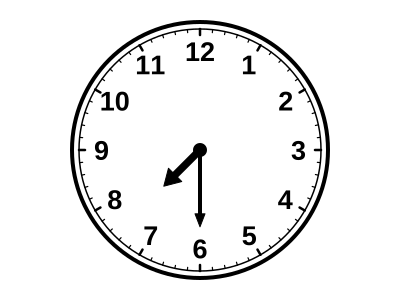
    1. A clock with the long hand on 6 and the short hand halfway between 7 and 8. What time is it?
    2. 1 + 8 = 9. So what is 9 - 1?

    Reading & Writing

    1. wishes, boxes, hops

    Math · Week 29 Day 1

    I can use tally marks to keep count.

    Look: tally marks for 7

    1. Make 1 mark for each vote.
    2. The fifth mark goes across the first 4, like a gate.
    3. A gate and 2 more marks: 5, 6, 7.

    How many does each tally show?

    1. 1.
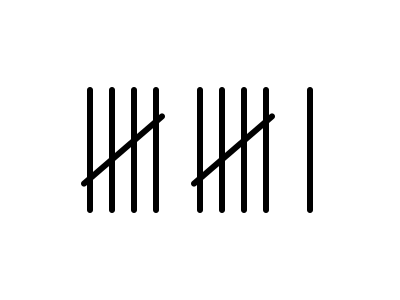
      Tally marks: 2 bundles of 5 (4 marks with a line across) and 1 more mark. ____
    2. 2.
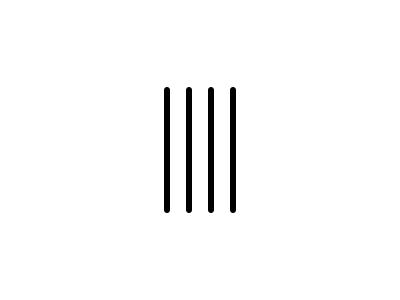
      Tally marks: 4 single marks, no bundle. ____
    3. 3.
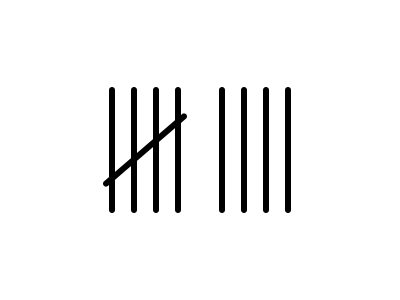
      Tally marks: 1 bundle of 5 (4 marks with a line across) and 4 more marks. ____
    4. 4.
      Draw tally marks for 13.

    Listen to the votes and make a tally chart.

    1. 5.
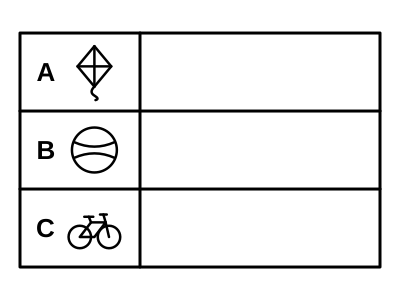
      A tally chart with 3 empty rows. Row A has a picture of a kite, row B a ball, row C a bike. Votes for best toy: kite, ball, ball, bike, kite, ball, bike, ball, ball, kite, ball. Make one mark for each vote.
    2. 6.
      How many chose the ball? ____
    3. 7.
      Which got the fewest votes? Circle the letter of the row.
      • A
      • B
      • C

    Challenge (optional)

    How many votes were there in all for the kite, the ball and the bike?

    You need: Pencil

    Reading & Writing · Week 29 Day 1

    I can read words that end in -ed.

    Look: -ed endings

    1. jump + ed = jumped. -ed means it already happened. Here -ed says /t/.
    2. play + ed = played. Here -ed says /d/.
    3. land + ed = landed. After t or d, -ed says /ed/ and adds a beat: land-ed.

    My Pea Plant

    Day 1: I planted a pea in a pot. Day 3: I checked the pot. I did not see a thing. Day 6: A green stem curled up! Day 8: I misted the soil.

    Read the word. Circle the sound -ed makes.

    1. 1.
      kissed
      • /t/
      • /d/
      • /ed/
    2. 2.
      spelled
      • /t/
      • /d/
      • /ed/
    3. 3.
      rusted
      • /t/
      • /d/
      • /ed/
    4. 4.
      boiled
      • /t/
      • /d/
      • /ed/

    Read the word. Write the root word.

    1. 5.
      tossed ____
    2. 6.
      printed ____
    3. 7.
      seemed ____
    4. 8.
      hunted ____

    Challenge (optional)

    Last night, I ____.

    Science · Week 29 Day 1

    I can compare how dark it is at dinner in winter and now.

    Look: Light or dark at dinner?

    1. Look at the Daylight Log: in December it was dark at dinner.
    2. Look out the window at dinner now: it is still light.
    3. So spring has more daylight than winter.

    In most of the United States, what does the window look like at dinnertime? Circle it.

    1. 1.
      Dinner in December
      • A window that is dark outside.
      • A window that is light outside.
    2. 2.
      Dinner in June
      • A window that is dark outside.
      • A window that is light outside.
    3. 3.
      Dinner in July
      • A window that is dark outside.
      • A window that is light outside.

    Circle, mark or draw.

    1. 4.
      Circle the season when it often gets dark before dinner.
      • A snowy winter day.
      • A sunny summer day at the beach.
    2. 5.
      Does the amount of daylight stay the same all year?
      • yes
      • no
    3. 6.
      Look at your Daylight Log. Make a mark on one month that was dark at dinner.
    4. 7.
      Draw the window at your dinner tonight. Is it light or dark?

    Challenge (optional)

    Your cousin eats dinner at the same time all year. When will the sky be light at her dinner: winter or summer?

    You need: crayons, the Daylight Log