This week's lessons
Math and reading every day; science and social studies take turns
- Day 1 · Monday
- MathTally chartsI can use tally marks to keep count.
- Reading & Writing-ed endingsI can read words that end in -ed.
- ScienceDaylight long or short?I can compare how dark it is at dinner in winter and now.
- Day 2 · Tuesday
- MathPicture graphsI can make a picture graph from my tally chart.
- Reading & WritingYesterday, today, tomorrowI can use verbs to tell about the past, present and future.
- Social StudiesTrading gameI can trade with a friend and tell if the trade was fair.
- Day 3 · Wednesday
- MathBar graphsI can make a bar graph with three bars.
- Reading & WritingRoot wordsI can find the root word in looks, looked and looking.
- ScienceDaylight graphI can make a picture graph of daylight at different times of year.
- Day 4 · Thursday
- MathAsking questions about dataI can tell how many in all and how many more.
- Reading & WritingDraft our fact pageI can write facts that answer our question about plants.
- Social Studies · CheckA banana's tripI can explain how buying something connects me to people far away.
- Day 5 · Friday
- Math · CheckLesson + weekly check: dataI can read a graph and answer questions about it.
- Reading & Writing · CheckShare and check: -edI can read -ed words and tell about something that already happened.
- Science · CheckPredict summer daylightI can predict if summer days will have more or less daylight.
This week's checks
Short checks on the last day each subject meets this week
Social Studies · Day 4
- I can trade with a friend and tell if the trade was fair.
- I can explain how buying something connects me to people far away.
Secure when: 6 of 8 correct, with at least one right on each goal
Open the checkMath · Day 5
- I can read a bar graph.
- I can count tally marks.
- I can find how many in all and how many more or fewer.
Secure when: 5 or 6 of the 6 items right.
Open the checkReading & Writing · Day 5
- I can read -ed words and tell about something that already happened.
- I can use verbs for past, now and not yet, and find the root word.
- I can write facts that answer our question.
Secure when: 8 of 10 words in items 1-2, 4 of 5 sight words, a past-tense sentence in item 4, and 4 of 6 on items 5-10.
Open the checkScience · Day 5
- I can compare how dark it is at dinner in winter and now.
- I can make a picture graph of daylight at different times of year.
- I can predict if summer days will have more or less daylight.
Secure when: 5 of 7 correct, including item 1 (predicts more daylight in summer and uses the graph as evidence) and item 3 (winter has the least).
Open the check
Reading About Our World: Long Days, Short Days
Read it aloud. Your child reads the sentences marked with a star. Builds science knowledge.
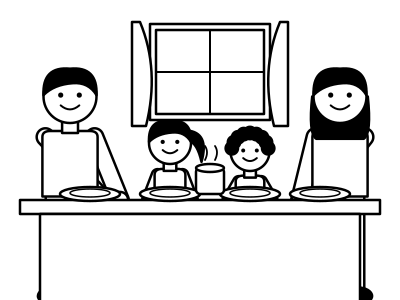
Dark at Dinner
In winter, it can be dark outside when you eat dinner. The sun sets early, so the days are short.
Light at Dinner
In summer, the sun stays up much later. It can still be light after dinner. Many children play outside in the long evenings. The days are long.
A Yearly Pattern
Daylight changes with each season. Each year, days get longer in spring and are longest in summer. Then they get shorter in fall and are shortest in winter. This pattern repeats every year. Watch the sky at dinnertime each month to see the pattern.
Words to know
- daylight: the time when the sun lights up the sky
- season: one of the four parts of the year
- repeat: happen again and again
Talk about it
- In which season is it dark at dinnertime?
- In which season are the days longest?
- It is spring. Will the days get longer or shorter in the next few weeks? Why?
Home Connection
Five-minute ideas for the whole family, with things you already have
Math
Tally marks and graphs help us count and compare.
Do: Ask family and friends one question with 3 choices, like "Apples, bananas or grapes?" Make a tally mark for each answer, then a picture graph.
Talk: Which choice got the most votes? How many more than the fewest?
Reading & Writing
Words with -ed often tell what already happened.
Do: At dinner, each person tells something they did today. Write jumped, played, landed and rested for your child to read.
Talk: What did you do yesterday?
Science
There is more daylight in summer and less in winter.
Do: Notice if it is light or dark outside at dinner time, and talk about what it was like at dinner in winter.
Talk: Do summer days have more daylight or less daylight?
Social Studies
A trade is fair when both people are happy, and buying things connects us to people far away.
Do: Trade a toy or snack with a family member or friend, and decide together if it was fair.
Talk: Where did your banana or another food come from? Check the sticker or label.
This week's words: follow, came, want, show, also
Celebrate a family survey, -ed words and a fair trade.
Math catch-up: Tally Bundles of Five
10 minutes, if this week's math check was not secure · 1.MD.C.4
Children often count a bundle of tally marks as 4, or answer a 'how many more' question with the bigger number. Counting each mark in a bundle and lining up two rows fixes both.
You need: paper and a pencil, 15 buttons or dry beans in 3 kinds, or 3 kinds of small toys
- Make tallies together as your child sorts objects: 1, 2, 3, 4, and the fifth mark crosses the four.
- Count one bundle slowly, touching each mark, including the one across: 5. Then count on the loose marks.
- Make a 3-row picture graph with the objects. Ask: "How many in all?" Add the three rows.
- Ask a 'how many more' question about two rows. Line them up and count only the extras.
Try again
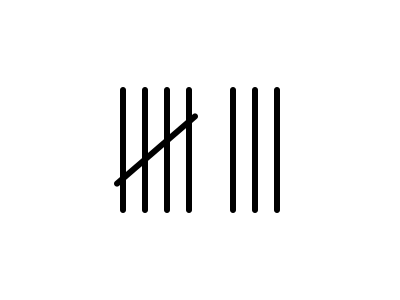 How many tally marks?
- A graph shows apples 6, bananas 4 and grapes 7. How many more grapes than bananas?
- A graph shows apples 6, bananas 4 and grapes 7. How many fruits in all?
Specials This Week
Weeks 25–30 unit • ~90 min/week per subject
Fitness Components (Cardiovascular & Strength)
Understanding what makes the heart beat faster, engaging in activities that build cardiovascular endurance and muscular strength.
Art from Around the World
Exploring art forms from different cultures (e.g., African masks, Native American pottery, Japanese origami, Aboriginal dot painting).
Music and Movement/Cultural Music
Moving creatively to music, exploring dance from different cultures, listening to music from around the world.
For guiding principles and full standards reference, visit How to use this curriculum
As an Amazon Associate, we earn from qualifying purchases. Book and supply links on this page are affiliate links — using them supports this curriculum at no extra cost to you.