1First Grade

    What makes a triangle a triangle?

    Comparing two books

    Practice pages

    0 of 180 days complete · Saved on this device

    View all 180 days

    Math

    What makes a triangle a triangle?

    I can tell what all triangles have.

    Standards: 1.G.A.1

    Number practice (no timer)
    Facts within 10 (keep-up practice)
    Builds on
    Kindergarten shape names. One-minute check: hold up a paper circle and a paper triangle. "Name each shape." (Circle, triangle)

    New words

    • side: a straight line that is part of the edge of a flat shape
    • corner: a point where two sides meet
    • closed: all the sides connect, with no gaps
    • attribute: something about a shape, like how many sides it has or its color

    You need

    • Paper shapes an adult cuts from colored paper before the lesson: 6 triangles (a big red one, a tiny blue one, a long skinny one, one with a square corner, a wide green one, and one more of any color), 3 rectangles, 2 squares and 2 circles
    • 2 index cards drawn by an adult: one with 3 straight lines that do not meet at one corner (a gap), and one with 2 straight sides and 1 curved side
    • Crayons
    • Notebook and pencil
    1. Warm-Up · 5 min

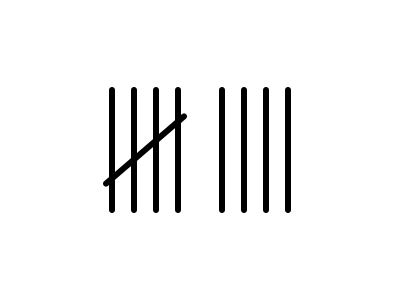
      Fluency: facts within 10. "6 + 4?" (10) "9 - 3?" (6) "2 + 5?" (7) Spaced review from Week 29: draw a bundle of 5 tally marks and 2 more. "How many?" (7)

    2. Mini-Lesson · 10 min

      Hold up the big red triangle. Say: "This is a triangle. Let's find out what makes it a triangle." Your child runs a finger along each side and counts. (3 sides) Touch each corner and count. (3 corners) Your child traces all the way around. Ask: "Did your finger get back to the start without jumping a gap?" (Yes.) Say: "It is closed." Hold up the tiny blue triangle. Ask: "Is this a triangle too?" (Yes. It is closed, with 3 straight sides and 3 corners.) Say: "Color does not matter. Size does not matter. A triangle must be closed and have 3 straight sides and 3 corners. Those are the attributes that matter." Hold up the long skinny triangle and turn it upside down. (Still a triangle.) Show the card with the gap. (Not a triangle. It is not closed.) Show the card with the curved side. (Not a triangle. One side is curved, not straight.)

    3. Guided Practice · 10 min

      Triangle or Not? Your child sorts all the paper shapes and both cards into 2 piles. For each one, your child says a sentence: "It is a triangle because it is closed and has 3 straight sides." or "It is not a triangle because ___." Answers: all 6 paper triangles are triangles. Not triangles: the rectangles and squares (4 sides), the circles (no straight sides and no corners), the gap card (not closed) and the curved card (a curved side). If stuck, say: "Trace the edge with your finger. Did you get back to the start? Count the straight sides out loud."

    4. Play · 10 min

      Draw 4 Triangles. Your child draws 4 different triangles in the notebook: a big one, a tiny one, a skinny one, and one standing on its point, and colors each one a different color. Then you draw 3 tricky shapes for your child to judge: a very flat triangle, a 3-sided shape with a gap, and a 4-sided shape. Your child says which is a triangle and why. (The flat triangle is a triangle. The gap shape is not closed. The 4-sided shape has 4 sides.)

    5. Exit Ticket · 3-5 min

      Before asking, draw 3 shapes in the notebook and label them A, B and C: A is a closed, tall, thin shape with 3 straight sides; B is a closed shape with 4 straight sides; C is 3 straight lines with a gap at one corner. Read each question aloud. Your child answers out loud. Check each answer together right away.

    Exit ticket

    1. Which of my drawings is a triangle?
    2. Why is C not a triangle?
    3. I color a triangle purple. Is it still a triangle? Why?
    Answers
    1. A
    2. It is not closed. It has a gap.
    3. Yes. Color does not change the shape. It is still closed, with 3 straight sides and 3 corners.
    Watch for, and help or stretch
    Watch for
    Saying a skinny or upside-down triangle is not a triangle because it does not look like the usual one.
    Try
    Run the triangle test out loud together: "Closed? 3 straight sides? 3 corners?" If all three are yes, it is a triangle.
    Extra help
    Sort only 4 shapes at first: the big triangle, the tiny triangle, a square and a circle. Count the sides of each one together.
    Stretch
    Ask: "Can a triangle have a square corner?" (Yes. Look at the triangle with a square corner.) "Can a triangle have 2 square corners?" (No. Let your child try to draw one; the sides will not close.)

    At home (optional): Your child finds 2 triangles at home (such as half of a sandwich cut corner to corner or a sign in a picture book) and tells a family member why each is a triangle.
    Reading & Writing

    Comparing two books

    I can compare two books about caring for the Earth.

    Standards: RI.1.9, RL.1.5, RF.1.3.b, RF.1.3.c

    Phonics
    oo as in moon and oo as in book (moon, book, food, wood), with cumulative review: short vowels, digraphs and blends
    Sight words
    well, large, must, big, even
    Reading
    The Earth Book (Todd Parr) and Michael Recycle (Ellie Bethel, illustrated by Alexandra Colombo), both optional; original story "The Big Trash Hunt" (decodable) and original idea list "Ways We Can Help the Earth"
    Writing
    Showcase: choose a best piece and add details (revision) · Handwriting: review of size and spacing
    Builds on
    Comparing two texts on one topic (Weeks 26 and 28). One-minute check: your child tells one way "Pip the Seed" and "A Bean Grows" were different.

    New words

    • Earth: the planet we live on
    • trash: things people throw away
    • recycle: to collect used things so they can be made into new things

    You need

    • Printed "The Big Trash Hunt" (in the lesson)
    • Printed "Ways We Can Help the Earth" (in the lesson)
    • The Earth Book by Todd Parr and Michael Recycle by Ellie Bethel, illustrated by Alexandra Colombo (both optional; the questions work with any idea book and any story about caring for the Earth)
    • A two-column chart on paper: Story and Ideas, with rows Same and Different
    • Word cards (index cards): moon, book, soon, food, hook, wood, zoom, cool, boot, cook, foot, spoon, trash, crust, plank, shelf, stomp, strap, swept
    • Sight word cards: well, large, must, big, even (5 index cards)
    • Lined handwriting paper
    1. Phonics & Word Work · 15 min

      New: oo has two sounds. I do: write moon. Say: "o and o together are a team. In moon, oo says /oo/, a long sound, like a cow saying moo." Tap and blend: /m/ /oo/ /n/, moon. Write book. Say: "oo has a second sound: /oo/ as in book, a short, quick sound." Tap and blend: /b/ /oo/ /k/, book. Say: "When you see oo, try the moon sound first. If that is not a real word, try the book sound." We do: read soon, food, hook and wood together. For each one, try the moon sound first and ask: "Is it a real word?" (soon and food: the moon sound; hook and wood: the book sound.) You do: your child reads zoom, cool, boot, cook, foot and spoon and tells which sound oo makes. (moon sound: zoom, cool, boot, spoon; book sound: cook, foot.) Blends review (4 min): write trash. Say: "tr is a blend: we hear both sounds, /t/ /r/. a is short. sh is a digraph: two letters, one sound." Tap and blend: /t/ /r/ /a/ /sh/, trash. Say: "Some blends have three letters, like str in strap, spl in splash, scr in scrub, shr in shrimp and thr in thrill. Some end blends we will meet a lot are sk in desk, sp in crisp, lf in shelf, lp in help, lt in melt, ld in held, pt in swept, nch in lunch and xt in next." Your child reads crust, plank, shelf, stomp, strap and swept and tells the short vowel in each (u, a, e, o, a, e). Read: "The moon is up, so the room is cool." "A crab hid in the shell." Dictation: say each word; your child taps the sounds and writes it: moon, book, crash, stomp. If stuck on oo, frame the two o's with your fingers: "Try the moon sound. Is it a word? Now try the book sound." If stuck on a blend, tap one finger for each sound and blend from the start; for a digraph, use one finger for both letters.

    2. Sight Words · 5 min

      Introduce this week's words with see-say-spell-write. For each card: Say: "This word is ___. Say it with me." Your child reads it, spells it aloud while tapping each letter, writes it once while saying each letter, and reads it again. Draw a small heart over any part we must learn by heart: well (regular: ll makes one /l/); large (ar is regular; g says /j/ because of the e, and the e is silent: heart over ge); must (regular); big (regular); even (the first e says its name: heart over it; ven is regular). Finish by reading all five cards in mixed order twice. If stuck, cover the tricky part, read the rest together, then uncover it and say the whole word.

    3. Read-Aloud & Shared Reading · 15 min

      Say: "Two texts can be about the same topic and still be different kinds of text." Your child reads the decodable story with you (echo-read: you read a line, your child reads it back). The Big Trash Hunt Fran and Dad went to the pond with a big sack. They had boots on their feet and mittens on their hands. "Yuck!" said Fran. "Trash is on the bank." A can, a cup, a sock and a spoon sat in the mud. "We must pick it up soon," said Dad. "Trash can get stuck on fish and ducks." Fran got the can and the spoon. Dad got the cup and the sock. Then Fran took a stick and dug in the mud. Thunk! She hit a large black thing. It was a lunch box with a crack in it. "Can we fix it?" asked Fran. "Well, the crack is too big," said Dad. "But we can still use it as a pot for plants!" At the end, the bank was clean. Fran stood on the bank and looked at the pond. A duck swam past in the cool pond. "Even the duck is glad," said Fran. "And so am I!" Then read the idea list aloud. Ways We Can Help the Earth (an original idea list; you read it) 1. Turn off the water while you brush your teeth. 2. Turn off the lights when you leave a room. 3. Use both sides of a sheet of paper. 4. Put cans, bottles and paper in a recycling bin, if your town has one. 5. Give toys and clothes you have outgrown to someone who can use them. 6. Pick up trash outside with a grown-up, wearing gloves. 7. Plant a seed or a tree. If you have The Earth Book and Michael Recycle, read them too: The Earth Book is like the idea list, and Michael Recycle is a story. Fill the chart together. Ask: "Which text tells a story? How do you know?" (The Big Trash Hunt, or Michael Recycle: it has characters, a place and things that happen in order.) Ask: "Which one gives ideas? How do you know?" (Ways We Can Help the Earth, or The Earth Book: it lists things we can do, with no characters.) Ask: "What do both texts want us to do?" (Answers vary. Look for: take care of the Earth, such as picking up trash or not wasting.) If stuck, hold up each text and ask: "Is there a character? Does it tell what happened?" Safety note for you: on any real trash walk, everyone wears gloves, and only an adult picks up anything sharp, such as glass, metal edges or needles. Teach your child: if you see something sharp, do not touch it; tell a grown-up.

    4. Writing & Handwriting · 15 min

      Your child writes two sentences: "The Big Trash Hunt is a ___." (story or tale) and "Each text wants us to ___." (Answers vary. Look for: help the Earth, pick up trash or a similar idea.) Spelling by sounds is fine for new words. Handwriting (4 min): size and spacing review. Tall letters (b, d, f, h, k, l, t) touch the top line; small letters (a, c, e, m, n, o) touch the middle line; leave a finger space between words. Your child copies "The bank was clean." and checks each rule.

    5. Exit Ticket · 5 min

      Oral answers. Your child reads the words from a card you write.

    Exit ticket

    1. Read these words: pool, hood, stool.
    2. A text says: Here are five ways to save water. Is it more like a story or an idea list?
    3. Tell me one thing the two texts have in common.
    Answers
    1. pool, hood, stool (pool and stool: oo as in moon; hood: oo as in book)
    2. An idea list: it gives ways to do something, not a story.
    3. Answers vary. Look for: both are about helping the Earth, or both talk about trash.
    Watch for, and help or stretch
    Watch for
    Reading the blend as one sound (fan for Fran).
    Try
    Slow it down: "Say the f, say the r, now slide them together: fr... Fran."
    Extra help
    Compare one thing only: "Does it tell a story or give ideas?" Read the story with your child (choral reading).
    Stretch
    Your child finds 6 words with a blend in "The Big Trash Hunt" and underlines the blend, then circles the oo words and tells each oo sound. (Blends: answers vary. Look for: any 6 of Hunt, Fran, and, went, pond, Trash, stuck, stick, black, crack, must, still, plants, end, clean, swam, past, glad, spoon, stood. oo words: boots, spoon, soon, too, cool (moon sound); took, stood, looked (book sound).)

    At home (optional): Your child picks one idea from the list that the family can do this week and tells why.

    Science

    What do engineers do?

    I can tell that engineers make things to solve problems.

    Standards: K-2-ETS1-1

    Builds on
    Our message devices (Unit 2) and nature designs (Unit 3). One-minute check: ask "What did our cup phone help us do?" (talk to someone far away) "Name one animal part we made a design work like." (Answers vary: a beak, a shell, spines.)

    New words

    • engineer: a person who designs and builds things to solve problems
    • problem: something that is not working or that people want to change
    • solution: a way to fix a problem
    • tool: a thing people make and use to help do a job

    You need

    • 5 everyday tools (the real things or pictures): kitchen tongs (metal or plastic), a plastic cup, an umbrella (closed), a clothespin, a plastic dustpan
    • Your cup phone or flashlight code card from Unit 2 and your nature design from Unit 3, or the Science Notebook pages that show them
    • A new Engineering Journal: 8 sheets of paper folded in half and stapled (16 pages), with "My Engineering Journal" on the cover
    • 6 index cards labeled Ask, Imagine, Plan, Create, Test, Improve
    • Pencil and crayons
    1. Warm-Up / Wonder · 5 min

      Spaced review: ask: "Which season has the most daylight?" (summer) Wonder question: "Who thought of the umbrella? What problem were they trying to fix?"

    2. Explore · 10–15 min

      Play "Problem Detective." Hold up each tool. Ask: "What problem does this solve?" Tongs (picking up hot or messy food without touching it). Cup (carrying water without spilling it). Umbrella (staying dry in the rain). Clothespin (holding things together, like a wet shirt on a line). Dustpan (picking up dirt from the floor). Say: "People called engineers design and build tools like these to solve problems. Tools are solutions." Then look back at our own designs. Message device: ask "What problem did the cup phone or flashlight code solve?" (sending a message to someone far away) "Did it use light or sound?" (Answers vary: the cup phone used sound that traveled along the string; the flashlight code used light.) Nature design: ask "What problem did your nature design solve?" (Answers vary.) "Which plant or animal part does it work like?" (Answers vary: tongs work like a bird's beak; a shell-shaped cover works like a turtle's shell.) Say: "You were already an engineer! Engineers often look at how animals and plants use their parts, and they use light and sound to send messages." Lay out the 6 step cards. Say: "Engineers use steps like these. NASA uses steps like these to teach students how engineers work: Ask about the problem, Imagine ideas, Plan with a drawing, Create it, Test it and Improve it." Act out each step with the cup phone: ask ("How can I talk to Grandma in the next room?"), imagine, plan, create, test ("Can she hear me?") and improve ("pull the string tighter"). If stuck on a tool, use it for a moment, then ask: "What would be hard to do without it?"

    3. Talk & Record · 5–10 min

      Your child writes their name on the Engineering Journal and draws one tool on the first page with its problem. Sentence frame: "A ___ solves the problem of ___." (Sample: "A cup solves the problem of carrying water.")

    4. Exit Ticket · 3–5 min

      Ask the three questions aloud. Your child answers by talking or drawing.

    Exit ticket

    1. What does an engineer do?
    2. A raincoat is a tool. What problem does it solve?
    3. What was the first step we listed for engineers?
    Answers
    1. Designs and builds things to solve problems.
    2. Staying dry in the rain.
    3. Ask (ask questions about the problem).
    Watch for, and help or stretch
    Watch for
    Naming what a tool is instead of the problem it solves ("It's a spoon").
    Try
    Ask: "What would be hard if we did not have it?" That points to the problem.
    Extra help
    Look at 3 tools only, and tell the steps with 3 cards: Ask, Create, Test.
    Stretch
    Your child finds 3 more tools at home and draws each one with the problem it solves.

    At home (optional): Your child goes on a tool hunt in the kitchen and tells a family member the problem each of 3 tools solves.

    Practice

    Read each direction aloud. Your child works on the page; answers are in the grown-up view.

    Warm-up

    Remember?

    Math

    1. Tally marks: one bundle of 5 and 4 more marks. How many does this tally show?
    2. 7 cubes are in a tower. Some more are added. Now there are 9. How many more came?

    Reading & Writing

    1. helping, fishing, looking

    Math · Week 31 Day 1

    I can tell what all triangles have.

    Look: what makes a triangle

    1. Trace around the shape. Your finger gets back to the start with no gap, so it is closed.
    2. Count the sides: 3 straight sides. Count the corners: 3 corners.
    3. Big or small, any color, it is a triangle.

    Is it a triangle? Circle yes or no.

    1. 1.
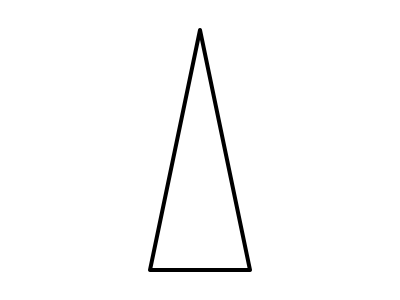
      A tall, thin triangle pointing up.
      • yes
      • no
    2. 2.
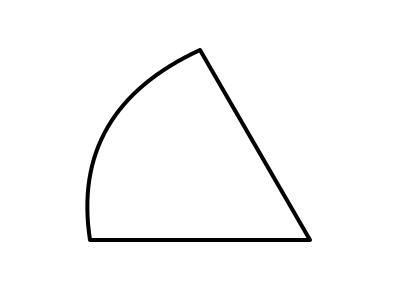
      A shape with 2 straight sides and 1 curved side.
      • yes
      • no
    3. 3.
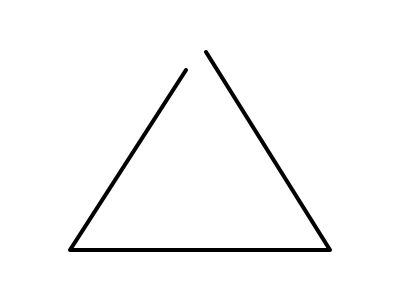
      3 straight lines that almost meet, with a gap at one corner.
      • yes
      • no
    4. 4.
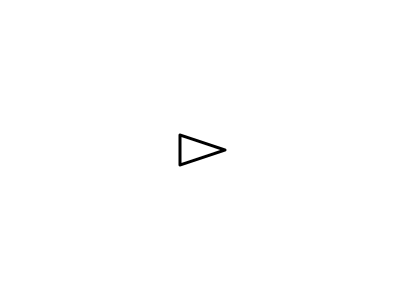
      A tiny triangle lying on its side.
      • yes
      • no
    5. 5.
      A square.
      • yes
      • no

    Write or draw.

    1. 6.
      Count the corners on any triangle. How many? ____
    2. 7.
      Count the sides on any triangle. How many? ____
    3. 8.
      Draw a triangle that looks different from the ones on this page.

    Challenge (optional)

    A shape has 3 corners and 3 sides, but one side is curved. Is it a triangle? Why?

    You need: Pencil, Crayons

    Reading & Writing · Week 31 Day 1

    I can compare two books about caring for the Earth.

    Look: a tale and a list

    1. A tale has a character and tells what happened: Ben got a sack.
    2. A list gives ideas, with no character: Pick up trash.
    3. Both can be about the same topic: caring for the Earth.

    A Tale and a List

    Ben got a sack and went to the park. "Yuck," said Ben, and he got the trash.

    Ways to Help: Pick up trash. Shut off the lamp. Plant a tree.

    Is it from the tale or the list? Circle one.

    1. 1.
      Ben got a sack.
      • tale
      • list
    2. 2.
      Plant a tree.
      • tale
      • list
    3. 3.
      "Yuck," said Ben.
      • tale
      • list
    4. 4.
      It has no kid in it.
      • tale
      • list

    Read the word. Circle the sound oo makes: moon or book.

    1. 5.
      noon
      • moon
      • book
    2. 6.
      hood
      • moon
      • book
    3. 7.
      loop
      • moon
      • book
    4. 8.
      brook
      • moon
      • book

    Challenge (optional)

    The tale and the list want us to ____.

    Science · Week 31 Day 1

    I can tell that engineers make things to solve problems.

    Look: Tools solve problems

    1. Look at a tool: a lunch box.
    2. Ask: what problem does it solve? It keeps food together and clean.
    3. People who design tools to solve problems are engineers.

    Circle the tool that solves the problem.

    1. 1.
      Your hands get cold outside.
      • Mittens.
      • Sunglasses.
    2. 2.
      You need to carry 5 books.
      • A spoon.
      • A backpack.
    3. 3.
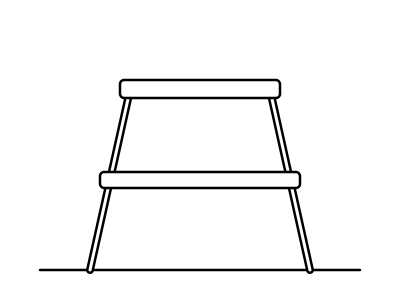
      You cannot reach a high shelf.
      • A step stool.
      • A pillow.
    4. 4.
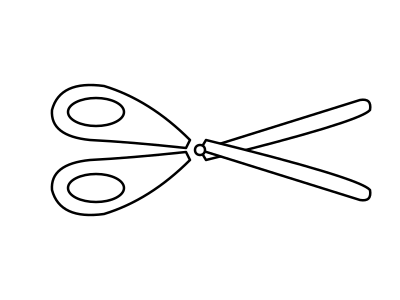
      You need to cut a sheet of paper.
      • A cup.
      • Child-safe scissors.

    Circle or draw.

    1. 5.
      You draw your idea before you build it. Which step is that?
      • Plan
      • Test
    2. 6.
      You try your design to see if it works. Which step is that?
      • Ask
      • Test
    3. 7.
      Is a toothbrush a tool that solves a problem?
      • yes
      • no
    4. 8.
      Draw a tool you use every day. Tell the problem it solves.

    Challenge (optional)

    Think of a problem no tool in your home solves yet. Tell it.

    You need: crayons