1First Grade

    Lesson + weekly check: shape attributes

    Share and check: review 1

    Practice pages

    0 of 180 days complete · Saved on this device

    View all 180 days

    MathWeekly check

    Lesson + weekly check: shape attributes

    I can tell defining attributes from ones that don't matter.

    Standards: 1.G.A.1

    Number practice (no timer)
    Facts within 10 (keep-up practice)
    Builds on
    This week's work: the attributes that decide a shape's name, and the ones that do not. One-minute check: "Does a triangle have to be red?" (No. Color does not matter.)

    New words

    • detective: someone who uses clues to solve a mystery

    You need

    • The paper shapes from Days 1 and 2, and the 8 shape cards from Day 3 (card 4 is the hexagon)
    • Notebook and pencil
    • The stored Week 31 check and its answer key
    1. Warm-Up · 5 min

      Fluency: facts within 10. "8 + 2?" (10) "6 - 3?" (3) Spaced review from Week 29: "A bar graph shows 6 votes for cats and 4 votes for dogs. How many more for cats?" (2)

    2. Short Lesson: Review Game · 10 min

      Shape Detective. Read each riddle. Your child names the shape and points to one on the table. 1) "I am closed. I have 3 straight sides and 3 corners." (Triangle) 2) "I have 4 straight sides that are all the same length and 4 square corners." (Square) 3) "I am closed and round like a plate. I have no straight sides and no corners." (Circle) 4) "I am closed and I have 6 straight sides." (Hexagon) 5) "I have 4 straight sides and 4 square corners. 2 of my sides are long and 2 are short." (Rectangle) 6) "I am big and red. What shape am I?" (You cannot tell. Size and color do not tell the shape.) Then your child makes up a riddle for you. If stuck, say: "Which clue tells about sides? Hold up a shape with that many sides."

    3. Weekly Check · 15 min

      Give the stored Week 31 check. The printed check has 9 items. It covers these goals: (1) I can sort shapes by their sides, corners and being closed; (2) I can tell that color, size and turning do not change a shape; (3) I can draw a shape to match clues. Read each item aloud. There is no time limit. If your child is stuck, say only: "Count the sides. Is it closed?" Do not give the answer. Score it with the answer key. Secure: 8 or 9 of the 9 items right. If the check is secure, start Week 32. If it is not, first do the reteach step on the check page for each group of items missed, then start Week 32.

    4. Exit Ticket · 3-5 min

      After the check, ask these two questions. Then go over any missed check items together.

    Exit ticket

    1. Name one thing that does not change what shape something is.
    2. What must every rectangle have?
    Answers
    1. Answers vary. Look for: its color, its size, turning it, or what it is made of.
    2. It must be closed, with 4 straight sides and 4 square corners.
    Watch for, and help or stretch
    Watch for
    Sorting by color or size instead of by sides and corners.
    Try
    Ask: "If I painted this shape blue, would its name change?" Then count the sides together.
    Extra help
    Let your child hold and trace each shape on the check with a finger before answering, and note it on the check.
    Stretch
    Ask: "I have 4 sides and 4 corners, but I am not a rectangle. Draw me." (Answers vary. Look for: a closed 4-sided shape without 4 square corners.)

    At home (optional): Your child makes up a shape riddle and asks a family member to solve it.
    Reading & WritingWeekly check

    Share and check: review 1

    I can read short vowel, digraph, blend and oo words.

    Standards: RF.1.3.a, RF.1.3.b, RF.1.3.g, RF.1.3.c

    Phonics
    oo as in moon and oo as in book (moon, book, food, wood), with cumulative review: short vowels, digraphs and blends
    Sight words
    well, large, must, big, even
    Reading
    The Earth Book (Todd Parr) and Michael Recycle (Ellie Bethel, illustrated by Alexandra Colombo), both optional; original story "The Big Trash Hunt" (decodable) and original idea list "Ways We Can Help the Earth"
    Writing
    Showcase: choose a best piece and add details (revision) · Handwriting: review of size and spacing
    Builds on
    This week's oo words and the short vowel, digraph and blend review. One-minute check: warm up with trash, thick, stomp, moon, book.

    New words

    • review: look back at what we learned to remember it

    You need

    • The printed Week 31 check (15 mixed short vowel, digraph and blend words, 5 oo words, 5 sight words and a short story)
    • 12 game cards (index cards): chop, flash, moon, drink, crust, book, plank, food, shelf, wood, grin, stump
    • Sight word cards: well, large, must, big, even, around, three, small, end, another
    • Recording sheet
    • The best piece with its added details
    • Lined handwriting paper
    1. Review Game · 10 min

      Word Path: lay 12 cards in a path: chop, flash, moon, drink, crust, book, plank, food, shelf, wood, grin, stump. Your child walks the path, reading each word. On a word with a digraph, your child claps once; on a word with a blend, your child stomps. Some words get both. On an oo word, your child says moon or book to tell the sound. (moon sound: moon, food; book sound: book, wood.) If stuck on a word during the game (not during the check), cover all but the first sound, say it together, then uncover the rest and blend; for oo, try the moon sound first.

    2. Sight Words · 5 min

      Review: well, large, must, big, even, around, three, small, end, another. Hop and Read: lay the 10 cards on the floor. Your child hops to a card, reads it and picks it up.

    3. Weekly Check · 15 min

      Give the printed Week 31 check: 10 items. Its goals: I can read short vowel, digraph and blend words. I can read words with oo as in moon and oo as in book. I can read a story on my own and compare a tale and a list. I can pick my best writing and add details. Items 1-3: your child reads 15 mixed words with short vowels, digraphs and blends. Item 4: 5 words with oo (moon or book sound). Item 5: the 5 sight words (well, large, must, big, even). Items 6-10: your child reads the short story alone and answers about it, tells a tale from a list, picks the line with details and names the best piece. Give no hints. Record each answer. Note any pattern your child misses more than once (for example, ending blends) for next week's warm-ups. The check's pass rule: "Secure: 12 of 15 words in items 1-3, 4 of 5 oo words in item 4, 4 of 5 sight words in item 5, and 4 of 5 on items 6-10. Note any pattern missed more than once (for example, end blends) for next week's warm-ups."

    4. Share & Listen · 10 min

      Your child reads the best piece with the new details to a listener. The listener tells one detail they liked and asks one question. Your child answers in a complete sentence.

    5. Handwriting · 5 min

      Your child copies Fran and Dad went to the pond. with good size and spacing. Circle the best word.

    6. Exit Ticket · 5 min

      Talk about the week.

    Exit ticket

    1. Read a word with a blend, a word with a digraph and a word with oo.
    2. What detail are you most proud of adding this week?
    Answers
    1. Answers vary. Look for: correct reads, such as clap, shop and moon.
    2. Answers vary. Look for: a detail from the best piece.
    Watch for, and help or stretch
    Watch for
    Skipping the second letter of a blend at the end (reading stump as stup).
    Try
    Before the check (not during it), practice tapping every sound in plank and thump.
    Extra help
    Give items 1-3 in three sets of 5 with a stretch between.
    Stretch
    Your child reads 3 bonus words: splint, strand, thrush. Do not score them.

    At home (optional): Your child does one idea from "Ways We Can Help the Earth" with the family and tells about it.

    ScienceWeekly check

    Define my problem

    I can say a problem in one sentence.

    Standards: K-2-ETS1-1

    Builds on
    Problem hunt (Day 3). One-minute check: ask "Which problem did you choose?" (Answers vary.) "Who did you interview?" (Answers vary.)

    New words

    • define: to say exactly what something is
    • goal: what you want your solution to do

    You need

    • Engineering Journal with the problem hunt notes
    • Problem frame card: an index card with "The problem is ___. It matters because ___. A good fix will ___."
    • 6 Problem or Not? cards on index cards (written in the Review Game)
    • Week 31 science check page (given separately)
    • Pencil
    1. Warm-Up / Wonder · 5 min

      Spaced review: ask: "Name two ways engineers gather information." (ask people, observe) Wonder question: "Why should an engineer say the problem clearly before building?"

    2. Review Game · 10 min

      Play "Problem or Not?" Write these on 6 cards and read each one. Your child says "Problem a tool could fix" or "Not that kind of problem." "The plant falls over when I water it." (problem a tool could fix) "My favorite color is green." (not a problem) "The towel slides off its hook." (problem a tool could fix) "It is Tuesday." (not a problem) "The dog's water bowl tips over." (problem a tool could fix) "I like soup." (not a problem) Then model the frame with the water bowl: "The problem is the dog's water bowl tips over. It matters because water spills and the dog gets thirsty. A good fix will hold water and not tip." Say: "The last part is our goal. Later we will test our designs to see if they meet the goal." If stuck, ask: "Could someone build something to make this better?"

    3. Check · 10 min

      Give the Week 31 science check. The check items are on the Week 31 check page; do not show them ahead of time. Read each part aloud. Your child answers by talking, pointing, showing with the real materials or drawing. You write down their words exactly. It is not timed; stop and finish later if your child is tired. Make a check mark next to each part your child shows on their own. The printed check has 7 items. It covers these goals: (1) I can tell that engineers make things to solve problems; (2) I can ask questions to find a problem at home; (3) I can say a problem in one sentence. This week the check is an oral problem-defining task. Look for: your child says the chosen problem in one clear sentence, tells why it matters (who it bothers or what goes wrong), and names a goal a good fix must meet (for the default problem: a crayon holder that holds the crayons and does not tip over). If stuck on a part, read your child's interview notes aloud and fill in the first blank together, then let your child finish. Secure: 5 of 7 correct, including items 1, 2 and 3 (the problem, why it matters and the goal). If the check is not yet secure, use the reteach step on the check page that matches the items missed.

    4. Exit Ticket · 3–5 min

      Ask the three questions aloud. Your child answers by talking or drawing.

    Exit ticket

    1. A backpack strap keeps sliding off the chair. Say the problem in one sentence.
    2. Why does it help to name a goal for your fix?
    3. What is the goal for your own design?
    Answers
    1. Answers vary. Look for: one clear sentence, such as "The problem is my backpack falls off the chair."
    2. Answers vary. Look for: so you know what the design must do and can test if it works.
    3. Answers vary. Look for: a goal that matches the problem, such as "It will hold 10 crayons and not tip over."
    Watch for, and help or stretch
    Watch for
    Naming a solution instead of the problem ("The problem is I need a cup").
    Try
    Ask: "What goes wrong right now?" Write that first. Say: "The cup is our idea for fixing it. We will save it for the sketch."
    Extra help
    Your child fills only the first sentence of the frame; you help with the rest.
    Stretch
    Your child adds a second goal (for example, "It is easy to grab a crayon").

    At home (optional): Your child reads the problem frame card to a family member and asks if they agree it is a problem.

    Practice

    Read each direction aloud. Your child works on the page; answers are in the grown-up view.

    Warm-up

    Remember?

    Math

    1. A bar graph of weather this month shows sun 6, rain 3, snow 1. Which has the fewest?
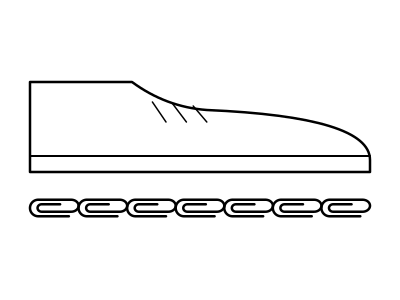
    2. A shoe with 7 same-size paper clips laid end to end under it, no gaps. How many paper clips long is the shoe?

    Reading & Writing

    Math · Week 31 check

    Weekly check

    How to give it: Read every item aloud. It is untimed. Your child may use the index card to check corners. If your child is stuck, say only: "Count the sides. Is it closed?" Do not give the answer. There are 9 parts. 8 or 9 right: start Week 32. 6 or 7 right: redo Day 1 or Day 2 Guided Practice (whichever shapes were missed) before Week 32. 5 or fewer right: redo Days 1 and 2 before Week 32.

    Secure when: 8 or 9 of the 9 items right.

    • I can sort shapes by their sides, corners and being closed.
    • I can tell that color, size and turning do not change a shape.
    • I can draw a shape to match clues.
    1. 1.
      A small rectangle colored in. Is it a rectangle?
      • yes
      • no
    2. 2.
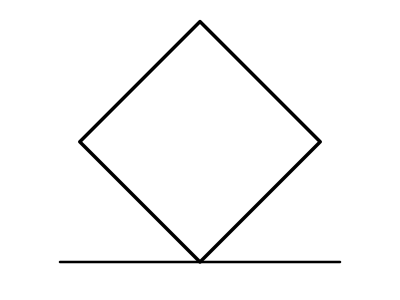
      A square standing on one corner. Is it a rectangle?
      • yes
      • no
    3. 3.
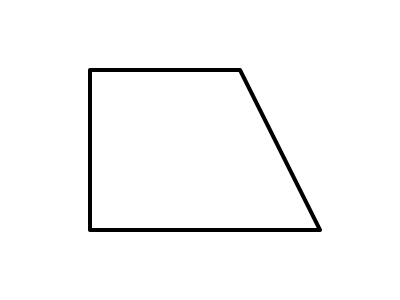
      A 4-sided shape with one slanted side and only 2 square corners. Is it a rectangle?
      • yes
      • no
    4. 4.
      A circle. Is it a rectangle?
      • yes
      • no
    5. 5.
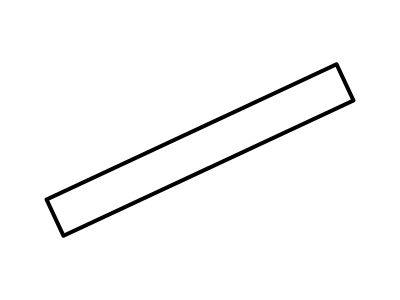
      A long, thin rectangle lying on a slant. Is it a rectangle?
      • yes
      • no
    6. 6.
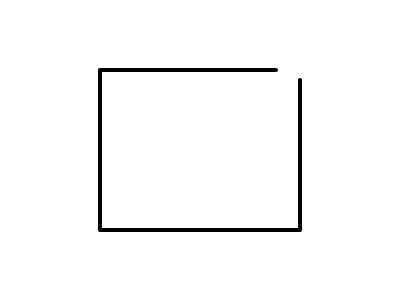
      4 straight lines that almost make a box, with a gap at one corner. Is it a rectangle?
      • yes
      • no
    7. 7.
      A big red triangle and a tiny blue triangle: are they both triangles? Tell why.
    8. 8.
      Draw a closed shape with 3 straight sides.
    9. 9.
      Draw a closed shape with 4 sides all the same length and 4 square corners.

    Reading & Writing · Week 31 check

    Weekly check

    How to give it: Give it in one sitting, untimed. Read each direction aloud and give no hints. For items 1-5, your child reads each word aloud and you tick the ones read right. Your child reads Glen and the Frog alone before items 6-7. For item 8, say: Which one is a list? For item 9, say: Which one helps you see it? For item 10, your child tells or writes which piece is their best and why; write the words if your child tells it aloud.

    Secure when: 12 of 15 words in items 1-3, 4 of 5 oo words in item 4, 4 of 5 sight words in item 5, and 4 of 5 on items 6-10. Note any pattern missed more than once (for example, end blends) for next week's warm-ups.

    • I can read short vowel, digraph and blend words.
    • I can read words with oo as in moon and oo as in book.
    • I can read a story on my own and compare a tale and a list.
    • I can pick my best writing and add details.

    Glen and the Frog

    Glen sat on a rock at the pond. A frog went hop, hop, hop. It sat on a log. Glen got his net. Then the frog jumped in the pond! Glen had to grin.

    1. 1.
      shack chunk whiz moth duck
    2. 2.
      flint snack trim plug swell
    3. 3.
      damp gust mend soft bulk
    4. 4.
      swoop woods bloom hooks proof
    5. 5.
      well large must big even
    6. 6.
      Where did Glen sit?
      • on a rock
      • on a log
    7. 7.
      What did the frog do at the end?
      • It jumped in the pond.
      • It sat on Glen.
    8. 8.
      Which one is a list?
      • Feed the birds. Clean up the park.
      • Glen sat on a rock at the pond.
    9. 9.
      Which one helps you see it?
      • A frog sat.
      • A fat green frog sat on a wet log.
    10. 10.
      My best one is ____ because ____.

    Science · Week 31 check

    Weekly check

    How to give it: Read every direction, question and choice aloud. It is not timed; stop and finish later if your child is tired. Your child answers by talking, pointing, showing with the real materials or drawing, and you write their words exactly. Have the Engineering Journal with the interview notes and the problem frame card. Your child may dictate every sentence. If stuck, fill in the first blank together, then let your child finish.

    Secure when: 5 of 7 correct, including items 1, 2 and 3 (the problem, why it matters and the goal).

    • I can tell that engineers make things to solve problems.
    • I can ask questions to find a problem at home.
    • I can say a problem in one sentence.
    1. 1.
      Say your problem in one sentence: "The problem is ___." Your grown-up writes it.
    2. 2.
      Tell why it matters: "It matters because ___." Your grown-up writes it.
    3. 3.
      Tell your goal: "A good fix will ___." Your grown-up writes it.
    4. 4.
      The cereal box keeps falling off the shelf. Is this a problem a tool could fix?
      • yes
      • no
    5. 5.
      Today is sunny. Is this a problem a tool could fix?
      • yes
      • no
    6. 6.
      A bike helmet is a tool. Circle the problem it solves.
      • A bump to the head.
      • A hungry tummy.
    7. 7.
      Circle a problem that is safe for a child engineer to work on.
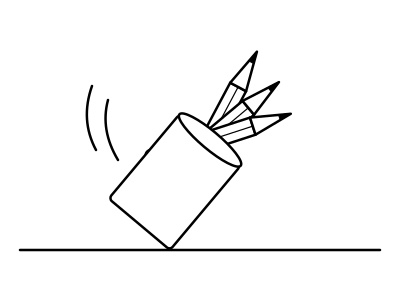
      • A pencil cup that tips over.
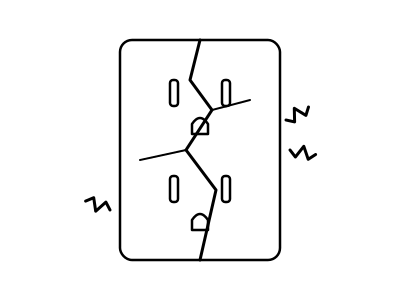
      • A broken electric outlet.