1First Grade

    Shapes turned around

    Pick my best piece

    Practice pages

    0 of 180 days complete · Saved on this device

    View all 180 days

    Math

    Shapes turned around

    I can tell that turning a shape does not change it.

    Standards: 1.G.A.1

    Number practice (no timer)
    Facts within 10 (keep-up practice)
    Builds on
    Days 1 and 2 (triangles, rectangles and squares). One-minute check: "How many sides does a rectangle have? How many square corners?" (4; 4)

    New words

    • turn: move a shape around in a circle without changing it
    • open: has a gap, so the sides do not all connect
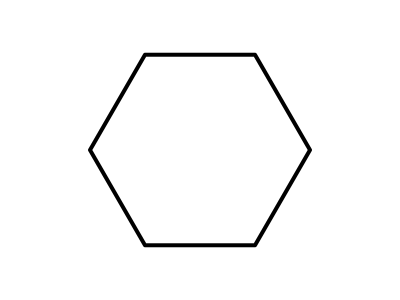
    • hexagon: a closed shape with 6 straight sides and 6 corners

    You need

    • A paper triangle, a paper square and a paper rectangle from Days 1 and 2
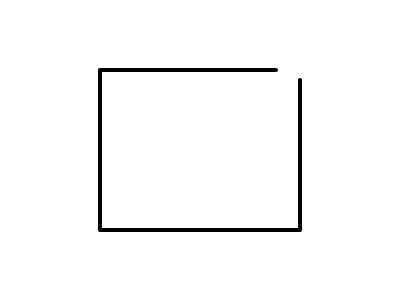
    • 8 shape cards an adult draws on index cards: 1) a triangle with a point at the bottom, 2) a square turned to stand on one corner, 3) a rectangle standing on a short side, 4) a hexagon, 5) a circle, 6) 3 straight lines with a gap at one corner, 7) a shape with 3 straight sides and 1 curved side, 8) 4 straight lines with a gap at one corner
    • The corner checker card and the paper strip from Day 2
    • Notebook and pencil
    1. Warm-Up · 5 min

      Fluency: facts within 10. "5 + 4?" (9) "10 - 6?" (4) Count down by 1s: "Count back from 15 to 5." (15, 14, 13, 12, 11, 10, 9, 8, 7, 6, 5) Spaced review from Week 28: "Write half past 3 the digital way." (3:30)

    2. Mini-Lesson · 10 min

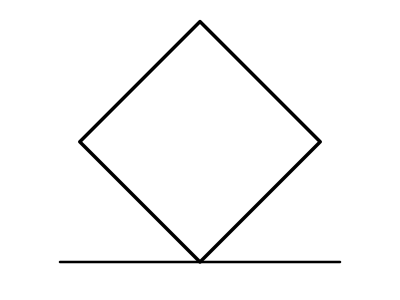
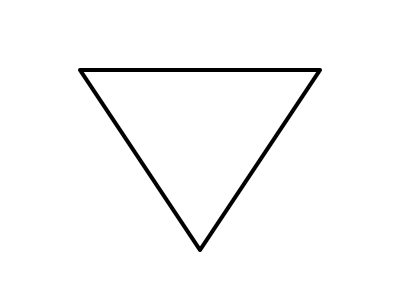
      Put the paper square flat and trace around it in the notebook. Now turn it so it stands on one corner and trace it again. Ask: "Some people call this a diamond. Is it still a square?" Check together: closed (yes), 4 straight sides (yes), all the same length (yes, check with the strip or by laying it back on the first tracing), 4 square corners (yes, check with the card). Say: "Turning did not change any of those. It is still a square." Turn the triangle upside down. (Still a triangle) Say: "Turning a shape, its color, and its size do not change its name. Its sides and corners decide its name." Then hold up card 4. Count the sides together. (6) Say: "This is a hexagon: closed, with 6 straight sides."

    3. Guided Practice · 10 min

      Shape or Not? Your child turns each of the 8 cards around in different directions, names the shape or says why it is not one of our shapes. Answers: 1) triangle 2) square 3) rectangle 4) hexagon 5) circle 6) not a shape we can name: it is open 7) not one of our shapes: it has a curved side 8) not a shape we can name: it is open. If stuck, say: "Turn the card so it looks the way you are used to. Then count the sides and check: is it closed?"

    4. Play · 10 min

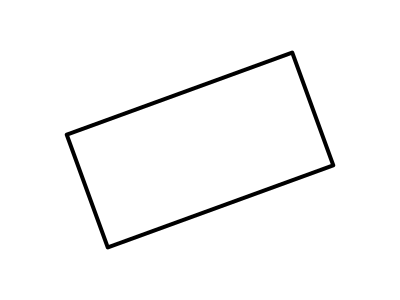
      Turn and Trace. Your child traces the paper rectangle in the notebook, turns it to a new position, and traces it again, 3 times in all, so the page shows the same rectangle in 3 positions. Then your child does the same with the triangle. Next to each tracing, your child writes the shape's name. Ask: "Did the name change when you turned it?" (No.) Then play I Spy Turned Shapes: find a shape at home that is turned, such as a picture frame hanging at a slant or a square cracker on its corner.

    5. Exit Ticket · 3-5 min

      Before asking, draw a rectangle tilted at a slant and a 4-sided shape with a gap at one corner. Read each question aloud. Your child answers out loud. Check each answer together right away.

    Exit ticket

    1. Is my slanted drawing still a rectangle?
    2. Is my other drawing a closed shape? Why?
    3. How many sides does a hexagon have?
    Answers
    1. Yes. It still has 4 straight sides and 4 square corners. Turning does not change it.
    2. No. It has a gap, so it is open.
    3. 6
    Watch for, and help or stretch
    Watch for
    Calling a square that stands on its corner a "diamond" and saying it is not a square.
    Try
    Turn it back to sit flat while your child watches. Ask: "Did anything about the sides or corners change?"
    Extra help
    Let your child turn the paper card or the paper shape back to a familiar position before naming it.
    Stretch
    Your child draws a hexagon that looks very different from the one on card 4 (long, or with sides of different lengths) and explains why it is still a hexagon. (It is closed with 6 straight sides.)

    At home (optional): Your child turns a square cracker, a napkin or a sticky note on its corner and tells a family member why it is still a square.
    Reading & Writing

    Pick my best piece

    I can choose my best writing and tell why it is my best.

    Standards: W.1.5, SL.1.4, SL.1.6

    Phonics
    oo as in moon and oo as in book (moon, book, food, wood), with cumulative review: short vowels, digraphs and blends
    Sight words
    well, large, must, big, even
    Reading
    The Earth Book (Todd Parr) and Michael Recycle (Ellie Bethel, illustrated by Alexandra Colombo), both optional; original story "The Big Trash Hunt" (decodable) and original idea list "Ways We Can Help the Earth"
    Writing
    Showcase: choose a best piece and add details (revision) · Handwriting: review of size and spacing
    Builds on
    All the writing from this year (narratives, All About pages, opinions, poems and research). One-minute check: your child names one kind of writing they did this year.

    New words

    • showcase: a special time to show your best work
    • best piece: the writing you are most proud of
    • revise: to make writing better by adding or changing words

    You need

    • The writing folder: all the writing from the year (stories, All About book, opinion pieces, poems, research pages)
    • A star sticker or a paper star
    • Word cards (index cards): stamp, frost, clasp, crisp, brush, plump, grand, swept, shrimp, scrub, spoon, stool, groom, brook, crook, smooth
    • Sight word cards: well, large, must, big, even (two sets: 10 cards for Memory Match)
    • Printed "Ways We Can Help the Earth" (from Day 1)
    • Lined handwriting paper
    1. Phonics & Word Work · 15 min

      Blends at the start and the end, and oo in blend words. I do: write stamp. Underline st and mp: "Two blends: one at the start, one at the end." Read it. We do: read frost and clasp together and underline the blends. You do: your child reads crisp, brush, plump, grand, swept, shrimp and scrub and underlines each blend. Ask: "Which word has a digraph too?" (brush and shrimp have sh.) Then oo in blend words: your child reads spoon, stool, groom, brook, crook and smooth, underlines the blend and tells the oo sound. (moon sound: spoon, stool, groom, smooth; book sound: brook, crook.) Read: "The plump shrimp swept past the crab." "A frog sat on a stool by the brook." Dictation: frost, scrub, spoon, brook. If stuck, read the blend sounds one at a time, then slide them together; for oo, try the moon sound first, then the book sound.

    2. Sight Words · 5 min

      Review: well, large, must, big, even. Memory Match with 10 cards: turn two over and read both. A match is kept.

    3. Read-Aloud & Shared Reading · 15 min

      Reread "Ways We Can Help the Earth" (or The Earth Book, if you have it). Ask: "Which idea do you think helps the most? Why?" (Answers vary. Look for: an idea and a reason.) Ask: "Which idea did our family already do?" (Answers vary. Look for: a real example.) Say: "Authors pick their best ideas to share. This week you are an author picking your best writing." Then go through the writing folder together. Lay out 5 or 6 pieces from different times in the year. Your child reads or tells about each one. If stuck choosing, ask: "Which one do you want everyone to read? Which one makes you proud?"

    4. Writing & Handwriting · 15 min

      Pick my best piece. Your child puts a star on the piece they choose and tells why in full sentences: "This is my best work because ___." (Answers vary. Look for: a real reason in a complete sentence, such as it has lots of details, it is funny, or it was hard and I did it.) Remember: no comma before because. Your child writes the sentence on a card and clips it to the piece. Handwriting (4 min): letter size. Your child checks one line of the chosen piece: do tall letters touch the top line and small letters the middle line? Circle the best word.

    5. Exit Ticket · 5 min

      Oral answers.

    Exit ticket

    1. Which piece did you choose?
    2. Tell me why it is your best, in a full sentence.
    3. Read this: We stood on the roof and looked at the moon.
    Answers
    1. Answers vary. Look for: the starred piece named.
    2. Answers vary. Look for: a complete sentence with a reason.
    3. We stood on the roof and looked at the moon.
    Watch for, and help or stretch
    Watch for
    Choosing the newest piece without looking at the others.
    Try
    Read one older piece aloud together and ask: "What do you like about this one?" Then let your child choose.
    Extra help
    Lay out only 3 pieces to choose from.
    Stretch
    Your child also picks a second-best piece and tells how the two are different.

    At home (optional): Your child shows the chosen piece to a family member and tells why it is the best.

    Science

    Problem hunt

    I can ask questions to find a problem at home.

    Standards: K-2-ETS1-1

    Builds on
    What do engineers do? (Day 1). One-minute check: ask "What is a solution?" (a way to fix a problem) "Name the 6 engineering steps." (ask, imagine, plan, create, test, improve)

    New words

    • observe: to look closely and notice
    • interview: to ask a person questions and listen to the answers
    • information: facts that help you learn about something

    You need

    • Engineering Journal
    • Interview card: an index card with 3 questions: "What bugs you at home?" "When does it happen?" "Who does it bother?"
    • Pencil and crayons
    • Optional: sticky notes
    1. Warm-Up / Wonder · 5 min

      Spaced review: ask: "What problem does an umbrella solve?" (staying dry in the rain) Wonder question: "What small problems do we have in our home?"

    2. Explore · 10–15 min

      Say: "Engineers start by asking questions and observing. They gather information before they build." Interview: your child reads or says the 3 questions to 2 family members. You write short answers in the Engineering Journal. Then go on a Problem Hunt walk through 3 rooms. Your child observes and points out small problems. Model one: say "I notice the crayons roll off the table and fall on the floor." Other examples: a pencil cup that tips over, shoes piled by the door, a toothbrush that falls into the sink, a book that will not stay open. Your child draws each problem on a sticky note or a journal page. Then sort. Ask: "Which problems could we fix with cups, tubes, clay, cardboard and tape?" Say: "Problems with anything hot, electrical or sharp are for grown-ups to fix, so we skip those." Ask: "Which problem bothers people the most?" (Answers vary. Use the interview answers as evidence.) Help your child choose one. If your child cannot choose, use the class problem: the crayons roll away or the crayon cup tips over, so we need a crayon holder that will not tip over. If stuck finding problems, ask: "What makes a mess or gets lost a lot?"

    3. Talk & Record · 5–10 min

      Your child circles the chosen problem in the Engineering Journal. Sentence frame: "I observed ___. ___ said it bugs them."

    4. Exit Ticket · 3–5 min

      Ask the three questions aloud. Your child answers by talking or drawing.

    Exit ticket

    1. Name one way engineers gather information.
    2. A tower of blocks falls every time the dog walks by. Is that a problem an engineer could work on?
    3. Which problem did you choose?
    Answers
    1. Answers vary. Look for: asking people questions (an interview) or observing.
    2. Yes.
    3. Answers vary. Look for: one problem from the hunt (for example, the crayon cup tips over).
    Watch for, and help or stretch
    Watch for
    Choosing a problem that is too big ("Make the house cleaner").
    Try
    Ask: "What is one small thing that keeps going wrong?" Point to one object.
    Extra help
    Do the hunt in 1 room and interview 1 person.
    Stretch
    Your child asks a third person and compares all three answers.

    At home (optional): Your child asks one more family member, "What bugs you at home?" and reports back.

    Practice

    Read each direction aloud. Your child works on the page; answers are in the grown-up view.

    Warm-up

    Remember?

    Math

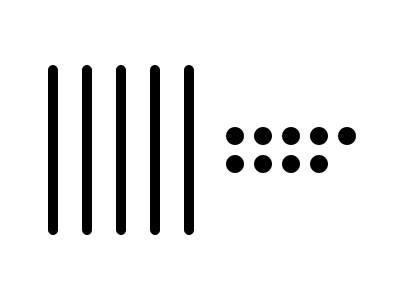
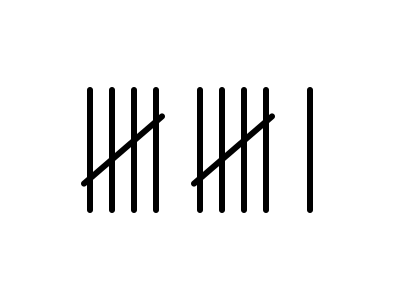
    1. Tally marks: 2 bundles of 5 and 1 more mark. How many does this tally show?
    2. A quick picture of 5 ten sticks and 9 ones dots. What number is this?

    Reading & Writing

    1. around, three, small
    2. goat, glow, float

    Math · Week 31 Day 3

    I can tell that turning a shape does not change it.

    Look: a square turned around

    1. Turn a square so it stands on one corner.
    2. Check: still closed, 4 straight sides all the same length, 4 square corners.
    3. Turning does not change its name. It is still a square.

    Answer about each shape.

    1. 1.
      A square standing on one corner. Is it still a square?
      • yes
      • no
    2. 2.
      A triangle upside down, pointing down. Is it still a triangle?
      • yes
      • no
    3. 3.
      A rectangle tipped on a slant. How many square corners does it have? ____
    4. 4.
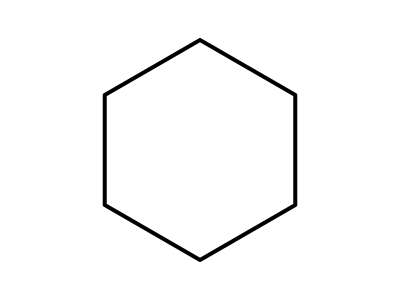
      A hexagon turned on its side. How many corners does it have? ____
    Is it a closed shape? Circle yes or no.

    1. 5.
      4 straight lines that almost make a box, with a gap at one corner.
      • yes
      • no
    2. 6.
      A hexagon.
      • yes
      • no
    3. 7.
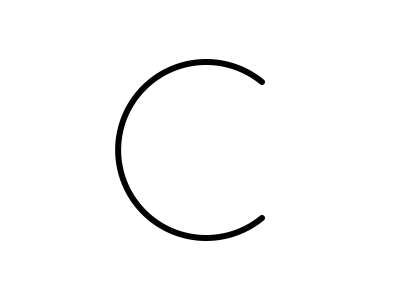
      A curved line shaped like the letter C.
      • yes
      • no

    Challenge (optional)

    Draw a triangle 3 different ways: one pointing up, one pointing down and one lying on its side.

    You need: Pencil

    Reading & Writing · Week 31 Day 3

    I can choose my best writing and tell why it is my best.

    Look: my best piece

    1. Look at your writing from this year.
    2. Pick the one you want everyone to read.
    3. Tell why in a full sentence: It is my best because it has lots of details.

    Max Fixes a Line

    Max had this line: The cat sat. Then he put in more: The fat gray cat sat on the soft rug. Now you can see it! It is his best line.

    Read both lines. Circle the one that helps you see it.

    1. 1.
      Which one helps you see it?
      • The dog ran.
      • The big black dog ran to the pond.
    2. 2.
      Which one helps you see it?
      • I got a red hat with a bell on it.
      • I got a hat.
    3. 3.
      Which one helps you see it?
      • We had corn.
      • We had hot corn at the farm.
    4. 4.
      Which one helps you see it?
      • Six fat ducks swam in the pond.
      • Ducks swam.

    Pick your best writing. Tell about it.

    1. 5.
      My best one is ____.
    2. 6.
      It is my best because ____.
    3. 7.
      My best one

    Read the line. Circle the word that fits.

    1. 8.
      We ____ in a line.
      • stood
      • stool
    2. 9.
      The pup ate the ____.
      • food
      • foot
    3. 10.
      Put on a ____.
      • book
      • boot

    Challenge (optional)

    I am proud of it because ____.

    You need: crayons

    Science · Week 31 Day 3

    I can ask questions to find a problem at home.

    Look: Hunt for a problem

    1. Ask people: "What bugs you at home?"
    2. Observe: I notice the bath toys fall off the edge of the tub.
    3. Pick a problem you could fix with cups, tubes, clay, cardboard and tape.

    Could a child engineer fix it with cups, tubes, clay, cardboard and tape? Circle yes or no.

    1. 1.
      The toy cars roll under the couch.
      • yes
      • no
    2. 2.
      The oven gets too hot.
      • yes
      • no
    3. 3.
      A lamp cord is loose.
      • yes
      • no
    4. 4.
      Your markers keep getting lost.
      • yes
      • no

    Circle, ask or draw.

    1. 5.
      Circle a way to gather information.
      • A child asking a grown-up a question.
      • A child asleep in bed.
    2. 6.
      Ask a family member: "What bugs you at home?" Your grown-up writes the answer.
    3. 7.
      Draw one problem you observed on your Problem Hunt.

    Challenge (optional)

    Why should engineers ask other people about a problem, not only themselves?

    You need: crayons