1First Grade

    Rectangles and squares

    Reading on my own

    Practice pages

    0 of 180 days complete · Saved on this device

    View all 180 days

    Math

    Rectangles and squares

    I can tell the attributes of rectangles and squares.

    Standards: 1.G.A.1

    Number practice (no timer)
    Facts within 10 (keep-up practice)
    Builds on
    Day 1 (what makes a triangle a triangle). One-minute check: "What must every triangle have?" (It is closed, with 3 straight sides and 3 corners.)

    New words

    • square corner: a corner shaped like the corner of a sheet of paper
    • rectangle: a closed shape with 4 straight sides and 4 square corners
    • square: a rectangle with 4 sides that are all the same length

    You need

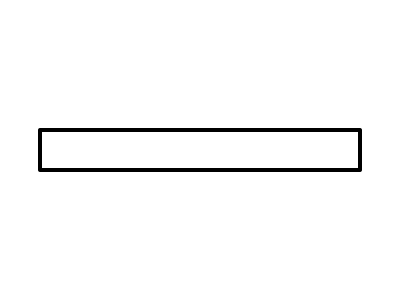
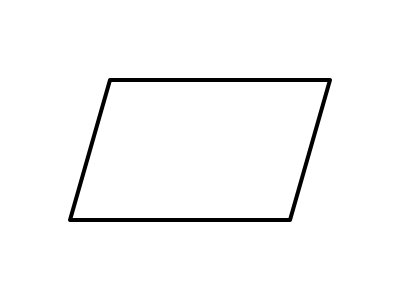
    • Paper shapes an adult cuts before the lesson: 3 rectangles (a long thin one, a short wide one and a big one), 3 squares of different sizes and colors, and 2 more 4-sided shapes without square corners (one slanted like a pushed-over box and one with a long bottom and a short top)
    • An index card or a sheet of paper to use as the corner checker
    • A strip of paper about 6 inches long, or a ruler edge, for comparing side lengths
    • Notebook and pencil
    1. Warm-Up · 5 min

      Fluency: facts within 10. "7 + 3?" (10) "8 - 4?" (4) "3 + 6?" (9) Spaced review from Week 15: "Draw a quick picture of 34." (3 sticks and 4 dots)

    2. Mini-Lesson · 10 min

      Hold up the index card. Say: "The corner of this card is a square corner. I can use it to check other corners." Put the card's corner into a corner of the big rectangle. Say: "It fits exactly. That is a square corner." Check all 4 corners with your child. Count the sides. (4) Say: "A rectangle is closed and has 4 straight sides and 4 square corners." Pick up a square. Check its corners. (4 square corners) Ask: "Is a square a rectangle?" (Yes. It has 4 straight sides and 4 square corners.) Lay the paper strip along one side of the square and make a pencil mark where the side ends. Hold the strip along each other side. (They are all the same length.) Say: "A square is a special rectangle: all 4 sides are the same length." Hold up the slanted shape and check a corner. Ask: "Is this a rectangle?" (No. It has 4 sides, but the corners are not square corners.)

    3. Guided Practice · 10 min

      Your child sorts the 8 paper shapes into 3 groups: Squares, Other rectangles, and Not rectangles. For each one, your child checks the corners with the card, counts the sides, and for squares checks the side lengths with the strip. Answers: Squares: the 3 squares. Other rectangles: the 3 rectangles. Not rectangles: the 2 other 4-sided shapes (their corners are not all square corners). Ask: "Could the squares also go in the rectangle group?" (Yes. Every square is a rectangle.) If stuck, say: "Check one corner at a time with the card. Does it fit exactly?"

    4. Play · 10 min

      Rectangle Hunt. Your child takes the corner checker around the house and looks at the flat fronts of things: a door, a book cover, a cereal box, a window, a napkin, a floor tile. Your child finds 5 rectangles and checks if any of them is a square, by checking corners and comparing sides with the strip. Your child draws each one in the notebook and writes "square" or "rectangle." Answers vary. Look for: corners checked with the card.

    5. Exit Ticket · 3-5 min

      Before asking, draw a long thin rectangle and a square in the notebook. Read each question aloud. Your child answers out loud. Check each answer together right away.

    Exit ticket

    1. How many square corners does every rectangle have?
    2. Is my long thin shape a rectangle? Is my square a rectangle?
    3. What makes a square different from other rectangles?
    Answers
    1. 4
    2. Yes and yes. Both are closed, with 4 straight sides and 4 square corners.
    3. All 4 of its sides are the same length.
    Watch for, and help or stretch
    Watch for
    Saying a square is not a rectangle because it is not long.
    Try
    Run the rectangle test on the square together: "Closed? 4 straight sides? 4 square corners?" All yes, so it is a rectangle too.
    Extra help
    Check only corners today. Your child sorts shapes into "4 square corners" and "not 4 square corners."
    Stretch
    Ask: "A shape has 4 square corners and 4 sides, and 2 sides are long and 2 are short. What is it?" (A rectangle that is not a square)

    At home (optional): Your child takes the corner checker on a walk or around the house and shows a family member 2 rectangles and 1 square.
    Reading & Writing

    Reading on my own

    I can read a story at my level with help when I need it.

    Standards: RL.1.10, RF.1.4.a, RF.1.3.a, RF.1.3.c

    Phonics
    oo as in moon and oo as in book (moon, book, food, wood), with cumulative review: short vowels, digraphs and blends
    Sight words
    well, large, must, big, even
    Reading
    The Earth Book (Todd Parr) and Michael Recycle (Ellie Bethel, illustrated by Alexandra Colombo), both optional; original story "The Big Trash Hunt" (decodable) and original idea list "Ways We Can Help the Earth"
    Writing
    Showcase: choose a best piece and add details (revision) · Handwriting: review of size and spacing
    Builds on
    Reading decodable stories all year. One-minute check: your child reads the first two lines of "The Big Trash Hunt".

    New words

    • purpose: the reason you are reading
    • retell: to tell what happened in a story, in order, in your own words
    • digraph: two letters that make one sound, like sh or ck

    You need

    • Printed "The Big Trash Hunt" (from Day 1)
    • A decodable or early-reader book from home or the library at your child's level (optional)
    • Digraph header cards (index cards): sh, ch, th, wh, ck, ng, nk
    • Two oo header cards (index cards): moon and book
    • Word cards (index cards): pool, took, root, hood, shoot, hoop, nook, broom, wool, tooth, shook, stood, scoop, shell, chest, then, whip, neck, sing, pink, which, long, quick
    • Sight word cards: well, large, must, big, even
    • Three sticky notes or slips of paper for retelling: First, Next, Last
    • Lined handwriting paper
    1. Phonics & Word Work · 15 min

      oo sort, then a digraph sort. I do: lay out two header cards: moon and book. Read pool: "Try the moon sound: /p/ /oo/ /l/, pool. That is a word." Put it under moon. Read took: "The moon sound gives /t/ /oo/ /k/. That is not a word I know. The book sound: took." Put it under book. Say: "When oo comes before k, it almost always says /oo/ as in book: book, took, look." We do: sort root, hood and shoot together. (moon: root, shoot; book: hood.) You do: your child reads and sorts hoop, nook, broom, wool, tooth, shook, stood and scoop. (moon: hoop, broom, tooth, scoop; book: nook, wool, shook, stood.) Digraph sort (5 min): hold up sh and say: "Two letters, one sound: /sh/." Your child reads shell, chest, then, whip, neck, sing, pink, which and long and puts each under sh, ch, th, wh, ck, ng or nk. (sh: shell; ch: chest, which (ch is at the end); th: then; wh: whip, which (wh is at the start); ck: neck; ng: sing, long; nk: pink.) Say: "which goes in two piles: it has wh and ch. And nk is not quite a digraph. The n says /ng/ and the k says /k/, so nk has two sounds." Read: "Which fish has a pink fin?" "The cook took a scoop of food." Dictation: tooth, shook, chest, quick. If stuck, frame the two letters with your fingers and say the one sound first; for oo, try the moon sound, then the book sound.

    2. Sight Words · 5 min

      Review: well, large, must, big, even. Sight Word Toss: your child tosses a sock onto a card, reads it and says it in a sentence.

    3. Read-Aloud & Shared Reading · 15 min

      Reading on my own. Say: "Today you read a whole story by yourself. I am right here if you need me." Your child chooses "The Big Trash Hunt" or a decodable book from home. Set a purpose first: "Read to find out what Fran found in the mud." (or a question that fits the book you chose). Your child reads aloud. Stay quiet and wait 3 seconds on a hard word, then prompt: "Look at all the letters. Tap it out." If still stuck, say the word and let your child go on. After reading, ask the purpose question. (A large black lunch box with a crack in it.) Then your child retells using the First, Next, Last notes. (Answers vary. Look for: First, Fran and Dad went to the pond and saw trash; Next, they picked it up and Fran found a lunch box in the mud; Last, the bank was clean and the duck was glad.) Ask: "What will Dad and Fran do with the lunch box?" (Use it as a pot for plants.)

    4. Writing & Handwriting · 15 min

      Your child writes a three-sentence retelling with First, Next and Last, such as: First, Fran and Dad went to the pond. Next, they got the trash. Last, the bank was clean. (Answers vary. Look for: three events in order.) Handwriting (4 min): spacing. Your child puts a finger space between words and checks each sentence by sliding a finger along the spaces.

    5. Exit Ticket · 5 min

      Oral answers.

    Exit ticket

    1. Read this: The chick stood on the roof of the shed.
    2. What do you do when you get to a word you do not know?
    3. Tell me the story you read in two sentences.
    Answers
    1. The chick stood on the roof of the shed.
    2. Answers vary. Look for: look at all the letters, tap the sounds and blend, or reread the sentence.
    3. Answers vary. Look for: a beginning and an end in order.
    Watch for, and help or stretch
    Watch for
    Guessing a word from the first letter (reading stick as sock).
    Try
    Say: "Check the middle. Is it i or o?" Have your child tap every sound.
    Extra help
    Echo-read the story once before your child reads it alone.
    Stretch
    Your child reads a second decodable book alone and tells which one they liked better and why.

    At home (optional): Your child reads a book to a family member (or a pet or stuffed animal) and retells it.

    Social Studies

    American symbols

    I can name American symbols and tell what they stand for.

    Standards: D2.Civ.5.K-2, D2.Civ.8.K-2

    Builds on
    What is government? (Unit 2). One-minute check: ask "What is a government?" (a group of people who make rules and run things for a place)

    New words

    • symbol: a picture or thing that stands for an idea
    • liberty: the right to make your own choices and to be treated fairly under the law
    • nation: a country and its people

    You need

    • 4 pictures (printed, from a library book, or on a screen): the U.S. flag, a bald eagle, the Statue of Liberty, the Liberty Bell
    • 4 meaning cards on index cards: "our 50 states and first 13 colonies," "our country (the national bird)," "liberty and democracy," "liberty for all people"
    • 1 sheet of paper and crayons for a family flag
    • Optional: a dollar bill or a passport to look for the eagle
    1. Warm-Up / Wonder · 5 min

      Spaced review: ask: "What does a government do?" (Answers vary: makes rules, runs things like roads, parks and schools.) Wonder question: "Why does our country have a flag?" Note for grown-ups: saying the Pledge of Allegiance is a choice. Your family decides whether your child says it; this lesson only explains what the flag stands for.

    2. Explore · 10–15 min

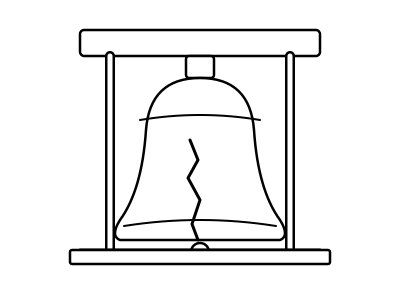
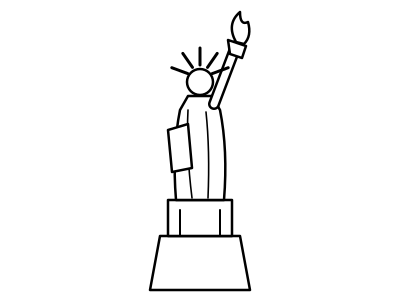
      Say: "A symbol is a picture or thing that stands for an idea. Our country has symbols that remind people of our nation and its government." Show the flag. Say: "The 13 red and white stripes stand for the 13 colonies that became the first states. The 50 white stars on the blue stand for our 50 states." Ask: "How many states do we have now?" (50) "Where do you see this flag?" (Answers vary: on government buildings like the post office, at schools.) Say: "Flying the flag on government buildings shows that the building belongs to all of us and to our government." Show the bald eagle. Say: "The bald eagle has been on the Great Seal of the United States since 1782. The government puts the Great Seal on important papers. In December 2024, a law made the bald eagle our national bird." If you have a dollar bill or a passport, find the eagle together. Show the Statue of Liberty. Say: "The people of France gave this statue to the people of the United States as a gift of friendship. It was dedicated in 1886. It is a symbol of liberty and democracy. Her tablet has the date July 4, 1776, the day the Declaration of Independence was adopted." Show the Liberty Bell. Say: "This bell is in Philadelphia. Its words say to proclaim liberty throughout all the land. Long ago, people working to end slavery named it the Liberty Bell because liberty should be for all people. Later, people working for women's right to vote and for civil rights used it too." Play Match: your child matches each picture with its meaning card. Ask: "What big ideas do these symbols stand for?" (Answers vary. Look for: liberty, democracy, our country, fairness for everyone.) Say: "Equal rights and fairness for all people are big ideas of our country's democracy." If stuck matching, hold up one picture and give a choice of 2 meaning cards.

    3. Talk & Record · 5–10 min

      Your child designs a family flag with 3 symbols that stand for things your family cares about. Sentence frame: "This symbol on my flag stands for ___."

    4. Exit Ticket · 3–5 min

      Ask the three questions aloud. Your child answers by talking or drawing.

    Exit ticket

    1. What do the 50 stars on the flag stand for?
    2. Which symbol was a gift from the people of France?
    3. Why did people working to end slavery use the Liberty Bell as a symbol?
    Answers
    1. The 50 states.
    2. The Statue of Liberty.
    3. Because liberty should be for all people.
    Watch for, and help or stretch
    Watch for
    Thinking the symbol is the thing itself ("The flag is the country").
    Try
    Ask: "Does the flag help us remember our country, like a photo helps us remember a person?" Say: "A symbol stands for an idea."
    Extra help
    Use 2 symbols: the flag and the Statue of Liberty.
    Stretch
    Your child finds a symbol on a coin, a stamp or a building and tells what it stands for.

    At home (optional): Your child shows the family flag to a family member and tells what each symbol stands for.

    Practice

    Read each direction aloud. Your child works on the page; answers are in the grown-up view.

    Warm-up

    Remember?

    Math

    1. A bar graph of pets our friends have shows cats 4, dogs 7, fish 2. How many in all?
    2. A ribbon is 10 paper clips long. A straw is 4 paper clips long. How many paper clips longer is the ribbon?

    Reading & Writing

    1. jump, jumped
    2. bathtub

    Math · Week 31 Day 2

    I can tell the attributes of rectangles and squares.

    Look: a rectangle and a square

    1. Put the corner of an index card into each corner. It fits: 4 square corners.
    2. A rectangle is closed, with 4 straight sides and 4 square corners.
    3. A square is a rectangle with all 4 sides the same length.

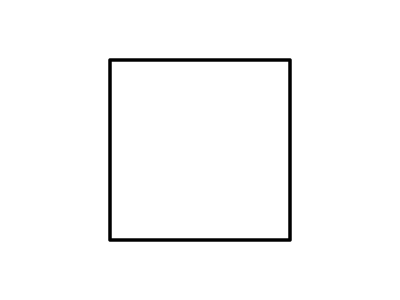
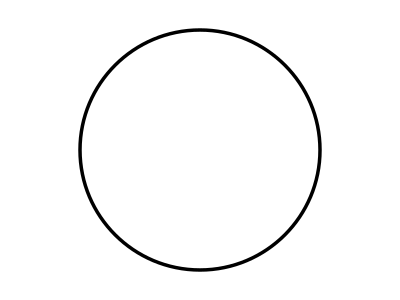
    Is it a rectangle? Circle yes or no.

    1. 1.
      A long, thin rectangle.
      • yes
      • no
    2. 2.
      A 4-sided shape that leans to one side, with no square corners.
      • yes
      • no
    3. 3.
      A square.
      • yes
      • no
    4. 4.
      A circle.
      • yes
      • no

    Circle, write or draw.

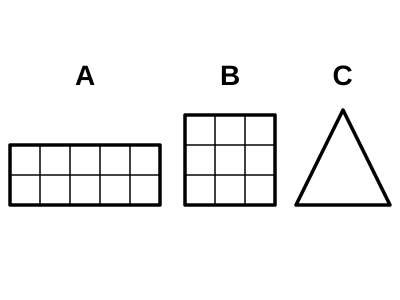
    1. 5.
      A is a rectangle 2 squares tall and 5 squares wide; B is a square 3 squares on each side; C is a triangle. Circle the square.
      • A
      • B
      • C
    2. 6.
      How many square corners does a square have? ____
    3. 7.
      Draw a rectangle that is not a square.

    Challenge (optional)

    A shape has 4 sides all the same length, but its corners are not square corners. Is it a square? Why?

    You need: Pencil, An index card (to check corners)

    Reading & Writing · Week 31 Day 2

    I can read a story at my level with help when I need it.

    Look: reading on my own

    1. Read to find out: What was lost?
    2. At a hard word, look at all the letters and tap it out.
    3. When you finish, tell it in order: First, Then, Last.

    The Lost Sock

    Tess lost her red sock. She went to the shed to check, but it was not there. Then she went to the deck. Her dog was on the deck. The sock was in his mouth!

    Read the story. Circle the answer.

    1. 1.
      What was lost?
      • a red sock
      • a hat
    2. 2.
      Where did Tess check first?
      • the shed
      • the deck
    3. 3.
      Who had the sock?
      • her dog
      • her mom
    4. 4.
      Where did Tess go then?
      • the deck
      • the park

    Tell the story in order.

    1. 5.
      First, ____.
    2. 6.
      Then ____.
    3. 7.
      Last, ____.

    Write the word I say. Both oo sounds are spelled o-o.

    1. 8.
      ____
    2. 9.
      ____
    3. 10.
      ____

    Challenge (optional)

    What will Tess say to her dog?

    Social Studies · Week 31 Day 2

    I can name American symbols and tell what they stand for.

    Look: what a symbol stands for

    1. A symbol is a picture or thing that stands for an idea.
    2. The flag's 13 stripes stand for the first 13 colonies. Its 50 stars stand for our 50 states.
    3. The bald eagle, the Statue of Liberty and the Liberty Bell stand for our country and for liberty.

    Listen. Circle yes or no.

    1. 1.
      Do the 13 stripes on the flag stand for the 13 colonies that became the first states?
      • yes
      • no
    2. 2.
      Is the bald eagle our national bird?
      • yes
      • no
    3. 3.
      Is the Liberty Bell in Philadelphia?
      • yes
      • no
    4. 4.
      Was the Statue of Liberty a gift from the people of Spain?
      • yes
      • no

    Talk and draw. Write what your child says.

    1. 5.
      The Liberty Bell. What big idea does this symbol stand for?
    2. 6.
      The Statue of Liberty. What does this symbol stand for?
    3. 7.
      Where can you see the U.S. flag in our community?
    4. 8.
      Draw the U.S. flag.

    Challenge (optional)

    Make up a symbol for our town. What does it stand for?

    You need: crayons