1First Grade

    Build and draw shapes

    Add details

    Practice pages

    0 of 180 days complete · Saved on this device

    View all 180 days

    Math

    Build and draw shapes

    I can build and draw a shape with given attributes.

    Standards: 1.G.A.1

    Number practice (no timer)
    Facts within 10 (keep-up practice)
    Builds on
    Days 1 to 3 (attributes of triangles, rectangles, squares and hexagons). One-minute check: "Does turning a square change its name?" (No.)

    New words

    • build: make a shape from parts, like sticks for sides
    • clue: a hint that tells what a shape must have

    You need

    • 12 sticks for sides: paper straws or pipe cleaners an adult cuts (fold over the sharp wire ends) into 6 long pieces (about 5 inches) and 6 short pieces (about 3 inches)
    • Play dough, a lump about the size of a lemon, to roll into small balls for corners
    • The corner checker card from Day 2
    • Notebook and pencil
    1. Warm-Up · 5 min

      Fluency: facts within 10. "4 + 5?" (9) "7 - 2?" (5) "10 - 5?" (5) Spaced review from Week 22: "37 + 6?" (43)

    2. Mini-Lesson · 10 min

      Say: "Today you are a shape builder. The sticks are sides. The play dough balls are corners." Read a clue: "Make a closed shape with 3 sides." Your child takes 3 sticks and joins their ends with play dough balls. Ask: "What did you build?" (A triangle) Take it apart. Read a second clue: "Make a closed shape with 4 sides and 4 square corners." Your child builds it and checks each corner with the card. Ask: "What is it?" (A rectangle, or a square if all 4 sticks are the same length) Then your child draws each shape in the notebook next to its clue. Say: "The clues tell what the shape must have."

    3. Guided Practice · 10 min

      Build from Clues. Take each shape apart before building the next. Your child builds, names and draws each one. 1) "Closed, 3 sides: 2 short sides and 1 long side." (A triangle) 2) "Closed, 4 sides, 4 square corners, 2 long sides and 2 short sides." (A rectangle) 3) "Closed, 4 sides all the same length, 4 square corners." (A square: 4 sticks of the same length) 4) "Closed, 6 sides." (A hexagon) 5) "Closed, 4 sides, but not a rectangle." (Answers vary. Look for: a slanted 4-sided shape whose corners are not all square corners.) If stuck, say: "Count out the sticks first. How many sides does the clue need?"

    4. Play · 10 min

      Draw It. You give a drawing clue and your child draws a shape with a pencil, using the edge of the corner checker card as a ruler. 1) "A very tall triangle." 2) "A closed shape with 5 straight sides." 3) "A square that is turned on its corner." Then your child gives you 3 clues. Draw one of them wrong on purpose (leave a gap, or draw a curved side). Your child catches the mistake and tells which clue it breaks.

    5. Exit Ticket · 3-5 min

      Put the objects to one side but leave them on the table. Read each question aloud. Your child answers out loud, with objects or with a quick drawing. Check each answer together right away.

    Exit ticket

    1. Draw a closed shape with 4 straight sides and 4 square corners.
    2. How many sticks do you need to build a hexagon?
    3. Could you build a square with 2 long sticks and 2 short sticks? Why?
    Answers
    1. Look for: a rectangle or a square, closed, with 4 square corners.
    2. 6
    3. No. All 4 sides of a square must be the same length.
    Watch for, and help or stretch
    Watch for
    Leaving a corner open when building, so the shape is not closed.
    Try
    Your child traces around the stick shape with a finger. If the finger has to jump a gap, push the sticks together at that corner.
    Extra help
    Build each shape together first. Your child copies your shape with a second set of sticks, then draws it.
    Stretch
    Ask: "Can you build a closed shape with only 2 sticks?" (No. Two straight sides cannot close a shape.) "What is the fewest number of sticks for a closed shape?" (3)

    At home (optional): Your child builds a triangle and a square from toothpick-size sticks, pasta pieces or paper strips with an adult, and tells a family member the clues each one fits.
    Reading & Writing

    Add details

    I can listen to suggestions and add details to my writing.

    Standards: W.1.5, SL.1.1.b, L.1.2.d

    Phonics
    oo as in moon and oo as in book (moon, book, food, wood), with cumulative review: short vowels, digraphs and blends
    Sight words
    well, large, must, big, even
    Reading
    The Earth Book (Todd Parr) and Michael Recycle (Ellie Bethel, illustrated by Alexandra Colombo), both optional; original story "The Big Trash Hunt" (decodable) and original idea list "Ways We Can Help the Earth"
    Writing
    Showcase: choose a best piece and add details (revision) · Handwriting: review of size and spacing
    Builds on
    Picking a best piece (Day 3). One-minute check: your child reads the chosen piece aloud.

    New words

    • detail: a small piece of information that tells more
    • caret: a little mark like a hat (^) that shows where to add words

    You need

    • The chosen best piece
    • 4 sticky notes (or small slips of paper and tape)
    • A colored pencil for revising
    • Word cards (index cards): splash, shrink, skunk, chomp, thrill, blush, trunk, cling, moon, foot, hook
    • Sight word cards: well, large, must, big, even
    • Printed "The Big Trash Hunt" (from Day 1)
    1. Phonics & Word Work · 15 min

      Spelling check with known patterns, and spelling oo. I do: say splash. Stretch it: /s/ /p/ /l/ /a/ /sh/. Write it as you say each sound. Say: "spl is a three-letter blend; sh is one sound." Then say moon and foot. Say: "Both oo sounds are spelled the same way: o-o." Write each one as you say its sounds. We do: spell shrink together, sound by sound, then spell hook together. You do: your child reads skunk, chomp, thrill, blush, trunk and cling, then spells these from memory as you say them: trunk, thrill, room, wood. Check together and fix any mistake. Read: "The skunk hid in the trunk." "Look at the moon from the room." Dictation: zoom, took, blush. If stuck spelling, stretch the word slowly and write one sound at a time; when you hear either /oo/ sound, write o-o.

    2. Sight Words · 5 min

      Review: well, large, must, big, even. Write and Check: say each word; your child writes it, then turns the card over to check. These are words we spell the right way every time.

    3. Read-Aloud & Shared Reading · 15 min

      Say: "Readers ask questions, and authors answer them by adding details." Your child reads "The Big Trash Hunt" once more. Ask: "What question could you ask the author?" (Answers vary. Look for: a real question, such as What did they do with the trash? or How big was the lunch box?) Say: "If the author added the answer, the story would have more details." Then your child reads the chosen best piece aloud to you. Listen, then ask two questions about it that call for details, such as "What did it look like?" or "How did you feel?" Your child answers each question aloud in a full sentence. Build on each answer: "Tell me more about that." If stuck, give a choice: "Was it big or small? Was it loud or quiet?"

    4. Writing & Handwriting · 15 min

      Add details. Your child writes each answer on a sticky note as a new sentence or a few words, then puts a caret (^) in the piece where the detail goes and sticks the note there. Read the piece again with the details. Ask: "Is it better? How?" (Answers vary. Look for: it tells more, so a reader can picture it.) Your child checks the spelling of any sight words in the new details against the cards (L.1.2.d). Handwriting (4 min): the new details use the same neat size as the rest of the piece.

    5. Exit Ticket · 5 min

      Oral answers.

    Exit ticket

    1. Read me one detail you added.
    2. Why did you add it?
    3. Spell these words aloud: must, food.
    Answers
    1. Answers vary. Look for: a new detail from today.
    2. Answers vary. Look for: it answers a question or helps a reader picture it.
    3. m-u-s-t, f-o-o-d
    Watch for, and help or stretch
    Watch for
    Adding a detail that is not about the topic.
    Try
    Ask: "Does this tell more about what your piece is about?" Read the first sentence of the piece again.
    Extra help
    Ask one question only. Your child says the detail, and you write it for your child to copy onto the sticky note.
    Stretch
    Your child asks you one question about their own piece and answers it with a third detail.

    At home (optional): Your child reads the piece with the new details to a family member, who asks one more question.

    Social StudiesWeekly check

    Many governments, many flags

    I can tell that our town, state, country and Native nations each have leaders and symbols.

    Standards: D2.Civ.5.K-2, D2.Civ.1.K-2

    Builds on
    American symbols (Day 2). One-minute check: ask "What do the 13 stripes on the flag stand for?" (the 13 colonies that became the first states)

    New words

    • mayor: the leader of a town or city
    • governor: the leader of a state
    • President: the leader of the United States
    • tribal government: the government of a Native nation, with leaders chosen by its citizens

    You need

    • A picture of your state's flag (from your state's official website or a library book)
    • Your town's or city's seal or flag, if it has one (from its website)
    • The Navajo Nation flag (from the Navajo Nation's own website, navajo-nsn.gov) and the Cherokee Nation seal (from the Cherokee Nation's own website, cherokee.gov)
    • A Levels chart: 4 boxes stacked from small to big labeled Town or city, State, Country, Native nations
    • 4 leader cards: Mayor, Governor, President, Tribal leader (for example, Principal Chief or Navajo Nation President)
    • A U.S. map
    • Week 31 social studies check page (given separately)
    • Pencil
    1. Warm-Up / Wonder · 5 min

      Spaced review: ask: "Which symbol stands for liberty and was a gift from France?" (the Statue of Liberty) Wonder question: "Does only our country have a flag? Who else might?"

    2. Review Game · 10 min

      Say: "Our country has a government, and so do our state and our town. Native nations have their own governments too. Each one has leaders and symbols." Go through the Levels chart. Town or city: ask "Who is the leader of a town or city?" (the mayor) Say: "The mayor and the town council take care of local things like parks, roads and trash pickup." Show the town seal if you have one. State: show the state flag. Ask: "What do you see on it?" (Answers vary.) Say: "The leader of a state is the governor, who works with the state lawmakers on things like state roads and schools." Country: show the U.S. flag. Say: "The President leads the country's government and works with Congress, which makes the country's laws." Native nations: say "In 2026, the U.S. government recognizes 575 Native nations: American Indian and Alaska Native tribes and villages. The number can change over time. Each one governs itself." Find Oklahoma on the map. Say: "The Cherokee Nation's capital is Tahlequah, Oklahoma. Its citizens elect a Principal Chief every four years and a Tribal Council of 17 members, which makes the nation's laws." Look at the Cherokee Nation seal on cherokee.gov and ask: "What do you notice?" (Answers vary.) Find Arizona, New Mexico and Utah. Say: "The Navajo Nation's capital is Window Rock, Arizona. It has a President, and the Navajo Nation Council has 24 delegates, each elected by the people of one area." Show the Navajo Nation flag. Say: "It shows a map of the Navajo homeland with the four sacred mountains around it, each in its own color, and a rainbow over it. In the middle, a traditional hogan and a modern home stand side by side." Play "Who Leads It?": hold up a leader card; your child puts it in the right box and tells one job that leader does. Say: "We talk about the jobs, not the names of the people who have them now." If stuck, ask: "Is this leader for a town, a state, the whole country or a Native nation?"

    3. Check · 10 min

      Give the Week 31 social studies check. The check items are on the Week 31 check page; do not show them ahead of time. Read each part aloud. Your child answers by talking, pointing, showing with the real materials or drawing. You write down their words exactly. It is not timed; stop and finish later if your child is tired. Make a check mark next to each part your child shows on their own. The printed check has 9 items. It covers these goals: (1) I can name American symbols and tell what they stand for; (2) I can tell that our town, state, country and Native nations each have leaders and symbols. This week the check is an oral matching task about levels of government. Look for: your child names a leader for each level (mayor for the town or city, governor for the state, President for the country, and a tribal leader such as a Principal Chief or the Navajo Nation President for a Native nation), tells one job a leader does, and says that each government has its own symbols, such as a flag or a seal. If stuck on a part, point to the box on the Levels chart and give a choice of 2 leader cards. Secure: 7 of 9 correct, with at least one right on each goal. If the check is not yet secure, use the reteach step on the check page that matches the items missed.

    4. Exit Ticket · 3–5 min

      Ask the three questions aloud. Your child answers by talking or drawing.

    Exit ticket

    1. Who leads a state?
    2. Name one thing a mayor and town council take care of.
    3. Is the Navajo Nation only from long ago, or does it have a government today?
    Answers
    1. The governor.
    2. Answers vary. Look for: parks, roads, trash pickup or other local services.
    3. It has a government today (with a President and a Council).
    Watch for, and help or stretch
    Watch for
    Thinking the President runs everything, including the town.
    Try
    Point to the small box on the Levels chart. Ask: "Who fixes the roads in our town?" (the town or city, led by the mayor)
    Extra help
    Use 3 levels (town, state, country) and add Native nations the next day.
    Stretch
    Your child finds out which Native nations have homelands in your state, using the state's or a nation's own website with a grown-up.

    At home (optional): Your child tells a family member the 4 levels and one leader for each.

    Practice

    Read each direction aloud. Your child works on the page; answers are in the grown-up view.

    Warm-up

    Remember?

    Math

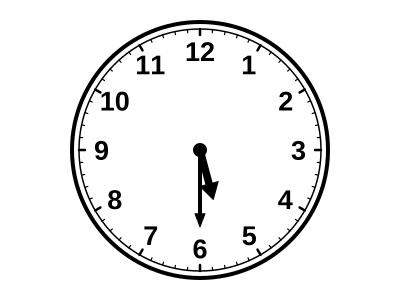
    1. A clock with the long hand on 6 and the short hand halfway between 5 and 6. What time is it?
    2. 15 + 4 = ? Start at the bigger number and count on.

    Reading & Writing

    Math · Week 31 Day 4

    I can build and draw a shape with given attributes.

    Look: build from a clue

    1. Clue: a closed shape with 4 sides all the same length and 4 square corners.
    2. Take 4 sticks that are the same length. Join the ends with square corners.
    3. It is a square.

    Draw a shape to match each clue.

    1. 1.
      Closed, with 3 straight sides and 1 square corner.
    2. 2.
      Closed, with 4 straight sides and 4 square corners. It is tall and thin.
    3. 3.
      Closed, with no straight sides and no corners.
    4. 4.
      Closed, with 4 straight sides all the same length and 4 square corners, standing on one corner.

    Write how many sticks you need.

    1. 5.
      Sticks for a triangle: ____
    2. 6.
      Sticks for a square: ____
    3. 7.
      Does a triangle have 4 sides?
      • yes
      • no

    Challenge (optional)

    You have 4 long sticks, all the same length. Can you build a square? Can you build a rectangle that is not a square?

    You need: Pencil

    Reading & Writing · Week 31 Day 4

    I can listen to suggestions and add details to my writing.

    Look: adding details

    1. Read your writing to a listener.
    2. The listener asks: What did it look like? How did you feel?
    3. Add the answer as a detail, and spell sight words the way the cards show.

    At the Pond

    Kim and I went to the pond. We got to see a duck. It swam up to us. Kim fed it a bit of corn.

    Read the line and the question. Write a detail that answers it.

    1. 1.
      The dog ran. What did it look like? The ____ dog ran.
    2. 2.
      I had a cake. Is it big or little? I had a ____ cake.
    3. 3.
      We went to the park. When? We went at ____.

    Write the sight word I say.

    1. 4.
      We ____ help.
    2. 5.
      It is a ____ box.
    3. 6.
      I am ____.
    4. 7.
      The dog is ____.

    Write the word I say. Tap the sounds first.

    1. 8.
      ____
    2. 9.
      ____
    3. 10.
      ____

    Challenge (optional)

    What ____?

    Social Studies · Week 31 check

    Weekly check

    How to give it: Read every question and choice aloud, and point to each picture as you name it. This week the check is an oral matching task about levels of government. Your child answers by talking, pointing, circling, acting it out or drawing; write their words exactly on the line. It is not timed; stop and finish later if your child is tired. Do not show the page ahead of time. Have the Levels chart and the leader cards nearby. If stuck on items 4 to 7, point to the box on the chart and give a choice of 2 leader cards. Make a check mark next to each part your child shows on their own.

    Secure when: 7 of 9 correct, with at least one right on each goal

    • I can name American symbols and tell what they stand for.
    • I can tell that our town, state, country and Native nations each have leaders and symbols.
    1. 1.
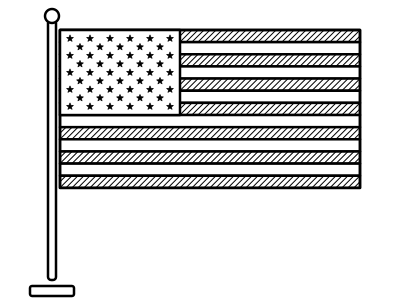
      The U.S. flag. The flag has 13 stripes. What did those 13 stand for?
    2. 2.
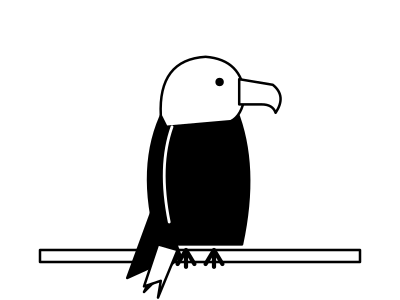
      A bald eagle. What does this symbol stand for?
    3. 3.
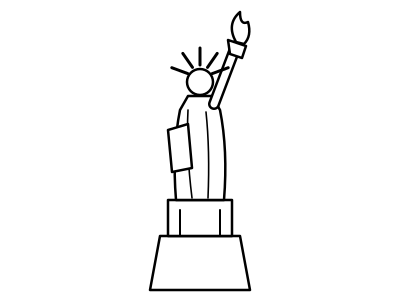
      The Statue of Liberty. Does this symbol stand for liberty?
      • yes
      • no
    4. 4.
      The leader of a city is called the ____.
    5. 5.
      Who leads a whole state?
    6. 6.
      Who leads the government of the whole country?
    7. 7.
      Name a leader of a Native nation.
    8. 8.
      Tell one job a governor does.
    9. 9.
      Do states and Native nations have their own symbols, like flags or seals?
      • yes
      • no