1First Grade

    Put shapes together

    Characters' adventures

    Practice pages

    0 of 180 days complete · Saved on this device

    View all 180 days

    Math

    Put shapes together

    I can put two shapes together to make a new shape.

    Standards: 1.G.A.2

    Number practice (no timer)
    Doubles with pattern blocks (keep-up practice)
    Builds on
    Week 31 (shape attributes). One-minute check: "How many sides does a triangle have? A rectangle?" (3; 4)

    New words

    • compose: put shapes together to make a new shape
    • half-circle: half of a circle; it has 1 straight side and 1 curved side
    • quarter-circle: a fourth of a circle; it has 2 straight sides and 1 curved side
    • trapezoid: a closed shape with 4 straight sides; the one we make today has 2 square corners and 1 slanted side

    You need

    • Paper shape kit (an adult makes it on Week 32 Day 1 from construction paper or cereal-box cardboard and keeps it in a bag all week): 8 squares, each 2 inches on a side; 12 triangles, made by cutting 6 more 2-inch squares in half from corner to corner; 4 rectangles, 2 inches by 4 inches; 4 half-circles, made by tracing a cup about 4 inches across twice, cutting out the circles and cutting each one in half; and 4 quarter-circles, made by cutting one more circle into 4 equal parts (fold it in half, then in half again, and cut on the folds)
    • Pattern blocks, if you have them (optional)
    • Notebook and pencil
    • Crayons
    • Pattern blocks are small parts: keep them away from children under 3.
    1. Warm-Up · 5 min

      Fluency: doubles with shape pieces. Lay out 3 triangles and 3 more. "3 + 3?" (6) Lay out 4 squares and 4 more. "4 + 4?" (8) "What is double 6?" (12) Spaced review from Week 31: "What makes a square a square?" (Closed, 4 straight sides all the same length, 4 square corners)

    2. Mini-Lesson · 10 min

      Say: "When we put shapes together, we make a new shape. This is called composing." Take 2 triangles. Put their long sides together so they touch all along. Ask: "What new shape did I make?" (A square) Pull them apart. Now put a short side of one triangle against a short side of the other, so their other short sides make one straight line along the bottom and the two long sides slant up to meet at the top. (A bigger triangle) Put 2 half-circles together along their straight sides. (A circle) Put 2 quarter-circles together along one straight side. (A half-circle) Put a triangle next to a square so one short side of the triangle touches one side of the square. Count the sides of the new shape together. (4) Say: "This 4-sided shape is a trapezoid."

    3. Guided Practice · 10 min

      Make It with 2 Pieces. Your child builds each shape, traces around the outside in the notebook, and says: "I put together ___ and ___ to make ___." Clear the table after each one. 1) A square from 2 triangles 2) A bigger triangle from 2 triangles 3) A circle from 2 half-circles 4) A half-circle from 2 quarter-circles 5) A trapezoid from 1 square and 1 triangle If stuck, say: "Find two sides that are the same length and push them together so they touch all the way along."

    4. Play · 10 min

      Shape Challenges. Read each challenge. Your child builds it, then you build a different answer if there is one. 1) "Use 2 triangles to make a shape with 4 sides." (A square, or a slanted 4-sided shape) 2) "Use 4 triangles to make one big triangle." (Look for: a triangle twice as wide as one piece.) 3) "Use 4 quarter-circles to make one whole shape." (A circle) 4) "Use 2 rectangles to make a square." (Long sides together) After each one, count the sides of the new shape out loud.

    5. Exit Ticket · 3-5 min

      Put the objects to one side but leave them on the table. Read each question aloud. Your child answers out loud, with objects or with a quick drawing. Check each answer together right away.

    Exit ticket

    1. What shape do 3 squares make when you put them in a row?
    2. I put a square and a triangle together and made a shape with 4 sides. Is it a square? Why?
    3. Make any new shape from 2 kit pieces and tell me what you made.
    Answers
    1. A rectangle
    2. No. One side is slanted, so it does not have 4 square corners and its sides are not all the same length. It is a trapezoid.
    3. Answers vary. Look for: 2 pieces touching along a whole side and a sentence naming the pieces and the new shape.
    Watch for, and help or stretch
    Watch for
    Putting pieces corner to corner, so they touch at only a point and do not make a closed new shape.
    Try
    Say: "Sides must touch all the way along, like two puzzle pieces." Slide the pieces until the sides line up.
    Extra help
    Show the finished shape first by tracing its outline in the notebook. Your child fills the outline with the 2 pieces.
    Stretch
    Ask: "How many different 4-sided shapes can you make with 2 triangles?" (Answers vary. Look for: a square and a slanted 4-sided shape.)

    At home (optional): Your child cuts a square paper napkin in half corner to corner with child-safe scissors (or an adult cuts a square slice of cheese corner to corner) and shows a family member that the 2 triangles make a square.
    Reading & Writing

    Characters' adventures

    I can compare the adventures of characters in two stories.

    Standards: RL.1.9, RL.1.3, RF.1.3.c, RF.1.3.e

    Phonics
    y as long e at the end of two-syllable words (happy, puppy, sleepy), with cumulative review: final e and vowel teams
    Sight words
    such, why, went, read, need
    Reading
    Goldilocks and the Three Bears and The Three Little Pigs (traditional, public domain; our own retellings); original decodable "Jade and the Three Goats"
    Writing
    Showcase: revise with peer and adult suggestions · Handwriting: neat final copy
    Builds on
    Comparing characters in two tales (Weeks 16 to 18). One-minute check: your child tells how the town mouse and the country mouse were different.

    New words

    • adventure: an exciting thing that happens to a character
    • compare: to tell how things are alike and different
    • experience: something that happens to you

    You need

    • Printed "Goldilocks and the Three Bears" and "The Three Little Pigs" retellings (in the lesson)
    • A two-column chart on paper: Goldilocks and The Third Pig, with rows What did they do? and How did it turn out?
    • Word cards (index cards): happy, puppy, sunny, candy, messy, funny, silly, foggy, muddy, lucky, sleepy, cap, cape, kit, kite, hop, hope, cut, cute, plane, smile, stove, mule
    • Sight word cards: such, why, went, read, need (5 index cards)
    • Lined handwriting paper
    1. Phonics & Word Work · 15 min

      New: y as long e, then a final e review. I do: write happy. Say: "Find the vowel sounds: a, and y at the end. Split between the two p's: hap | py. hap has a short a. At the end of a two-part word, y usually says /ee/, long e." Read hap, then py, then happy. Write puppy: pup | py, puppy. Say: "In fly, y is at the end of a one-part word and says long i. In happy, y is at the end of a two-part word and says long e." We do: clap, split and read sunny, candy and messy together. You do: your child reads funny, silly, foggy, muddy, lucky and sleepy, claps the two parts and tells the sound y makes. (Long e in each: fun | ny, sil | ly, fog | gy, mud | dy, luck | y, sleep | y.) Final e review (5 min): write cap, then add e: cape. Say: "The e at the end is silent. It makes the a say its name: /ay/." Your child reads kit, kite, hop, hope, cut, cute, plane, smile, stove and mule and sorts the final e words by vowel. (a_e: cape, plane; i_e: kite, smile; o_e: hope, stove; u_e: cute, mule; kit, hop and cut have no final e.) Read: "The mule ate a grape by the lake." "My puppy is happy and muddy." Dictation: hope, smile, happy, sunny. If stuck on y, clap the word and read it one part at a time, with y as long e at the end; for final e, cover the e, read the short word, then uncover it: "Now the vowel says its name."

    2. Sight Words · 5 min

      Introduce this week's words with see-say-spell-write. For each card: Say: "This word is ___. Say it with me." Your child reads it, spells it aloud while tapping each letter, writes it once while saying each letter, and reads it again. Draw a small heart over any part we must learn by heart: such (regular: u is short and ch is one sound); why (wh says /w/ and y says long i, as in my: regular); went (regular); read (ea says /ee/ when it is now, but /e/ when it already happened: "I read it yesterday." Heart over ea); need (ee says /ee/, regular). Finish by reading all five cards in mixed order twice. If stuck, cover the tricky part, read the rest together, then uncover it and say the whole word.

    3. Read-Aloud & Shared Reading · 15 min

      Say: "Today we hear two old tales and compare what happens to two characters: Goldilocks and the third little pig." Read both retellings aloud. Goldilocks and the Three Bears (our retelling of the traditional tale; you read it) Once upon a time, three bears lived in a little house in the woods: Papa Bear, Mama Bear and Baby Bear. One morning they made porridge for breakfast. It was too hot to eat, so they went for a walk while it cooled. While they were gone, a girl named Goldilocks came along. She peeked in the window. Then she opened the door and walked right in. She tasted Papa Bear's porridge. "This porridge is too hot!" she said. She tasted Mama Bear's porridge. "This porridge is too cold!" she said. She tasted Baby Bear's porridge. "This porridge is just right," she said, and she ate it all up. She sat in Papa Bear's chair. "Too hard!" She sat in Mama Bear's chair. "Too soft!" She sat in Baby Bear's chair. "Just right!" But crack! The little chair broke. Goldilocks felt tired, so she went upstairs. Papa Bear's bed was too hard. Mama Bear's bed was too soft. Baby Bear's bed was just right, and she fell fast asleep. Soon the bears came home. "Someone has been eating my porridge," said Papa Bear in his big, deep voice. "Someone has been eating my porridge," said Mama Bear. "Someone has been eating my porridge," said Baby Bear in his small voice, "and it is all gone!" "Someone has been sitting in my chair," said Papa Bear. "Someone has been sitting in my chair," said Mama Bear. "Someone has been sitting in my chair," said Baby Bear, "and it is broken!" The bears went upstairs. "Someone has been sleeping in my bed," said Papa Bear and Mama Bear. "Someone has been sleeping in my bed," said Baby Bear, "and here she is!" Goldilocks woke up and saw the three bears. She jumped out of bed, ran down the stairs and out the door, and she never came back. The Three Little Pigs (our retelling of the traditional tale; you read it) Once upon a time, three little pigs left home to build houses of their own. The first pig built a house of straw. The second pig built a house of sticks. The third pig worked hard all day and built a house of bricks. A hungry wolf came to the straw house. "Little pig, little pig, let me come in!" "Not by the hair of my chinny chin chin!" said the first pig. "Then I'll huff and I'll puff and I'll blow your house in!" said the wolf. He huffed and he puffed, and the straw house fell down. The first pig ran to his brother's house of sticks. The wolf came to the stick house. "Little pig, little pig, let me come in!" "Not by the hair of my chinny chin chin!" He huffed and he puffed, and the stick house fell down. The two pigs ran to their brother's house of bricks. The wolf came to the brick house. "Little pig, little pig, let me come in!" "Not by the hair of my chinny chin chin!" He huffed and he puffed, and he huffed and he puffed, but the brick house did not fall. The wolf climbed onto the roof to slide down the chimney. The third pig put a big pot of water under the chimney. Splash! Down came the wolf, right into the water. He jumped out with a yelp, ran off into the woods, and he never came back. The three little pigs lived safe and snug in the brick house. Note for you: in many old versions the wolf meets a harsher end. Our retelling keeps it gentle: he lands in a pot of water and runs off. If your child asks whether wolves are bad, say: "Real wolves are wild animals that stay away from people. This wolf is pretend." Fill the chart together. Ask: "What did Goldilocks do?" (She went into the bears' house without asking, ate the porridge, broke the chair and slept in Baby Bear's bed.) Ask: "How did it turn out for her?" (The bears found her, and she was scared and ran away.) Ask: "What did the third pig do?" (He worked hard and built a strong house of bricks, and he let his brothers in.) Ask: "How did it turn out for him?" (The wolf could not blow the house down, and the pigs were safe.) Ask: "How are their adventures different?" (Answers vary. Look for: Goldilocks made bad choices and had to run away; the third pig made a good choice and stayed safe.) Ask: "How are they alike?" (Answers vary. Look for: both tales have three of something, things that are too much or too little or just right, or a scary moment at someone's house.) If stuck, point to one row of the chart at a time.

    4. Writing & Handwriting · 15 min

      Write two sentence starts for your child: Goldilocks ___. The third pig ___. Your child finishes each one to tell what the character did. (Answers vary. Look for: an action from each tale, such as Goldilocks went in and slept in a bed. The third pig made a home of bricks.) Spelling by sounds is fine for porridge. Handwriting (4 min): capital G and P. G starts like a C, then a short line in. P is a tall line down, back to the top and around to the middle. Your child writes each 4 times.

    5. Exit Ticket · 5 min

      Oral answers. Your child reads the words from a card you write.

    Exit ticket

    1. Read these words: shine, bumpy, sandy.
    2. Who made a better choice, Goldilocks or the third pig? Why?
    3. Tell one way the two tales are alike.
    Answers
    1. shine, bumpy, sandy
    2. Answers vary. Look for: the third pig, with a reason, such as he worked hard and stayed safe (or a thoughtful reason for Goldilocks).
    3. Answers vary. Look for: both have threes, both have a scary moment, or both have a character who goes to another's house.
    Watch for, and help or stretch
    Watch for
    Retelling both tales instead of comparing the two characters.
    Try
    Point to the chart: "Just Goldilocks. Now just the third pig. Same or different?"
    Extra help
    Compare just one row of the chart: What did they do?
    Stretch
    Your child adds a third column for Baby Bear and tells how Baby Bear's day went.

    At home (optional): Your child tells a family member one way Goldilocks and the third pig are different.

    Social Studies

    Days we remember

    I can tell why our country has holidays like Independence Day and Martin Luther King Jr. Day.

    Standards: D2.His.3.K-2, D2.Civ.14.K-2

    Builds on
    Days we remember on the calendar (and People who changed things, Week 23). One-minute check: ask "What is a holiday?" (Answers vary. Look for: a special day when people remember or celebrate something.)

    New words

    • holiday: a special day when people remember or celebrate something
    • veteran: a person who served in the military
    • independence: being able to rule yourself

    You need

    • A calendar for the year (paper or on a screen)
    • 7 holiday cards on index cards: Martin Luther King Jr. Day, Washington's Birthday (Presidents' Day), Memorial Day, Juneteenth, Independence Day, the second Monday in October (Columbus Day and Indigenous Peoples' Day), Veterans Day
    • A Questions chart: a sheet of paper titled "Our questions"
    • Tape and a pencil
    1. Warm-Up / Wonder · 5 min

      Spaced review: ask: "Who leads our country?" (the President) Wonder question: "Why does our country take a day off to remember certain people and events?"

    2. Explore · 10–15 min

      Say: "Our country has national holidays. Each one remembers people or an event that changed our country." Read each card and tape it on its month in the calendar. Martin Luther King Jr. Day, the third Monday in January: remembers Dr. King, who worked peacefully so all people would be treated fairly. Washington's Birthday, the third Monday in February (many people call it Presidents' Day): remembers George Washington, our first President. Memorial Day, the last Monday in May: remembers people who died while serving in the military. Juneteenth, June 19: on June 19, 1865, people in Galveston, Texas, who had been enslaved learned that slavery had ended for them. It became a national holiday in 2021. Independence Day, July 4: on July 4, 1776, leaders adopted the Declaration of Independence, saying the colonies would rule themselves. The second Monday in October: the national holiday is called Columbus Day. It remembers Christopher Columbus, a sailor whose ships reached the Americas in 1492. Many states and cities also mark that day, or use it instead, as Indigenous Peoples' Day, which honors Native peoples, who lived in the Americas long before 1492 and live here today. Different places call it different names. Veterans Day, November 11: thanks everyone who has served in the military. It began as Armistice Day, when the fighting in World War I stopped on November 11, 1918. Ask: "Which holidays remember people who worked to make our country fairer or better for everyone?" (Answers vary. Look for: Martin Luther King Jr. Day, Juneteenth.) Say: "People have tried to make their communities better for a long time, and some holidays remember them." Now be history detectives. Say: "Good learners ask questions." Your child picks 2 holidays and asks a question about each, using Who, What, Why or How. Write them on the Questions chart. (Sample: "Who was George Washington?" "How did people in Texas find out that slavery had ended?") Answer one question together now, using a library book or a website such as nps.gov or loc.gov. If stuck making a question, start it for your child: "Why did ___?"

    3. Talk & Record · 5–10 min

      Your child draws one holiday and what it remembers. Sentence frame: "On ___, we remember ___."

    4. Exit Ticket · 3–5 min

      Ask the three questions aloud. Your child answers by talking or drawing.

    Exit ticket

    1. Your neighbor served in the Navy. Which November holiday says thank you to people like her?
    2. What happened on July 4, 1776?
    3. Ask one question you still have about a holiday.
    Answers
    1. Veterans Day.
    2. Leaders adopted the Declaration of Independence.
    3. Answers vary. Look for: a real Who, What, Why or How question about a person or event.
    Watch for, and help or stretch
    Watch for
    Mixing up Memorial Day and Veterans Day.
    Try
    Say: "Memorial Day remembers people who died serving. Veterans Day thanks everyone who served."
    Extra help
    Use 4 cards: Independence Day, Martin Luther King Jr. Day, Veterans Day and Juneteenth.
    Stretch
    Your child finds the answer to one more question on the chart with a grown-up and tells it to the family.

    At home (optional): Your child tells a family member which holiday comes next on the calendar and what it remembers.

    Practice

    Read each direction aloud. Your child works on the page; answers are in the grown-up view.

    Warm-up

    Remember?

    Math

    1. How many sides does every triangle have?
    2. 60 - 40 = ? Think: 6 tens take away 4 tens.

    Reading & Writing

    1. chomp, cloth, trash
    2. part, new

    Math · Week 32 Day 1

    I can put two shapes together to make a new shape.

    Look: 2 triangles

    1. Take 2 same-size triangles.
    2. Put their long sides together so they touch all along.
    3. The new shape is a square.

    What new shape did the pieces make? Circle the letter.

    1. 1.
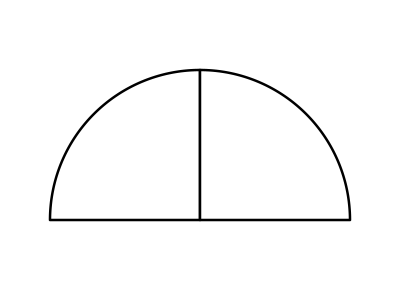
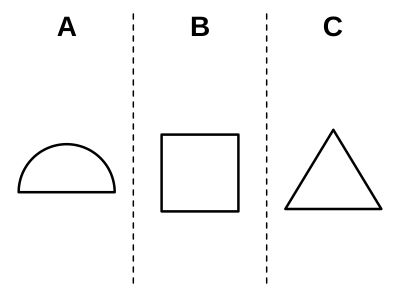
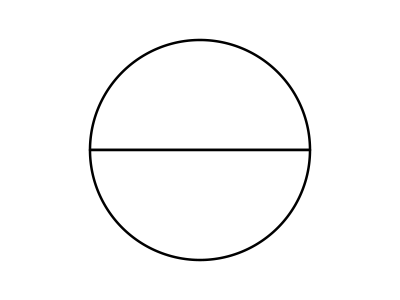
      2 half-circles with their straight sides touching. Picture A: a square; picture B: a triangle; picture C: a circle.
      • A
      • B
      • C
    2. 2.
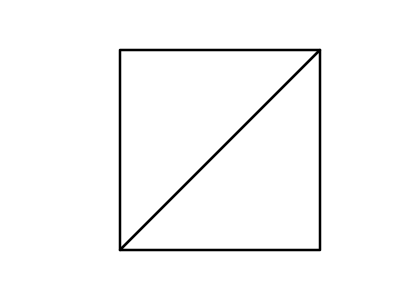
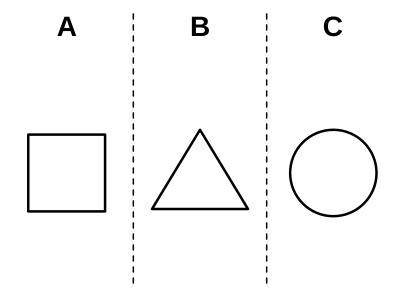
      2 same-size triangles with their long sides touching. Picture A: a square; picture B: a triangle; picture C: a circle.
      • A
      • B
      • C
    3. 3.
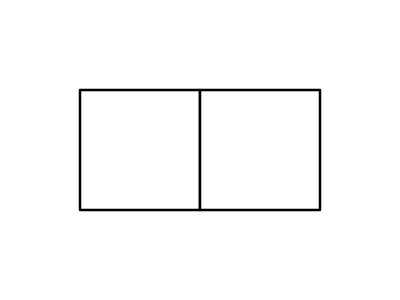
      2 squares side by side. Picture A: a rectangle; picture B: a triangle; picture C: a circle.
      • A
      • B
      • C
    4. 4.
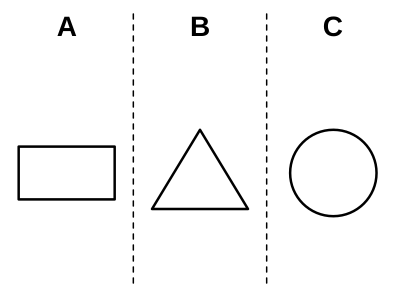
      2 quarter-circles with one straight side touching. Picture A: a half-circle; picture B: a square; picture C: a triangle.
      • A
      • B
      • C

    Write how many pieces.

    1. 5.
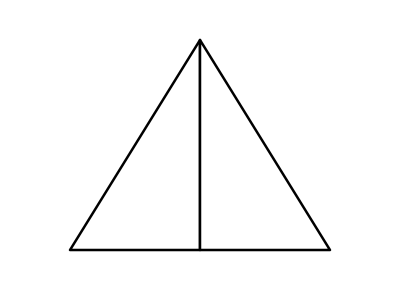
      A big triangle made of 2 small triangles, with a line where they touch. How many small triangles? ____
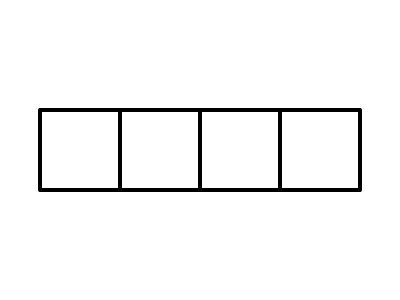
    2. 6.
      A long rectangle made of 4 squares in a row. How many squares? ____
    3. 7.
      Draw a square and a triangle put together to make a new shape.

    Challenge (optional)

    How many triangles do you need to make a long rectangle of 3 squares?

    You need: Pencil, Paper shape kit (optional, to check)

    Reading & Writing · Week 32 Day 1

    I can compare the adventures of characters in two stories.

    Look: comparing two characters

    1. Ask about each character: What did they do?
    2. Ask: How did it turn out?
    3. Then compare: How are they the same? How are they not the same?

    Two Tales

    Kate went in a home with no one in it. She ate the cake and ran.

    Gabe made a home of stone. When the storm came, Gabe was safe in it.

    Who did it? Circle Kate or Gabe.

    1. 1.
      ate the cake and ran
      • Kate
      • Gabe
    2. 2.
      made a home of stone
      • Kate
      • Gabe
    3. 3.
      was safe in the storm
      • Kate
      • Gabe

    Add e to the end. Write the new word.

    1. 4.
      pin ____
    2. 5.
      tub ____
    3. 6.
      not ____
    4. 7.
      man ____

    Read the word. Write the two parts.

    1. 8.
      bunny ____
    2. 9.
      fussy ____
    3. 10.
      tummy ____

    Challenge (optional)

    Kate and Gabe are not the same: ____.

    Social Studies · Week 32 Day 1

    I can tell why our country has holidays like Independence Day and Martin Luther King Jr. Day.

    Look: which holiday?

    1. Our country has national holidays. Each one remembers people or an event that changed our country.
    2. Find the holiday on the calendar and say what it remembers.
    3. Ask a question about it with who, what, why or how.

    Listen to the clue. Write what your child says.

    1. 1.
      This day remembers Dr. King, who worked peacefully so all people would be treated fairly.
    2. 2.
      This day, July 4, remembers when leaders adopted the Declaration of Independence.
    3. 3.
      This day, June 19, remembers when people in Galveston, Texas, who had been enslaved learned that slavery had ended for them.
    4. 4.
      This day in May remembers people who died while serving in the military.
    5. 5.
      This day in February remembers George Washington, our first President.

    Ask questions and draw. Write what your child says.

    1. 6.
      Ask a "who" question about a holiday.
    2. 7.
      Ask a "why" question about a holiday.
    3. 8.
      Draw a calendar page for one month and mark one holiday on it.

    Challenge (optional)

    Find out one day your state or town celebrates. What does it remember?

    You need: a calendar, crayons