1First Grade

    Lesson + weekly check: composing shapes

    Share and check: review 2

    Practice pages

    0 of 180 days complete · Saved on this device

    View all 180 days

    MathWeekly check

    Lesson + weekly check: composing shapes

    I can make new shapes from shapes.

    Standards: 1.G.A.2

    Number practice (no timer)
    Doubles with pattern blocks (keep-up practice)
    Builds on
    This week's work: composing flat and solid shapes, and building with composite shapes. One-minute check: "What do 2 triangles make when their long sides touch?" (A square)

    New words

    • tangram: a square puzzle cut into pieces that fit together to make shapes

    You need

    • Paper shape kit (an adult makes it on Week 32 Day 1 from construction paper or cereal-box cardboard and keeps it in a bag all week): 8 squares, each 2 inches on a side; 12 triangles, made by cutting 6 more 2-inch squares in half from corner to corner; 4 rectangles, 2 inches by 4 inches; 4 half-circles, made by tracing a cup about 4 inches across twice, cutting out the circles and cutting each one in half; and 4 quarter-circles, made by cutting one more circle into 4 equal parts (fold it in half, then in half again, and cut on the folds)
    • A 4-piece tangram an adult makes: fold a square of paper corner to corner both ways and cut on the folds to make 4 triangles
    • Notebook and pencil
    • The stored Week 32 check and its answer key
    1. Warm-Up · 5 min

      Fluency: doubles with shape pieces. "8 + 8?" (16) "10 + 10?" (20) Spaced review from Week 29: "A graph shows 5 votes for red, 3 for blue and 2 for green. How many votes in all?" (10)

    2. Short Lesson: Review Game · 10 min

      Tangram Challenge. Give your child the 4 tangram triangles. Read each challenge. 1) "Put the 4 pieces back together into the square." 2) "Use 2 pieces to make a smaller square." (Look for: 2 triangles with their long sides together.) 3) "Use all 4 pieces to make one big triangle." 4) "Use all 4 pieces to make a rectangle that is not a square." (Look for: 2 smaller squares side by side.) After each one, your child traces the outline and counts its sides. If stuck, say: "Start with 2 pieces. Make a shape you know. Then add the others."

    3. Weekly Check · 15 min

      Give the stored Week 32 check. The printed check has 6 items. It covers these goals: (1) I can fill an outline with shapes and name the shapes I used; (2) I can put solid shapes together and name them; (3) I can make a new shape and use it to make another shape. Read each item aloud. There is no time limit. If your child is stuck, say only: "Which piece has a side that fits there?" Do not give the answer. Score it with the answer key. Secure: 5 or 6 of the 6 items right. If the check is secure, start Week 33. If it is not, first do the reteach step on the check page for each group of items missed, then start Week 33.

    4. Exit Ticket · 3-5 min

      After the check, ask these two questions. Then go over any missed check items together.

    Exit ticket

    1. What shape do 2 half-circles make?
    2. How could you make a rectangle from triangles?
    Answers
    1. A circle
    2. Answers vary. Look for: 2 triangles make a square and 2 squares make a rectangle, using 4 triangles.
    Watch for, and help or stretch
    Watch for
    Leaving gaps between pieces inside an outline.
    Try
    Slide the pieces together until all the sides touch. Run a finger along each seam.
    Extra help
    Trace each check outline darker and let your child lay a first piece in each outline before starting, and note it on the check.
    Stretch
    After the check, your child uses the 4 tangram pieces to make a shape that is not a square, a triangle or a rectangle, traces it and counts its sides. (Answers vary. Look for: pieces touching along whole sides and a correct count.)

    At home (optional): Your child shows a family member the 4-piece tangram and makes a square and a big triangle from it.

    Reading & WritingWeekly check

    Share and check: review 2

    I can read final e, vowel team and y-as-long-e words.

    Standards: RF.1.3.c, RF.1.3.g, RL.1.9, RL.1.6, RF.1.3.e

    Phonics
    y as long e at the end of two-syllable words (happy, puppy, sleepy), with cumulative review: final e and vowel teams
    Sight words
    such, why, went, read, need
    Reading
    Goldilocks and the Three Bears and The Three Little Pigs (traditional, public domain; our own retellings); original decodable "Jade and the Three Goats"
    Writing
    Showcase: revise with peer and adult suggestions · Handwriting: neat final copy
    Builds on
    This week's final e, vowel team and y-as-long-e words and the two tales. One-minute check: warm up with cape, rain, light, happy.

    New words

    • long vowel: a vowel that says its name, like the a in cake

    You need

    • The printed Week 32 check (15 final e and vowel team words, 5 y-as-long-e words, 5 sight words and a short story)
    • 12 game cards (index cards): grape, ride, home, tune, paint, stay, feet, puppy, coat, snow, night, sandy
    • Sight word cards: such, why, went, read, need, well, large, must, big, even
    • Recording sheet
    • The final copy of the best piece
    • Lined handwriting paper
    1. Review Game · 10 min

      Long Vowel Hop: lay 12 cards on the floor: grape, ride, home, tune, paint, stay, feet, puppy, coat, snow, night, sandy. Your child hops to a card, reads it and names the long vowel sound in it (grape, paint, stay: long a; ride, night: long i; home, coat, snow: long o; tune: long u; feet, puppy, sandy: long e). For puppy and sandy, your child claps the two parts and says: "y at the end says long e." If stuck on a word during the game (not during the check), cover all but the first sound, say it together, then uncover the rest and blend.

    2. Sight Words · 5 min

      Review: such, why, went, read, need, well, large, must, big, even. Flashlight Read: dim the lights; your child shines a flashlight on a card and reads it.

    3. Weekly Check · 15 min

      Give the printed Week 32 check: 10 items. Its goals: I can read final e and vowel team words. I can read words where y at the end says long e. I can compare two characters and tell who is talking. I can use quotation marks and spell words I know. Items 1-3: your child reads 15 words with final e and vowel teams. Item 4: 5 words with y as long e. Item 5: the 5 sight words (such, why, went, read, need). Item 6: your child tells one way Goldilocks's adventure and the third pig's adventure are alike or different. Items 7-10: who is talking, quotation marks and one spelling word. Give no hints. Record each answer. The check's pass rule: "Secure: 12 of 15 words in items 1-3, 4 of 5 y words in item 4, 4 of 5 sight words in item 5, one true comparison in item 6, and 3 of 4 on items 7-10."

    4. Share & Listen · 10 min

      Your child reads the final copy of the best piece to a listener. The listener names one thing they liked and asks one question. Your child answers in a complete sentence.

    5. Handwriting · 5 min

      Your child copies Jade went on a hike. neatly. Circle the best word.

    6. Exit Ticket · 5 min

      Talk about the week.

    Exit ticket

    1. Read a word with a vowel team or with y as long e, and tell the pattern.
    2. Which tale did you like best this week? Why?
    Answers
    1. Answers vary. Look for: a correct read and pattern, such as boat: oa, or happy: y says long e.
    2. Answers vary. Look for: a tale and a reason.
    Watch for, and help or stretch
    Watch for
    Reading a vowel team word with a short vowel (reading seal as sell).
    Try
    Before the check (not during it), review: "When you see two vowels together, try the long sound first."
    Extra help
    Give items 1-3 in three sets of 5 with a stretch between. Read both tales' summaries aloud before Part 3.
    Stretch
    Your child reads 3 bonus words: sailboat, sunshine, peanut. Do not score them.

    At home (optional): Your child acts out one of the tales with family members as the characters.

    Social StudiesWeekly check

    Leaders for fairness

    I can tell how Dr. Martin Luther King Jr. worked for fair and equal treatment.

    Standards: D2.Civ.8.K-2, D2.His.3.K-2

    Builds on
    Days we remember (Day 1). One-minute check: ask "In which month is Martin Luther King Jr. Day?" (January)

    New words

    • equal: the same; every person gets the same rights and fair treatment
    • unfair: not right for everyone
    • peaceful: calm, without fighting or hurting anyone

    You need

    • The short biography of Dr. King (in the Review Game; copy it on a card or read it from the screen)
    • Optional: a picture-book biography of Dr. King from the library
    • Drawing paper and crayons
    • Week 32 social studies check page (given separately)
    • Pencil
    1. Warm-Up / Wonder · 5 min

      Spaced review: ask: "What do many celebrations have in common?" (Answers vary: food, family time, lights, music, giving.) Wonder question: "What can a person do when a rule is unfair?" Note for grown-ups: keep this calm and simple. If your child asks what happened to Dr. King, you can say: "In 1968, a man killed him. People all over the country were very sad, and many people kept working for fairness." If your child seems worried, say: "That happened a long time ago. The grown-ups who love you work hard to keep you safe." Then return to his work.

    2. Review Game · 10 min

      Read the short biography: "Martin Luther King Jr. was born on January 15, 1929, in Atlanta, Georgia. When he was a boy, unfair laws in many places kept Black people and white people apart. Black children had to go to different schools. On city buses in Montgomery, Alabama, Black riders had to sit in the back and could be told to give up their seats to white riders. Dr. King grew up and became a minister and a leader. He believed people could change unfair laws peacefully, without fighting. In 1955, after Rosa Parks was arrested for refusing to give up her bus seat to a white rider, he helped lead the people of Montgomery, Alabama, in a year-long protest of not riding the buses. In 1956, the country's highest court said the bus rules were unfair, and Black and white riders could sit anywhere. In 1963, he spoke to a huge, peaceful crowd at the March on Washington and shared his dream that all people would be treated fairly and equally. In 1964, he won the Nobel Peace Prize. Today, Martin Luther King Jr. Day remembers his work." Ask: "What was unfair?" (Laws kept Black people and white people apart, like different schools and being told to move to the back of the bus.) "What did Dr. King do?" (He spoke, led a peaceful bus protest and marched peacefully.) "Did he use fighting?" (No. He worked peacefully.) Say: "Equal means every person gets the same rights and fair treatment." Play "Fair or Unfair?" Say each one; your child shows thumbs-up for fair, thumbs-down for unfair. "Only kids with red shirts may use the slide." (unfair) "Everyone takes turns on the slide." (fair) "Some kids may not go to this school because of their skin color." (unfair) "Every child gets a library card." (fair) Then your child asks one question about Dr. King or the people who worked with him (Who, What, Why or How). (Sample: "How did the bus protest work?") If stuck, reread the one sentence of the biography that tells what Dr. King did.

    3. Check · 10 min

      Give the Week 32 social studies check. The check items are on the Week 32 check page; do not show them ahead of time. Read each part aloud. Your child answers by talking, pointing, showing with the real materials or drawing. You write down their words exactly. It is not timed; stop and finish later if your child is tired. Make a check mark next to each part your child shows on their own. The printed check has 9 items. It covers these goals: (1) I can tell why our country has holidays like Independence Day and Martin Luther King Jr. Day; (2) I can tell how families celebrate in different ways and what many celebrations have in common; (3) I can tell how Dr. Martin Luther King Jr. worked for fair and equal treatment. This week the check is an oral explaining task. Look for: your child explains what equal means (everyone gets the same rights and fair treatment), tells one unfair thing Dr. King worked to change, tells one peaceful way he worked (speaking, a bus protest, marching), and asks one question about him or the people who worked with him. If stuck on a part, read the biography sentence about the buses again and ask: "Was that fair? What did people do about it?" Secure: 7 of 9 correct, with at least one right on each goal. If the check is not yet secure, use the reteach step on the check page that matches the items missed.

    4. Exit Ticket · 3–5 min

      Ask the three questions aloud, then your child draws "my dream for a fair world" and tells about it.

    Exit ticket

    1. A team lets only some kids play because of where they live. Is that fair or unfair?
    2. What does equal mean?
    3. Tell one peaceful way people can work to change an unfair rule.
    Answers
    1. Unfair.
    2. Every person gets the same rights and fair treatment.
    3. Answers vary. Look for: talking or writing to leaders, voting, peaceful marches or protests.
    Watch for, and help or stretch
    Watch for
    Thinking the unfair laws are still the same today.
    Try
    Say: "Those laws were changed because many people worked together peacefully. People still work for fairness today."
    Extra help
    Read the biography in 3 short parts and stop after each to ask "What happened?"
    Stretch
    Your child reads a library biography of another person who worked for fairness and tells one thing that person did.

    At home (optional): Your child shows the "my dream for a fair world" drawing to a family member and explains it.

    Practice

    Read each direction aloud. Your child works on the page; answers are in the grown-up view.

    Warm-up

    Remember?

    Math

    1. If you turn a triangle upside down, is it still a triangle? (yes or no)
    2. 14 + 50 = ?

    Reading & Writing

    Math · Week 32 check

    Weekly check

    How to give it: Read every item aloud. It is untimed. Your child may use the paper shape kit to try each one before drawing. If your child is stuck, say only: "Which piece has a side that fits there?" Do not give the answer. 5 or 6 right: start Week 33. 4 right: redo Day 2 Guided Practice before Week 33. 3 or fewer right: redo Days 1 and 2 before Week 33.

    Secure when: 5 or 6 of the 6 items right.

    • I can fill an outline with shapes and name the shapes I used.
    • I can put solid shapes together and name them.
    • I can make a new shape and use it to make another shape.
    1. 1.
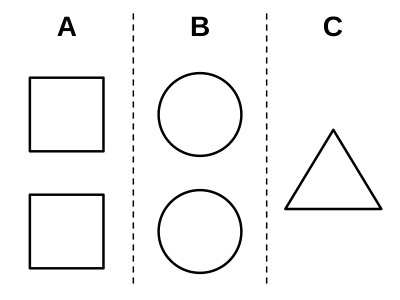
      A rectangle outline, 2 squares long. Which pieces fill it? Picture A: 2 squares; picture B: 2 circles; picture C: 1 triangle.
      • A
      • B
      • C
    2. 2.
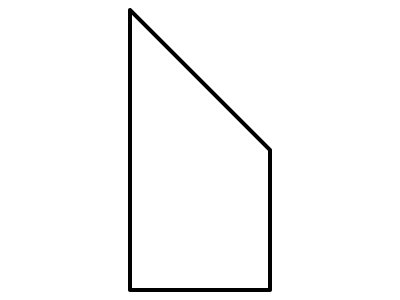
      A house outline drawn the same size as the kit pieces: one 2-inch square with one kit triangle on top, the triangle's short side along the square's top edge; outline only. Draw lines to show the kit pieces that fill it. How many pieces did you use?
    3. 3.
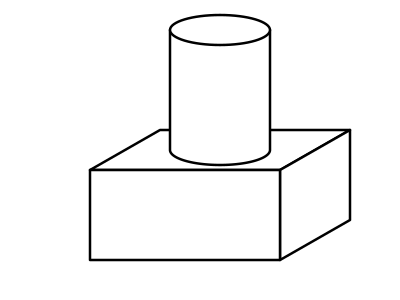
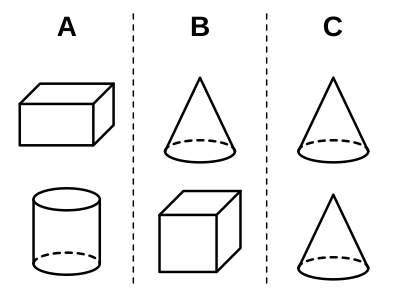
      A cylinder standing on top of a box shape. Which solid shapes were put together? Picture A: a box shape and a cylinder; picture B: a cone and a cube; picture C: 2 cones.
      • A
      • B
      • C
    4. 4.
      Draw 2 triangles that make a square.
    5. 5.
      Now draw 2 of those squares together. What new shape did you make?
    6. 6.
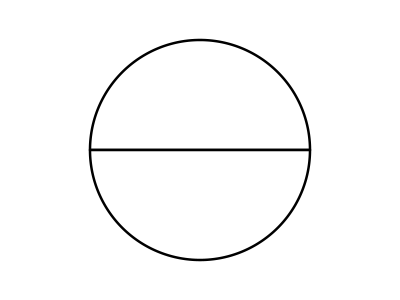
      2 half-circles put together. Then 2 of those circles are put side by side. How many half-circles are used in all?

    Reading & Writing · Week 32 check

    Weekly check

    How to give it: Give it in one sitting, untimed. Read each direction aloud and give no hints. For items 1-5, your child reads each word aloud and you tick the ones read right. For item 6, your child tells one way Goldilocks's adventure and the third pig's adventure are alike or different; write the words if your child tells it aloud. Your child reads Gabe and the Kite before items 7-8. For item 8, say: Circle N if the narrator tells this part. For item 9, say: Put in the quotation marks. For item 10, say the word plate twice.

    Secure when: 12 of 15 words in items 1-3, 4 of 5 y words in item 4, 4 of 5 sight words in item 5, one true comparison in item 6, and 3 of 4 on items 7-10.

    • I can read final e and vowel team words.
    • I can read words where y at the end says long e.
    • I can compare two characters and tell who is talking.
    • I can use quotation marks and spell words I know.

    Gabe and the Kite

    Gabe made a kite. "It can fly high!" said Gabe. Then the kite went up in the bright sky. "Wow!" said his dad.

    1. 1.
      robe spine globe mute flake
    2. 2.
      braid sway creek leash toast
    3. 3.
      bright sly glow bait wheel
    4. 4.
      sticky frosty floppy chunky fishy
    5. 5.
      such why went read need
    6. 6.
      The girl and the pig: ____
    7. 7.
      Who said, "It can fly high!"?
      • Gabe
      • his dad
    8. 8.
      Then the kite went up in the bright sky.
      • N
      • Gabe
    9. 9.
      I like it, said Dad.
    10. 10.
      Spell it: ____

    Social Studies · Week 32 check

    Weekly check

    How to give it: Read every question and choice aloud, and point to each picture as you name it. This week the check is an oral explaining task. Your child answers by talking, pointing, circling, acting it out or drawing; write their words exactly on the line. It is not timed; stop and finish later if your child is tired. Do not show the page ahead of time. Keep the talk about Dr. King calm and simple. If stuck on items 6 or 7, read the biography sentence about the buses again and ask "Was that fair? What did people do about it?" Make a check mark next to each part your child shows on their own.

    Secure when: 7 of 9 correct, with at least one right on each goal

    • I can tell why our country has holidays like Independence Day and Martin Luther King Jr. Day.
    • I can tell how families celebrate in different ways and what many celebrations have in common.
    • I can tell how Dr. Martin Luther King Jr. worked for fair and equal treatment.
    1. 1.
      Why does our country have Independence Day?
    2. 2.
      Juneteenth is on June 19. What does it remember?
    3. 3.
      Diwali and Hanukkah both have something special that shines. What is it?
    4. 4.
      Your friend's family celebrates Kwanzaa, and yours does not. What could you ask your friend?
    5. 5.
      "Every person gets the same rights and fair treatment." Which word means this: equal or unfair?
    6. 6.
      Tell one unfair thing Dr. King worked to change.
    7. 7.
      Did Dr. King use fighting? What did he do instead?
    8. 8.
      A rule says kids with blue shoes must sit in the back of the bus. Is that fair?
      • yes
      • no
    9. 9.
      Ask one question about Dr. King or the people who worked with him.