1First Grade

    Halves

    Story and facts about rabbits

    Practice pages

    0 of 180 days complete · Saved on this device

    View all 180 days

    Math

    Halves

    I can split a shape into 2 equal parts.

    Standards: 1.G.A.3

    Number practice (no timer)
    Halves and doubles: 4 + 4 = 8, half of 8 is 4
    Builds on
    Week 32 (composing shapes, such as 2 half-circles making a circle). One-minute check: "What do 2 half-circles make?" (A circle)

    New words

    • equal shares: parts that are all the same size
    • half: one of 2 equal shares of a whole
    • halves: 2 equal shares; two halves make the whole
    • whole: the full shape before it is split

    You need

    • 4 paper circles about 6 inches across (an adult traces a small plate and cuts them out)
    • 4 paper rectangles (half sheets of printer paper)
    • 3 paper shapes an adult cuts in half for a puzzle: a circle, a square and a rectangle
    • Child-safe scissors
    • Crayons
    • Notebook and pencil
    1. Warm-Up · 5 min

      Fluency: halves and doubles. "4 + 4?" (8) "So what is half of 8?" (4) "5 + 5?" (10) "Half of 10?" (5) Spaced review from Week 31: "How many sides does a triangle have?" (3)

    2. Mini-Lesson · 10 min

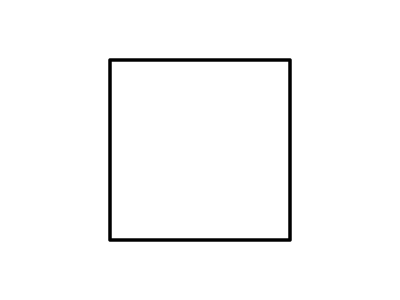
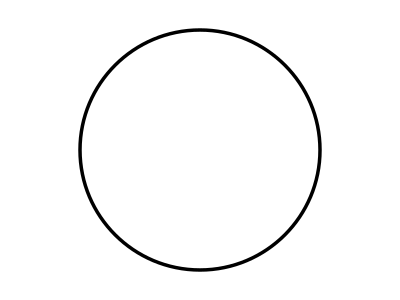
      Hold up a paper circle. Say: "This is one whole circle. I want to share it fairly with you." Fold it so the edges match exactly, then press the fold. Open it and draw a line on the fold. Say: "Now there are 2 parts that are the same size. They are equal shares. Each part is a half. This part is half of the circle." Your child cuts on the line with child-safe scissors and lays one half on top of the other. Ask: "Do they match?" (Yes.) Put them back together. Say: "Two halves make the whole circle." Fold a rectangle edge to edge the same way. Ask: "How many equal shares?" (2) "What is each one called?" (A half)

    3. Guided Practice · 10 min

      Your child folds each shape into halves, matching the edges before pressing, then colors one half and says: "I colored half of the ___. Two halves make the whole." 1) A circle 2) A rectangle folded the long way 3) A rectangle folded the short way Ask: "How many halves make one whole?" (2) If stuck, say: "Match the edges first, then press the fold."

    4. Play · 10 min

      Halves Puzzle. Mix up the 6 halves of the cut circle, square and rectangle. Your child finds the 2 halves that make each whole and puts them together, saying: "Two halves make one whole circle." Then your child gives you one half of a piece of paper and keeps the other half, saying: "Here is half of the paper."

    5. Exit Ticket · 3-5 min

      Put the objects to one side but leave them on the table. Read each question aloud. Your child answers out loud, with objects or with a quick drawing. Check each answer together right away.

    Exit ticket

    1. Draw a square and split it into halves.
    2. How many halves make one whole?
    3. A pizza is cut into 2 equal shares. What is each share called?
    Answers
    1. Look for: one line that splits the square into 2 parts of the same size.
    2. 2
    3. A half, or half of the pizza
    Watch for, and help or stretch
    Watch for
    Folding without matching the edges, so the two parts are not the same size.
    Try
    Unfold it, lay one part on the other to see that they do not match, and fold again with the edges lined up.
    Extra help
    Fold the first shape together, holding your child's hands to match the edges.
    Stretch
    Ask: "Can you fold a square into halves a different way?" (Yes. Fold it corner to corner to make 2 triangles.)

    At home (optional): At a snack or meal, your child shows a family member how to share something fairly in halves, such as a slice of bread (an adult does the cutting).

    Reading & Writing

    Story and facts about rabbits

    I can compare a storybook and a fact book on the same topic.

    Standards: RI.1.9, RL.1.5, RF.1.3.b, RF.1.3.e

    Phonics
    Consonant-le syllables (little, apple, candle), with cumulative review: r-controlled vowels and ou/ow, oi/oy
    Sight words
    home, us, try, kind, hand
    Reading
    The Tale of Peter Rabbit (Beatrix Potter, 1902; public domain; reread) paired with Rabbits, Rabbits & More Rabbits (Gail Gibbons), optional; original fact page "Real Rabbit Facts" and original decodable "Fern Hops Out at Dusk"
    Writing
    Showcase: publish with a digital tool · Handwriting: title page
    Builds on
    Story or information (Unit 2) and Peter Rabbit (Week 5). One-minute check: your child tells one thing Peter did in Mr. McGregor's garden.

    New words

    • real: true; it can happen in our world
    • pretend: made up; it can't happen in our world
    • cottontail: a wild rabbit with a white, fluffy tail

    You need

    • Printed "The Tale of Peter Rabbit" retelling and "Real Rabbit Facts" (in the lesson)
    • Rabbits, Rabbits & More Rabbits by Gail Gibbons, or any fact book about rabbits (optional)
    • A two-column chart on paper: Real and Pretend
    • Word cards (index cards): little, candle, apple, puddle, jungle, bubble, simple, nibble, handle, purple, turtle, farm, fork, fern, shark, storm, perch, girl, bird, hurt
    • Sight word cards: home, us, try, kind, hand (5 index cards)
    • Lined handwriting paper
    1. Phonics & Word Work · 15 min

      New: consonant-le, then an r-controlled review. I do: write little. Say: "When a word ends in a consonant and le, count back three letters: t-l-e. That is the last part. It says /tl/, and the e is silent." Split it: lit | tle. Read lit, then tle, then little. Write candle: can | dle, candle. We do: split and read apple (ap | ple), puddle (pud | dle) and jungle (jun | gle) together. You do: your child reads bubble, simple, nibble, handle, purple and turtle, splits each one before the consonant-le and reads both parts. (bub | ble, sim | ple, nib | ble, han | dle, pur | ple, tur | tle.) Say: "purple and turtle start with an r-team: ur." r-controlled review (5 min): write farm, fork and fern. Say: "When r comes after a vowel, the r changes the sound. ar says /ar/; or says /or/; er, ir and ur all say /er/." Your child reads shark, storm, perch, girl, bird and hurt and sorts them into ar, or and er/ir/ur. (ar: farm, shark; or: fork, storm; er/ir/ur: fern, perch, girl, bird, hurt.) Read: "The bird sat on the fork in the barn." "A little turtle swam in the puddle." Dictation: storm, shark, candle, puddle. If stuck on a consonant-le word, cover the last three letters, read the first part, then uncover the consonant-le and say it. If stuck on an r-team, frame the vowel and r together and say the r-team sound first.

    2. Sight Words · 5 min

      Introduce this week's words with see-say-spell-write. For each card: Say: "This word is ___. Say it with me." Your child reads it, spells it aloud while tapping each letter, writes it once while saying each letter, and reads it again. Draw a small heart over any part we must learn by heart: home (o_e, regular); us (regular); try (tr and y as long i, as in my: regular); kind (i says its name before nd, as in find: heart over i); hand (regular). Finish by reading all five cards in mixed order twice. If stuck, cover the tricky part, read the rest together, then uncover it and say the whole word.

    3. Read-Aloud & Shared Reading · 15 min

      Say: "Today we compare a storybook and a fact page about the same animal: rabbits." Read the Peter Rabbit retelling (or the book itself), then the fact page (and the Gibbons book, if you have it). The Tale of Peter Rabbit (by Beatrix Potter, 1902; our short retelling. The original book and its pictures are in the public domain, and you can find them at Project Gutenberg, ebook 14838.) Four little rabbits, Flopsy, Mopsy, Cotton-tail and Peter, lived with their mother in a sand-bank under the root of a big fir tree. One morning, Mrs. Rabbit told them they could play in the fields or down the lane, but they must not go into Mr. McGregor's garden. Then she took her basket and her umbrella and went through the wood to the baker's. Flopsy, Mopsy and Cotton-tail were good little bunnies. They went down the lane to pick blackberries. But Peter, who was very naughty, ran straight to Mr. McGregor's garden and squeezed under the gate. He ate some lettuces and some French beans, and then some radishes. Then, feeling rather sick, he went to look for some parsley. And who should he meet but Mr. McGregor! Mr. McGregor ran after him. Peter lost one shoe among the cabbages and the other among the potatoes. His blue jacket with brass buttons got caught in a net, so he wriggled out of it and left it behind. He hid in a watering can, but it had water in it, and he sneezed! Mr. McGregor nearly caught him again. At last Peter saw the gate. He ran as fast as he could and slipped under it. He was safe in the wood outside the garden. Mr. McGregor hung up Peter's little jacket and shoes as a scarecrow to frighten the blackbirds. Peter was so tired when he got home that he flopped down on the soft sand. He did not feel well that evening. His mother put him to bed and gave him camomile tea. But Flopsy, Mopsy and Cotton-tail had bread and milk and blackberries for supper. Real Rabbit Facts (an original fact page; you read it) Cottontails are wild rabbits. They live in fields, meadows, farms and yards in much of the United States. Food: Cottontails eat plants: grasses, clover, dandelions and other leafy plants. In winter, they nibble buds, twigs and bark. Day and night: They rest during the day, hidden in grass or bushes. They come out to eat at dusk and at night. Babies: A mother rabbit digs a small, slanting nest hole and lines it with grass and her own fur. The babies are born with very fine hair, and their eyes are closed. Their eyes open when they are about a week old. Staying safe: Hawks, owls and foxes hunt rabbits. A cottontail can run as fast as 18 miles an hour, and it zigzags to get away. Tail: The underside of a cottontail's tail is white, like a cotton ball. You see it best when the rabbit runs. Diagram (draw this for your child): a rabbit from the side, with four labels and lines: long ears, whiskers, white tail, strong back legs. Note for you: Peter lives in a hole in a sand-bank. Rabbits like Peter (European rabbits) dig burrows. Cottontails, the wild rabbits in most of the United States, use holes that other animals dug. So living in a hole counts as real. Sources for the facts: National Park Service cottontail pages and the USDA Forest Service species review of the eastern cottontail. Fill the Real and Pretend chart with things Peter did. Ask: "What does Peter do that real rabbits do?" (Answers vary. Look for: eats garden plants, runs fast, squeezes under a gate, hides, lives in a hole.) Ask: "What does Peter do that is pretend?" (Answers vary. Look for: wears a jacket and shoes, drinks camomile tea, his mother goes to the baker's with a basket and an umbrella, the rabbits talk.) Ask: "Which text would you use to learn what wild rabbits eat? Why?" (The fact page or fact book: it gives true facts about real rabbits.) If stuck, ask about one thing at a time: "Can a real rabbit wear shoes?"

    4. Writing & Handwriting · 15 min

      Your child writes one real sentence and one pretend sentence about rabbits, with frames: "Real: A rabbit can ___." "Not real: A rabbit can ___." (Answers vary. Look for: a true rabbit action, such as hop, run fast or munch grass, and a pretend one, such as sing or drink tea.) Handwriting (4 min): capital R. A tall line down, back to the top, around to the middle, then a slant kick out. Your child writes R 4 times and Real once.

    5. Exit Ticket · 5 min

      Oral answers. Your child reads the words from a card you write.

    Exit ticket

    1. Read these words: smart, puzzle, curb.
    2. Is this real or pretend: A rabbit puts on a coat and shoes?
    3. Tell me one fact about real rabbits from the fact page.
    Answers
    1. smart, puzzle, curb
    2. Pretend.
    3. Answers vary. Look for: a fact from the page, such as they eat plants, rest in the day, or run in a zigzag.
    Watch for, and help or stretch
    Watch for
    Calling the whole story pretend, so nothing Peter does counts as real.
    Try
    Ask about one action at a time: "Do real rabbits eat garden plants? Then that part is real, even in a pretend story."
    Extra help
    Sort only 4 things onto the chart: shoes, tea, eating beans and running fast.
    Stretch
    Your child writes a question about rabbits that neither text answers, then you look it up together in a fact book.
    At home (optional): Your child tells a family member one real thing and one pretend thing about Peter Rabbit.

    Science

    Build design A

    I can build my first design.

    Standards: K-2-ETS1-2

    Builds on
    Sketch two designs (Week 32). One-minute check: ask "Show me Design A. What shape helps it work?" (Answers vary. Look for: a labeled shape.)

    New words

    • model: a thing you build to show or try out an idea
    • material: what something is made of, like cardboard or clay

    You need

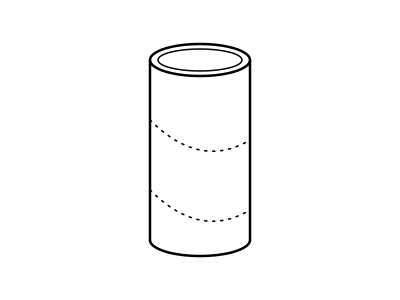
    • 4 empty cardboard tubes (paper towel or toilet paper tubes)
    • 4 plastic cups
    • 1 stick of modeling clay or a ball of play dough about the size of a tennis ball
    • Masking tape or clear tape
    • 2 cardboard squares about 6 inches on each side (a grown-up cuts them from a box)
    • Child-safe scissors (for paper only)
    • Engineering Journal with the two sketches
    1. Warm-Up / Wonder · 5 min

      Spaced review: ask: "Why do lamps have a wide base?" (so they do not tip over) Wonder question: "Will Design A look exactly like the sketch when it is built?" Safety: a grown-up does all cutting of cardboard. Your child uses only child-safe scissors on paper. No hot glue guns and no sharp tools; tape and clay hold everything together.

    2. Explore · 10–15 min

      Say: "Today we Create. Engineers build a model of their plan." Look at the Design A sketch together. Your child makes a materials list: ask "What will you need?" and lay out only those things. Your child builds while you help hold pieces. Talk while building: ask "Which part is the base?" "Where does the tape go so it holds?" If your child wants a piece of cardboard a new size, they draw the line and the grown-up cuts it. If something does not work as planned, say: "Engineers change plans. Draw the change on your sketch with a different color." When done, give it a gentle look-over (no testing yet): ask "Does it look like your sketch? What is different?" (Answers vary.) Put the design on a shelf with a label "Design A" so it is safe until testing day. If stuck on how to start, begin with the base: ask "What does it stand on?" and build that first.

    3. Talk & Record · 5–10 min

      Your child draws Design A as it was really built on the next journal page. Sentence frame: "I built ___. I changed ___ from my sketch."

    4. Exit Ticket · 3–5 min

      Ask the three questions aloud. Your child answers by talking or drawing.

    Exit ticket

    1. What is a model?
    2. You want a cup to stay on a cardboard square. Name a material that could hold it there.
    3. What is one way your built design is different from your sketch?
    Answers
    1. A thing you build to show or try out an idea.
    2. Answers vary. Look for: tape or clay.
    3. Answers vary. Look for: a real change, or "It is the same."
    Watch for, and help or stretch
    Watch for
    Building something new that does not match either sketch.
    Try
    Hold up the sketch. Ask: "Which part of your sketch are we building now?"
    Extra help
    Build together: your child tells you each step and you both hold pieces.
    Stretch
    Your child labels each material on the built model with small sticky notes.

    At home (optional): Your child shows Design A to a family member and tells which shape should help it work.

    Practice

    Read each direction aloud. Your child works on the page; answers are in the grown-up view.

    Warm-up

    Remember?

    Math

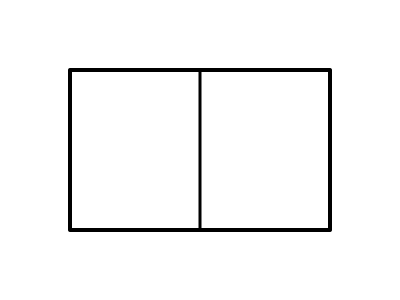
    1. Put 2 same-size squares side by side. What shape do you make?
    2. 3 + 3 + 5 = ?

    Reading & Writing

    1. shine, float, cheek
    2. crab, grin, spot

    Math · Week 33 Day 1

    I can split a shape into 2 equal parts.

    Look: halves of a circle

    1. Fold the circle so the edges match. Press the fold.
    2. Now there are 2 equal shares. Each share is a half.
    3. 2 halves make the whole circle.

    Draw one line to split each shape into halves.

    1. 1.
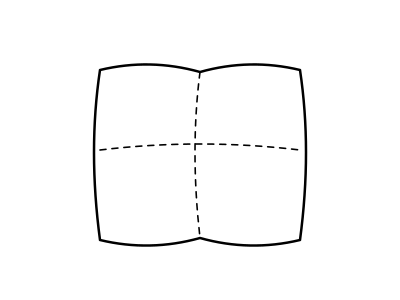
      A square.
    2. 2.
      A circle.
    3. 3.
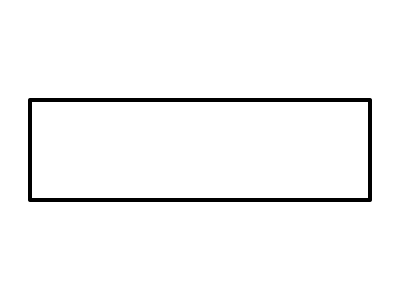
      A long rectangle.

    Circle or color.

    1. 4.
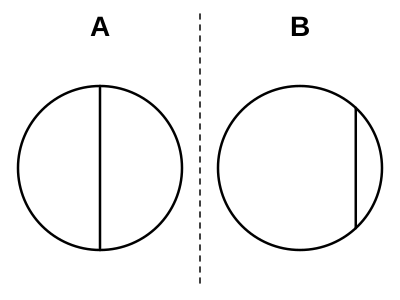
      Picture A: a circle split by a line through the middle; picture B: a circle split by a line near the edge. Circle the one split into halves.
      • A
      • B
    2. 5.
      A rectangle split into 2 equal shares. Color half of the rectangle.
    3. 6.
      2 halves of a pizza are put back together. Is the pizza whole again?
      • yes
      • no

    Challenge (optional)

    A sandwich is cut into halves. You eat one half. How much of the sandwich is left?

    You need: Pencil, Crayons

    Reading & Writing · Week 33 Day 1

    I can compare a storybook and a fact book on the same topic.

    Look: a tale and facts

    1. A tale can have pretend things: a rabbit in a hat.
    2. Facts tell what is real: A rabbit eats grass.
    3. Ask: Could a real rabbit do it? If not, it is pretend.

    Bun and a Rabbit

    Bun the rabbit put on a red hat. "I will go to the shop," said Bun.

    A rabbit eats grass. It rests in the day and hops out at night.

    Read the line. Could a real rabbit do it? Circle yes or no.

    1. 1.
      A rabbit eats grass.
      • yes
      • no
    2. 2.
      Bun put on a red hat.
      • yes
      • no
    3. 3.
      A rabbit hops out at night.
      • yes
      • no
    4. 4.
      "I will go to the shop," said Bun.
      • yes
      • no

    Read the word. Write the two parts.

    1. 5.
      dimple ____
    2. 6.
      tumble ____
    3. 7.
      hurdle ____
    4. 8.
      cuddle ____

    Challenge (optional)

    In a tale, a rabbit can ____.

    Science · Week 33 Day 1

    I can build my first design.

    Look: Build from the plan

    1. Look at the Design A sketch and list the materials it needs.
    2. Lay out only those materials.
    3. Build the base first, then the rest. Draw any change on the sketch in a new color.

    Circle the material that fits the job.

    1. 1.
      Make a heavy bottom so it does not tip.
      • A ball of clay.
      • A tissue.
    2. 2.
      Make tall sides to hold crayons in.
      • A cotton ball.
      • A cardboard tube.
    3. 3.
      Join 2 tubes together.
      • A roll of tape.
      • A cup of water.

    Circle, build and draw.

    1. 4.
      Who cuts the cardboard?
      • A child.
      • A grown-up.
    2. 5.
      Is it fine for an engineer to change the plan while building?
      • yes
      • no
    3. 6.
      Build Design A. Make a mark when it is done.
    4. 7.
      Draw Design A the way you really built it.

    Challenge (optional)

    Why do engineers build the base first?

    You need: your Design A sketch, 4 cardboard tubes, 4 plastic cups, clay or play dough, tape, 2 cardboard squares (cut by a grown-up), crayons