1First Grade

    Fair halves or not?

    Pictures in two books

    Practice pages

    0 of 180 days complete · Saved on this device

    View all 180 days

    Math

    Fair halves or not?

    I can tell if two parts are equal.

    Standards: 1.G.A.3

    Number practice (no timer)
    Halves and doubles: 4 + 4 = 8, half of 8 is 4
    Builds on
    Day 1 (halves). One-minute check: "What do we call each of 2 equal shares?" (A half)

    New words

    • fair: everyone gets the same amount
    • unequal: not the same size

    You need

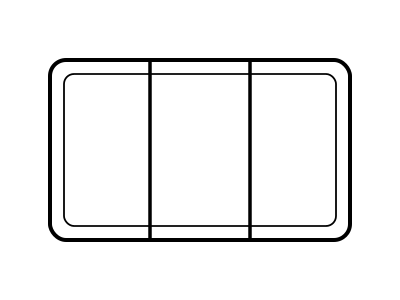
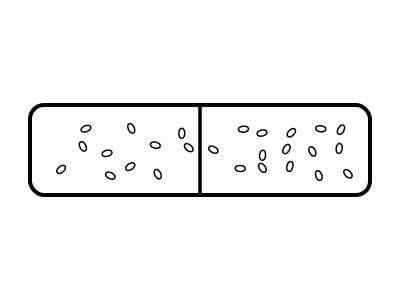
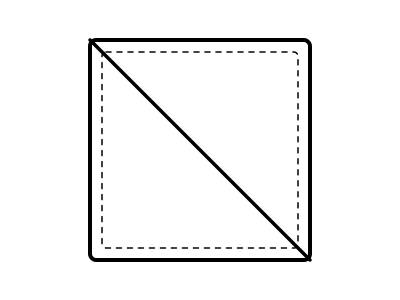
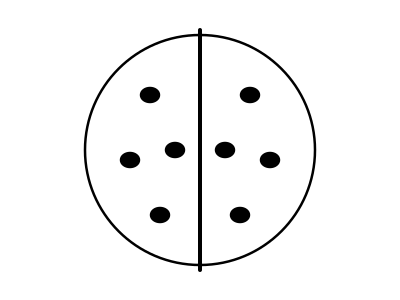
    • 10 shape cards an adult draws on index cards: 1) a circle split by a line through the middle, 2) a rectangle split down the middle, 3) a rectangle split across the middle, 4) a square split corner to corner, 5) a rectangle split corner to corner, 6) a circle split by a line far from the middle, 7) a rectangle split near one end, 8) a square split by a line off to one side, 9) a circle split into 3 parts, 10) a rectangle split by a line from one corner to the middle of the opposite side
    • 2 paper labels: Equal halves and Not halves
    • 2 paper rectangles for folding
    • Crayons
    • Notebook and pencil
    1. Warm-Up · 5 min

      Fluency: halves and doubles. "3 + 3?" (6) "Half of 6?" (3) "6 + 6?" (12) "Half of 12?" (6) Spaced review from Week 30: "How many tally marks are in 2 bundles of 5?" (10)

    2. Mini-Lesson · 10 min

      Fold one paper rectangle in half the long way and the other in half the short way. Ask: "Are both of these split into halves?" (Yes. Each has 2 equal shares.) Say: "There is more than one way to make halves." Show card 7. Ask: "Are these halves?" (No. One part is much bigger.) Say: "If you got the small part, would that be fair?" (No.) Show card 4. Say: "Corner to corner can make halves too. If we cut on the line and put one part on top of the other, they would match." Show card 9. Ask: "Are these halves?" (No. There are 3 parts, and halves means 2 equal parts.)

    3. Guided Practice · 10 min

      Your child sorts all 10 cards under Equal halves or Not halves and says why for each one. Answers: Equal halves: cards 1, 2, 3, 4 and 5. Not halves: card 6 (unequal), 7 (unequal), 8 (unequal), 9 (3 parts) and 10 (unequal). If stuck, say: "If you cut on the line and put one part on top of the other, would they match? Is it 2 parts?"

    4. Play · 10 min

      Fix It. Your child takes each Not halves card and draws the same shape next to it, split into equal halves. Then: "You and a friend share a rectangle-shaped sandwich. Draw 3 different ways to cut it into halves." (Look for: down the middle, across the middle and corner to corner.)

    5. Exit Ticket · 3-5 min

      Before asking, draw a square with a line from one corner to the middle of the opposite side. Read each question aloud. Your child answers out loud or draws. Check each answer together right away.

    Exit ticket

    1. Is my square split into halves? Why?
    2. Draw a rectangle split into halves a different way than straight down the middle.
    Answers
    1. No. The 2 parts are not the same size.
    2. Look for: a line across the middle or from corner to corner, making 2 equal shares.
    Watch for, and help or stretch
    Watch for
    Calling any shape cut into 2 parts "halves," even when the parts are different sizes.
    Try
    Ask: "Would you be happy to get this part? Is it the same size as the other part?"
    Extra help
    Let your child fold a paper copy of a tricky card to check whether the parts match.
    Stretch
    Ask: "Card 5 shows a rectangle split corner to corner. The parts are triangles. Are they still halves?" (Yes. They are the same size.)

    At home (optional): Your child draws a pizza and a sandwich for a family member, splits each into equal halves, and explains why it is fair.
    Reading & Writing

    Pictures in two books

    I can compare how two books use pictures.

    Standards: RI.1.9, RI.1.6, RL.1.7

    Phonics
    Consonant-le syllables (little, apple, candle), with cumulative review: r-controlled vowels and ou/ow, oi/oy
    Sight words
    home, us, try, kind, hand
    Reading
    The Tale of Peter Rabbit (Beatrix Potter, 1902; public domain; reread) paired with Rabbits, Rabbits & More Rabbits (Gail Gibbons), optional; original fact page "Real Rabbit Facts" and original decodable "Fern Hops Out at Dusk"
    Writing
    Showcase: publish with a digital tool · Handwriting: title page
    Builds on
    Comparing a storybook and a fact page (Day 1). One-minute check: your child tells one pretend thing about Peter.

    New words

    • illustration: a picture an artist makes for a book
    • diagram: a drawing with labels that shows parts
    • label: a word that names part of a picture

    You need

    • Peter Rabbit's pictures: the book, or Beatrix Potter's pictures at Project Gutenberg (ebook 14838) on a screen
    • Printed "Real Rabbit Facts" with the diagram you drew (from Day 1)
    • Printed "Fern Hops Out at Dusk" (in the lesson)
    • Word cards (index cards): out, cloud, brown, howl, coin, boil, toy, joy, south, crowd, nibble, wiggle, pebble
    • Sight word cards: home, us, try, kind, hand
    • Crayons and plain paper
    1. Phonics & Word Work · 15 min

      ou/ow and oi/oy review. I do: write out and brown. Say: "ou and ow can both say /ow/, like when you bump your knee." Write coin and toy: "oi and oy both say /oi/." We do: read cloud, howl and boil together. You do: your child reads joy, south, crowd, out, coin, toy and sorts them into /ow/ and /oi/. (/ow/: out, cloud, brown, howl, south, crowd; /oi/: coin, boil, toy, joy.) Then consonant-le: your child reads nibble, wiggle and pebble from this week's story, splits each one (nib | ble, wig | gle, peb | ble) and reads both parts. Read: "The brown owl sat in the oak." "Fern can nibble and wiggle." Dictation: cloud, howl, coin, wiggle. If stuck, frame both letters of the team and say: "o and u together say /ow/; o and i together say /oi/."

    2. Sight Words · 5 min

      Review: home, us, try, kind, hand. Walk Around: tape the 5 cards around the room. Your child walks around, reads each card and touches it.

    3. Read-Aloud & Shared Reading · 15 min

      Echo-read this week's decodable story, then your child reads it alone. Fern Hops Out at Dusk Fern is a little brown rabbit with soft fur and a white tail. In the day, Fern rests in the thick grass by a farm. At dusk, she hops out to nibble. She eats grass and weeds. "Look, a rabbit!" says a boy on the farm. He points at Fern. Then a sound makes Fern stop. Her little nose wiggles. An owl is hunting! Fern turns and runs. She zigs and zags in the dark. Fern darts into a burrow by a big oak. The owl can not find her. Fern stays still, as still as a pebble. At last, the owl turns and is out of sight. Fern hops out and nibbles more grass. When the sun comes up, Fern hops back to her spot in the thick grass. Home at last! Ask: "Is Fern more like Peter or more like the rabbits on the fact page? Why?" (More like the fact page: Fern does real rabbit things, such as resting in the day, eating grass at dusk and zigzagging away from an owl. She does not wear clothes.) Now compare pictures. Show 2 or 3 of Beatrix Potter's pictures of Peter and the diagram on the fact page. Ask: "What do Beatrix Potter's pictures show?" (Answers vary. Look for: Peter in his blue jacket, Peter in the garden; they show the story and how Peter feels.) Ask: "What does the diagram show?" (The parts of a real rabbit, with labels.) Ask: "What can you learn from the diagram that the words on the fact page do not say?" (Answers vary. Look for: where the parts are on the rabbit's body, such as where the whiskers are.) Ask: "What do the words tell that the diagram does not?" (Answers vary. Look for: what rabbits eat, when they rest, how fast they run.) If stuck, cover the words and ask: "What can you learn from the picture alone?"

    4. Writing & Handwriting · 15 min

      Your child draws a picture for "Fern Hops Out at Dusk" that shows a real rabbit, then adds 3 labels with lines: fur, tail, legs. Under it, your child writes a caption: "Fern hops at dusk." (Answers vary. Look for: a caption that tells what the picture shows.) Handwriting (4 min): labels are small, neat and close to the part they name.

    5. Exit Ticket · 5 min

      Oral answers.

    Exit ticket

    1. Read this: The boy found a little coin in the puddle.
    2. Which picture helps you learn the parts of a rabbit: Peter in his jacket, or a diagram with labels?
    3. What can a story picture show that a diagram does not?
    Answers
    1. The boy found a little coin in the puddle.
    2. The diagram with labels.
    3. Answers vary. Look for: what is happening in the story or how a character feels.
    Watch for, and help or stretch
    Watch for
    Saying the story pictures are not useful because they are pretend.
    Try
    Say: "Story pictures help us understand the story. Diagrams help us learn facts. Both help, in different ways."
    Extra help
    Compare one picture of Peter with the diagram only. Your child copies one label.
    Stretch
    Your child adds a second drawing that shows Fern zigzagging, with arrows, and tells why rabbits zigzag.

    At home (optional): Your child reads "Fern Hops Out at Dusk" to a family member and shows the labeled picture.

    Social Studies

    Spot a problem

    I can find a problem in our community and tell why it matters to me.

    Standards: D4.6.K-2, D1.1.K-2

    Builds on
    Making our community better (Week 24). One-minute check: ask "Name one way people made their community better long ago." (Answers vary.)

    New words

    • community: a place where people live, work and play together
    • problem: something that is not working or that people want to change
    • compelling question: a big question we want to answer

    You need

    • A clipboard or a piece of cardboard with paper clipped to it, and a pencil
    • 3 to 5 photos or drawings of community problems: litter in a park, a neighbor who lives alone, a library shelf with few children's books, a busy crossing with no sign
    • A Problems chart: a sheet with 3 columns labeled Near us (local), Our region, The whole world
    • Crayons
    1. Warm-Up / Wonder · 5 min

      Spaced review: ask: "What did Dr. King work to change?" (unfair laws that kept people apart) Wonder question: "What is one thing in our neighborhood you wish were better?"

    2. Explore · 10–15 min

      Say: "Our big question for the next few weeks is: How can we help our community? We will find a problem, learn about it, make a plan and take action." Ask: "Why is that question important to you?" (Answers vary. Look for: a personal reason, such as "I play in the park.") Take a short neighborhood walk with a grown-up, or look at the photos. Your child writes or draws each problem on the clipboard. Then sort on the Problems chart. Near us: litter in our park, a lonely neighbor, few library books. Our region (a bigger area, like our state): ask "What about a river that runs through many towns?" Say: "Sometimes trash gets into rivers, and people in many towns help clean them." The whole world: say "Plastic trash in the oceans is a problem around the world. People in many countries work on it by using less plastic, recycling and cleaning beaches." Ask: "Who is trying to fix these problems?" (Answers vary: park workers, volunteers, neighbors, people around the world.) Now choose. Your child picks one local problem we could help with. Ask: "Why does this problem matter to you?" (Answers vary.) Safety: our project stays small and safe, done with a grown-up. If stuck choosing, ask: "Which problem do you see most often?"

    3. Talk & Record · 5–10 min

      Your child draws the chosen problem. Sentence frame: "Our problem is ___. It matters to me because ___."

    4. Exit Ticket · 3–5 min

      Ask the three questions aloud. Your child answers by talking or drawing.

    Exit ticket

    1. Name one problem that is near us (local).
    2. Name one problem that the whole world works on.
    3. What is our big question?
    Answers
    1. Answers vary. Look for: a local problem, such as litter in the park.
    2. Answers vary. Look for: trash in the oceans, or another problem many countries share.
    3. How can we help our community?
    Watch for, and help or stretch
    Watch for
    Choosing a problem that is too big for a family to help with ("Stop all pollution").
    Try
    Ask: "What is one small part of that problem we could help with near home?"
    Extra help
    Look at 3 photos only and choose between 2 problems.
    Stretch
    Your child asks a neighbor or relative what problem they see in the community and adds it to the chart.

    At home (optional): Your child tells a family member the problem we picked and why it matters.

    Practice

    Read each direction aloud. Your child works on the page; answers are in the grown-up view.

    Warm-up

    Remember?

    Math

    1. Is a square a kind of rectangle? (yes or no)
    2. A digital clock shows 9:00. Where does the short hand point?

    Reading & Writing

    Math · Week 33 Day 2

    I can tell if two parts are equal.

    Look: fair or not?

    1. Cut on the line and lay one part on top of the other.
    2. If the parts match, they are equal shares: halves.
    3. If one part is bigger, or there are 3 parts, they are not halves.

    Is it split into halves? Circle yes or no.

    1. 1.
      A round cookie split by one line through the middle.
      • yes
      • no
    2. 2.
      A square cracker split by a line close to one edge, so one part is a thin strip.
      • yes
      • no
    3. 3.
      A rectangle-shaped sandwich split into 3 strips.
      • yes
      • no
    4. 4.
      A long rectangle-shaped granola bar split across the middle into 2 equal parts.
      • yes
      • no
    5. 5.
      A square napkin split from one corner to the opposite corner into 2 triangles.
      • yes
      • no

    Draw halves a new way.

    1. 6.
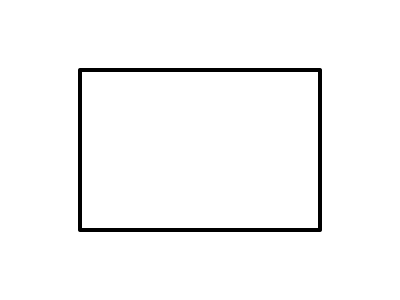
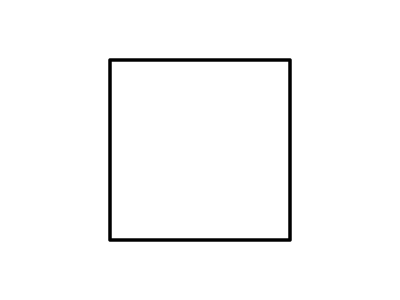
      A rectangle. Split it into halves from corner to corner.
    2. 7.
      A square. Split it into halves a different way than you did on the rectangle.
    3. 8.
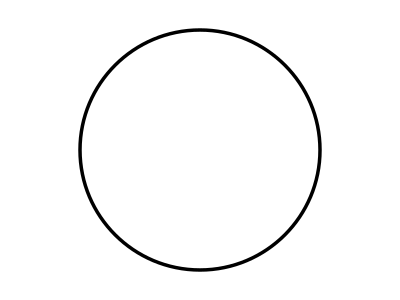
      A circle. Split it into halves.

    Challenge (optional)

    Draw a square and split it into halves 3 different ways.

    You need: Pencil

    Reading & Writing · Week 33 Day 2

    I can compare how two books use pictures.

    Look: pictures in two kinds of texts

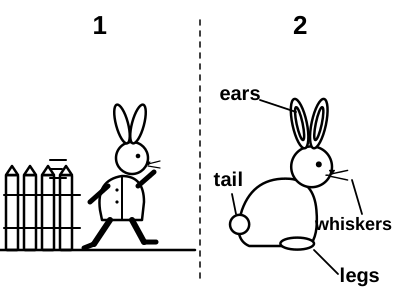
    1. A story picture shows what happens and how a character feels.
    2. A diagram shows the parts of a real thing, with labels.
    3. Ask: What can I learn from the picture that the words do not say?

    The Rabbit in the Yard

    A brown rabbit sits in the yard. It has soft fur and a white tail. At night, it hops out to eat grass. A dog barks, and the rabbit runs. It zigs and zags to the shed.

    Look at the two pictures. Circle 1 or 2.

    1. 1.
      1 a story picture of a rabbit in a coat running from a garden, 2 a diagram of a real rabbit with labels: ears, whiskers, tail, legs. Which one shows the parts of a rabbit?
      • 1
      • 2
    2. 2.
      Look at the same two pictures. Which one shows how the rabbit in the tale feels?
      • 1
      • 2
    3. 3.
      Which one has names for the parts?
      • 1
      • 2
    4. 4.
      Which one tells a tale?
      • 1
      • 2

    Draw a real rabbit. Put a label on the fur, the tail and the legs. Then finish the lines.

    1. 5.
      My rabbit
    2. 6.
      It has a ____ tail.
    3. 7.
      It can ____ fast.

    Read the line. Circle the word that fits.

    1. 8.
      I can blow a big ____.
      • bubble
      • candle
    2. 9.
      The ____ is lit.
      • bubble
      • candle
    3. 10.
      The pup will ____ in my lap.
      • snuggle
      • apple

    Challenge (optional)

    When does the rabbit hop out to eat?

    You need: crayons

    Social Studies · Week 33 Day 2

    I can find a problem in our community and tell why it matters to me.

    Look: near, region or world?

    1. Our big question: "How can we help our community?"
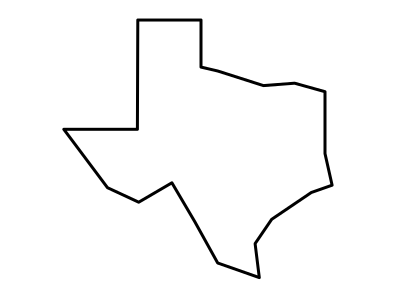
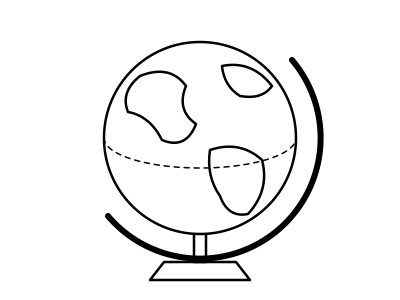
    2. Some problems are near us, some are in our region (like our state), and some are in the whole world. On this page, the house means near us, the state shape means our region and the globe means the whole world.
    3. We pick one small, safe problem near us that we can help with.

    Listen. Circle the house for near us, the state for our region or the globe for the whole world.

    1. 1.
      Litter at our neighborhood playground.
      • A house.
      • The outline of one state.
      • A globe.
    2. 2.
      Plastic trash floating in oceans around the world.
      • A house.
      • The outline of one state.
      • A globe.
    3. 3.
      Trash in a river that runs through many towns in our state.
      • A house.
      • The outline of one state.
      • A globe.
    4. 4.
      The library down the street has few children's books.
      • A house.
      • The outline of one state.
      • A globe.

    Ask each question. Write what your child says.

    1. 5.
      Name a problem you have seen near our home.
    2. 6.
      Why does that problem matter to you?
    3. 7.
      Who is trying to fix it?

    Challenge (optional)

    Think of one small, safe thing a first grader could do about a problem in the whole world.