1First Grade

    Fourths and quarters

    Type it up

    Practice pages

    0 of 180 days complete · Saved on this device

    View all 180 days

    Math

    Fourths and quarters

    I can split a shape into 4 equal parts.

    Standards: 1.G.A.3

    Number practice (no timer)
    Halves and doubles: 4 + 4 = 8, half of 8 is 4
    Builds on
    Days 1 and 2 (halves, and checking that shares are equal). One-minute check: "How many halves make a whole?" (2)

    New words

    • fourth: one of 4 equal shares of a whole
    • fourths: 4 equal shares; four fourths make the whole
    • quarter: another name for a fourth
    • quarters: another name for fourths

    You need

    • 4 paper circles about 6 inches across
    • 6 paper squares (an adult cuts them from printer paper)
    • 2 paper rectangles (half sheets of printer paper)
    • Crayons
    • Notebook and pencil
    1. Warm-Up · 5 min

      Fluency: halves and doubles. "2 + 2?" (4) "Half of 4?" (2) "7 + 7?" (14) "Half of 14?" (7) Spaced review from Week 29: "Cats got 4 votes and dogs got 6. How many more votes for dogs?" (2)

    2. Mini-Lesson · 10 min

      Fold a paper circle in half, then fold it in half again. Open it. Ask: "How many parts?" (4) Lay the parts' edges on each other by folding to show they match. Say: "4 equal shares. Each share is a fourth. Another name for a fourth is a quarter. This part is a fourth of the circle, or a quarter of the circle. Four fourths make the whole circle." Then fold a square in half and in half again the other way, and open it. (4 small squares) Fold a second square in half and in half again the same way. (4 strips) Ask: "Are both of these fourths?" (Yes. Each has 4 equal shares.)

    3. Guided Practice · 10 min

      Your child folds each shape into fourths, draws on the fold lines, and colors as asked. 1) A circle: color a fourth of it. 2) A square: color a quarter of it. 3) A rectangle: color 2 of the fourths. After each, ask: "How many fourths make the whole?" (4) For the rectangle, ask: "How many fourths are not colored?" (2) If stuck, say: "Fold in half first. Then fold in half again. Count the parts."

    4. Play · 10 min

      Fourths Fold Challenge. Ask: "How many different ways can you fold a square into fourths?" Your child tries with the paper squares and draws each way. Answers vary. Look for: 4 small squares, 4 strips, and 4 triangles (folding corner to corner both ways). For each one, your child checks the parts are the same size by folding one onto another, and says: "Each part is a quarter of the square."

    5. Exit Ticket · 3-5 min

      Put the objects to one side but leave them on the table. Read each question aloud. Your child answers out loud, with objects or with a quick drawing. Check each answer together right away.

    Exit ticket

    1. Draw a circle and split it into fourths.
    2. What is another name for a fourth?
    3. How many quarters make a whole?
    Answers
    1. Look for: 2 lines that cross in the middle like a plus sign, making 4 equal shares.
    2. A quarter
    3. 4
    Watch for, and help or stretch
    Watch for
    Drawing 4 parts that are not the same size, such as a circle cut with lines that do not cross in the middle.
    Try
    Fold a paper circle in half and in half again. Use the folds as a guide to draw the lines.
    Extra help
    Fold together the first time: fold in half, check, then fold in half again.
    Stretch
    Ask: "You colored 2 fourths of the rectangle. Is that the same as half of the rectangle?" (Yes. 2 fourths cover the same part as 1 half.)

    At home (optional): At a meal, your child shows a family member a fourth of something, such as a tortilla or a slice of bread cut by an adult into 4 equal shares.
    Reading & Writing

    Type it up

    I can use a tablet or computer with help to publish my writing.

    Standards: W.1.6, L.1.2.b, L.1.2.a

    Phonics
    Consonant-le syllables (little, apple, candle), with cumulative review: r-controlled vowels and ou/ow, oi/oy
    Sight words
    home, us, try, kind, hand
    Reading
    The Tale of Peter Rabbit (Beatrix Potter, 1902; public domain; reread) paired with Rabbits, Rabbits & More Rabbits (Gail Gibbons), optional; original fact page "Real Rabbit Facts" and original decodable "Fern Hops Out at Dusk"
    Writing
    Showcase: publish with a digital tool · Handwriting: title page
    Builds on
    The final copy of the best piece (Week 32). One-minute check: your child reads the title of the final copy.

    New words

    • type: to press keys to put letters on a screen
    • keyboard: the keys you press to type
    • publish: to make a finished copy to share

    You need

    • A computer or tablet with a simple writing program (adult sets it up)
    • The final copy of the best piece (from Week 32)
    • A photo of the drawing or a chance to draw in the program (optional)
    • Word cards (index cards): March, Pam, Ben, Mom, Sunday
    • Consonant-le word cards (index cards): middle, kettle, beetle, sample
    • Sight word cards: home, us, try, kind, hand (two sets: 10 cards for Memory Match)
    • Printed "Fern Hops Out at Dusk" (from Day 2)
    1. Phonics & Word Work · 15 min

      Capitals for names and dates, and end marks. I do: write "on sunday, pam and ben went to the farm." Say: "Names of people and days need capitals. The first word does too." Fix it as your child watches: On Sunday, Pam and Ben went to the farm. We do: read and fix "is fern a rabbit" together. (Is Fern a rabbit? Capital I and F; a question mark.) You do: your child reads and fixes: "the owl is hunting" (The owl is hunting! or The owl is hunting.) and "mom and i went home" (Mom and I went home.). Consonant-le check (3 min): your child reads middle, kettle, beetle and sample, splits each one (mid | dle, ket | tle, bee | tle, sam | ple) and reads both parts. Say: "beetle starts with a vowel team: ee." Dictation: say the sentence; your child writes it with capitals and an end mark: Pam went home. If stuck, ask: "Is it a name, a day or the first word? Then it needs a capital."

    2. Sight Words · 5 min

      Review: home, us, try, kind, hand. Memory Match with 10 cards: turn two over and read both. A match is kept.

    3. Read-Aloud & Shared Reading · 15 min

      Your child reads "Fern Hops Out at Dusk" with expression. Ask: "Find a sentence that ends with an exclamation mark. How should you read it?" (Look, a rabbit!, An owl is hunting! or Home at last!: with strong feeling.) Ask: "Find a name. How do you know it is a name?" (Fern: it has a capital in the middle of a sentence.) Then show the keyboard. Ask: "Where is the key for a capital letter?" (The shift key: hold it down while you press a letter.) Show the period key, the space bar and the backspace key. If stuck, put a sticky dot on the shift key and the space bar.

    4. Writing & Handwriting · 15 min

      Type it up, with an adult. The adult sits beside your child and types most of the piece while your child watches and reads along. Your child types the title, their name and one sentence on their own, using the shift key for capitals and the space bar between words. Then your child checks every sentence for a capital at the start and an end mark, and every name and date for a capital. Add a photo of the drawing or draw a picture in the program. Save and print the page. Keep screen time short: stop after about 12 minutes. Handwriting (4 min): on paper, your child writes today's date with a capital for the month, such as May 4.

    5. Exit Ticket · 5 min

      Oral answers.

    Exit ticket

    1. What key makes a capital letter?
    2. Write this on a card. Your child reads it and tells every fix: on sunday, tom had a bubble bath
    3. What did you type by yourself?
    Answers
    1. The shift key.
    2. On Sunday, Tom had a bubble bath. Capitals for On, Sunday and Tom, and a period at the end.
    3. Answers vary. Look for: the title, their name or a sentence.
    Watch for, and help or stretch
    Watch for
    Hunting for letters for a long time and getting frustrated.
    Try
    Say the letter and point to its row. Keep the typing short; the goal is to see the piece published, not typing speed.
    Extra help
    Your child types only their name and the title. You type the rest while your child watches and reads along.
    Stretch
    Your child types two sentences alone and uses the backspace key to fix one mistake.

    At home (optional): Your child shows the printed page to a family member and points to one capital and one end mark.

    Science

    Build design B

    I can build my second design.

    Standards: K-2-ETS1-2

    Builds on
    Build design A (Day 1). One-minute check: ask "What did you change from your Design A sketch while building?" (Answers vary.)

    New words

    • compare: to look at how things are alike and different
    • different: not the same

    You need

    • The same materials as Design A: 4 cardboard tubes, 4 plastic cups, a ball of modeling clay or play dough, tape, 2 cardboard squares (a grown-up cuts them), child-safe scissors for paper
    • Design A (from Day 1)
    • Engineering Journal with the Design B sketch
    1. Warm-Up / Wonder · 5 min

      Spaced review: ask: "What is a model?" (a thing you build to try out an idea) Wonder question: "Which design do you think will work better? Why?" Your child writes the prediction in the journal. Safety: a grown-up does all cutting of cardboard. Your child uses only child-safe scissors on paper. No hot glue guns and no sharp tools; tape and clay hold everything together.

    2. Explore · 10–15 min

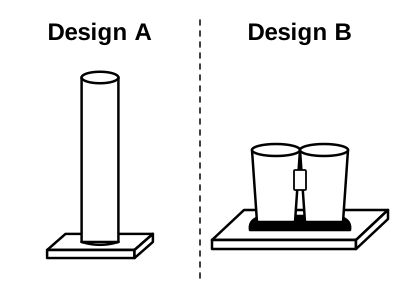
      Say: "Engineers often build two ideas so they can compare them. Design B needs a different shape from Design A." Set Design A beside the Design B sketch. Ask: "How is the shape of B different?" (Answers vary: wider base, taller sides, heavier bottom, a clay foot.) Your child lays out the materials for B and builds, with you holding pieces. Keep the same kinds of materials so the test is fair about shape, not materials. When done, set A and B side by side. Ask: "What is the same about A and B?" (Answers vary: both hold crayons, both use cups.) "What is different?" (Answers vary. Look for: the shape, such as the base or the height.) Say: "On Friday we will test both in the same way to see which one meets our goal better." If stuck making B different, offer a choice: "Do you want B to be wider at the bottom or heavier at the bottom?"

    3. Talk & Record · 5–10 min

      Your child draws Design B as built and circles the part whose shape is different from A. Sentence frame: "Design B is different because ___."

    4. Exit Ticket · 3–5 min

      Ask the three questions aloud. Your child answers by talking or drawing.

    Exit ticket

    1. Why do engineers sometimes build two designs?
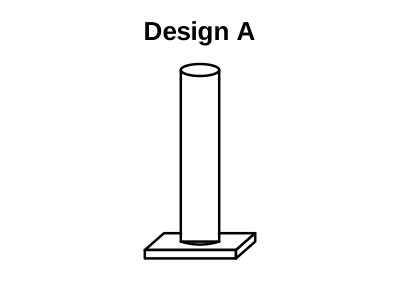
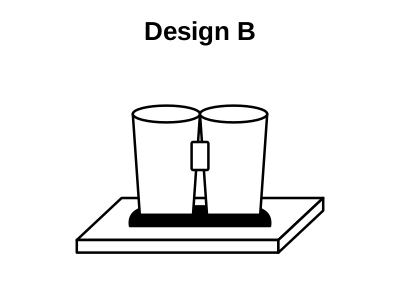
    2. Design A is a tall tube standing alone. Design B is a short cup taped to a big cardboard square. Which part of their shape is most different?
    3. Which design do you predict will work better?
    Answers
    1. So they can test and compare them and pick the better one.
    2. The base (the bottom): B has a wide base and A has a narrow one. (Also accept: their height.)
    3. Answers vary. Look for: a prediction with a reason about shape.
    Watch for, and help or stretch
    Watch for
    Making Design B a copy of Design A.
    Try
    Point to the base of A. Ask: "What could you change about this part?"
    Extra help
    Your child changes only one part of Design A to make Design B (for example, adds a clay base).
    Stretch
    Your child predicts how many crayons each design will still hold after the test and writes the numbers down.

    At home (optional): Your child tells a family member the prediction and the reason.

    Practice

    Read each direction aloud. Your child works on the page; answers are in the grown-up view.

    Warm-up

    Remember?

    Math

    1. Put 2 same-size triangles together to make a square. How many sides does the new shape have?
    2. Write >, < or =: 95 ___ 95

    Reading & Writing

    1. such, why, went
    2. these, which

    Math · Week 33 Day 3

    I can split a shape into 4 equal parts.

    Look: fourths of a square

    1. Fold the square in half. Then fold it in half again.
    2. Open it. There are 4 equal shares.
    3. Each share is a fourth, or a quarter. 4 fourths make the whole.

    Draw lines to split each shape into fourths.

    1. 1.
      A circle.
    2. 2.
      A square.
    3. 3.
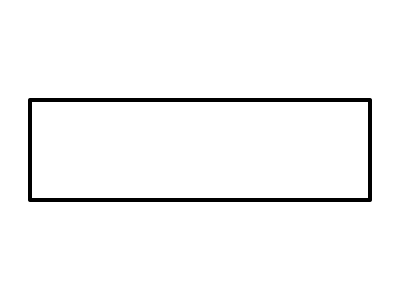
      A long rectangle.

    Circle or color.

    1. 4.
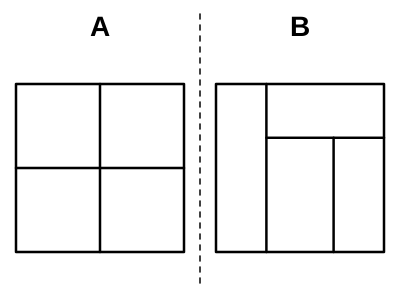
      Picture A: a square split into 4 equal small squares; picture B: a square split into 4 parts of different sizes. Circle the one split into fourths.
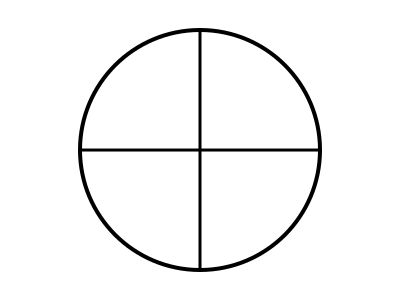
      • A
      • B
    2. 5.
      A circle split into 4 equal shares. Color a quarter of the circle.
    3. 6.
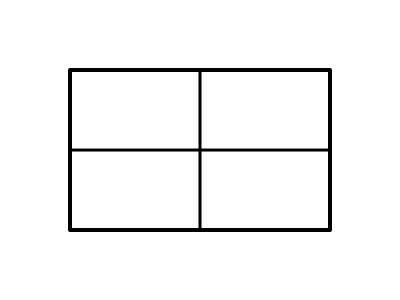
      A rectangle split into 4 equal shares. Color 3 of the fourths.
    4. 7.
      How many fourths are not colored on the rectangle? ____

    Challenge (optional)

    A pizza is cut into fourths. You and a friend each eat 1 fourth. How many fourths are left?

    You need: Pencil, Crayons

    Reading & Writing · Week 33 Day 3

    I can use a tablet or computer with help to publish my writing.

    Look: capitals and end marks

    1. Names of people and days get a capital: Max, Sunday.
    2. The first word of a line gets a capital too.
    3. End with a period, a question mark or an exclamation point. On a computer, hold the shift key for a capital.

    On Sunday

    On Sunday, Max and I went to the farm. We fed the hens. Then a pig ran out of the pen! Max got it back in.

    Fix it. Write the line with capitals and an end mark.

    1. 1.
      on sunday, max and kim went home
    2. 2.
      is it march
    3. 3.
      dad and i got a cake
    4. 4.
      in march it will rain

    Look at the keys. Circle the number of the key you need.

    1. 5.
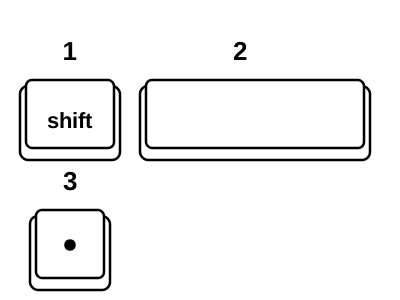
      1 a shift key, 2 a space bar, 3 a period key. To make a big A, I press ____.
      • 1
      • 2
      • 3
    2. 6.
      To make a gap, I press ____.
      • 1
      • 2
      • 3
    3. 7.
      To end a telling line, I press ____.
      • 1
      • 2
      • 3

    Write the word I say. Find the consonant-le part first.

    1. 8.
      ____
    2. 9.
      ____
    3. 10.
      ____

    Challenge (optional)

    The date is ____.

    Science · Week 33 Day 3

    I can build my second design.

    Look: A different shape for Design B

    1. Look at Design A. Plan Design B with a different shape, such as a wider base.
    2. Use the same kinds of materials, so the test is about shape.
    3. Set A and B side by side. Tell what is the same and what is different.

    Design A, a tall tube on a small cardboard square; Design B, 2 cups taped side by side on a big cardboard square with clay on the bottom. Circle yes or no.

    1. 1.
      Do A and B have the same shape?
      • yes
      • no
    2. 2.
      Does B have a wider base than A?
      • yes
      • no
    3. 3.
      Do A and B both use cardboard?
      • yes
      • no

    Circle, build and draw.

    1. 4.
      Look at the same picture. Which design will tip less, do you predict?
      • Design A.
      • Design B.
    2. 5.
      Should Design B use the same kinds of materials as Design A?
      • yes
      • no
    3. 6.
      Build Design B. Make a mark when it is done.
    4. 7.
      Draw Designs A and B side by side. Put a star on one part that is the same.

    Challenge (optional)

    Why would it not be fair if Design B were made of wood and Design A of cardboard?

    You need: Design A, 4 cardboard tubes, 4 plastic cups, clay or play dough, tape, 2 cardboard squares (cut by a grown-up), crayons