1First Grade

    Halves or fourths: which is bigger?

    Publishing together

    Practice pages

    0 of 180 days complete · Saved on this device

    View all 180 days

    Math

    Halves or fourths: which is bigger?

    I can tell that more equal shares make smaller shares.

    Standards: 1.G.A.3

    Number practice (no timer)
    Halves and doubles: 4 + 4 = 8, half of 8 is 4
    Builds on
    Days 1 to 3 (halves and fourths). One-minute check: "What is another name for a fourth?" (A quarter)

    New words

    • smaller: less big
    • share: split something so each person gets a part

    You need

    • 4 paper squares all the same size
    • 2 slices of bread or 2 tortillas, the same size (optional snack: use a food your family eats safely; an adult does all cutting with a knife)
    • Child-safe scissors
    • A sheet of paper with 4 same-size circles drawn as pizzas (drawn by an adult)
    • Crayons
    • Notebook and pencil
    1. Warm-Up · 5 min

      Fluency: halves and doubles. "8 + 8?" (16) "Half of 16?" (8) "Half of 20?" (10) Spaced review from Week 32: "What do 2 squares make side by side?" (A rectangle)

    2. Mini-Lesson · 10 min

      Show 2 paper squares that are the same size. Fold one into halves and the other into fourths. Your child cuts on the folds with child-safe scissors. Lay one fourth on top of one half. Ask: "Which share is bigger?" (The half) Say: "The wholes were the same size. When we cut the same whole into more equal shares, each share is smaller." Ask: "How many fourths fit on one half?" (2)

    3. Guided Practice · 10 min

      Snack Shares. An adult cuts one slice in halves and the other slice in fourths. (If you are not using food, use the other 2 paper squares: fold and cut one into halves and the other into fourths.) Ask: 1) "How many people can share this slice in halves?" (2) 2) "How many people can share this slice in fourths?" (4) 3) "If you are very hungry, would you take a half or a fourth of the slice?" (A half) 4) "Why?" (The slices are the same size, and the half is cut into fewer shares, so each share is bigger.) If stuck, say: "Put one piece on top of the other. Which one covers more?"

    4. Play · 10 min

      Share the Pizza. On the pizza page, your child splits pizza 1 into halves (2 people share it) and pizza 2 into fourths (4 people share it). Ask: "Who gets a bigger slice: someone sharing with 1 other person, or someone sharing with 3 other people?" (Sharing with 1 other person because halves are bigger.) Pizzas 3 and 4: your child chooses how many people share each one (2 or 4), splits it, and tells you which slice is bigger.

    5. Exit Ticket · 3-5 min

      Put the objects to one side but leave them on the table. Read each question aloud. Your child answers out loud, with objects or with a quick drawing. Check each answer together right away.

    Exit ticket

    1. Which is bigger: a half of a cracker or a fourth of the same cracker?
    2. Two same-size pancakes: one is cut into halves and one is cut into fourths. Which pancake has more pieces? Which has bigger pieces?
    3. Why does cutting the same whole into more equal shares make each share smaller?
    Answers
    1. A half
    2. The pancake cut into fourths has more pieces. The pancake cut into halves has bigger pieces.
    3. Answers vary. Look for: the same whole is split into more parts, so each part gets less.
    Watch for, and help or stretch
    Watch for
    Saying a fourth is bigger because 4 is a bigger number than 2.
    Try
    Put a fourth piece on top of a half piece. Ask: "Which one covers more?" Say: "More shares means smaller shares."
    Extra help
    Keep the half and the fourth pieces from the Mini-Lesson on the table so your child can lay one on the other for every question.
    Stretch
    Ask: "Is 2 fourths of a pancake more than, less than, or the same as half of the same pancake?" (The same)

    At home (optional): At a meal, your child tells a family member whether they would rather have half or a fourth of a same-size food, and why.
    Reading & Writing

    Publishing together

    I can work with someone to publish a page.

    Standards: W.1.6, SL.1.1.b, SL.1.5

    Phonics
    Consonant-le syllables (little, apple, candle), with cumulative review: r-controlled vowels and ou/ow, oi/oy
    Sight words
    home, us, try, kind, hand
    Reading
    The Tale of Peter Rabbit (Beatrix Potter, 1902; public domain; reread) paired with Rabbits, Rabbits & More Rabbits (Gail Gibbons), optional; original fact page "Real Rabbit Facts" and original decodable "Fern Hops Out at Dusk"
    Writing
    Showcase: publish with a digital tool · Handwriting: title page
    Builds on
    Typing with an adult (Day 3). One-minute check: your child shows where the shift key and the space bar are.

    New words

    • partner: someone you work with
    • take turns: first one person goes, then the other
    • slide: one page in a computer show

    You need

    • A computer or tablet (adult sets it up)
    • A partner: a sibling, a parent or a friend on a video call
    • Printed "Real Rabbit Facts" and "Fern Hops Out at Dusk"
    • Word cards (index cards): corn, short, turn, shirt, mouth, crown, point, boy, marble, sparkle
    • Sight word cards: home, us, try, kind, hand
    • Paper and crayons for planning
    1. Phonics & Word Work · 15 min

      Mixed review: r-controlled, ou/ow and oi/oy. I do: read corn and turn and name the r-team. We do: read mouth and point together and name the team. You do: your child reads short, shirt, crown, boy, corn, turn, mouth and point and tells the vowel sound in each (or, er, ow, oi, or, er, ow, oi). Then r-teams with consonant-le: your child reads marble and sparkle, splits each one (mar | ble, spar | kle) and names the r-team (ar). Then your child reads: "The boy found a short, brown shirt." "A marble can sparkle." Dictation: short, mouth, point, marble. If stuck, find the vowel team or r-team first, then blend.

    2. Sight Words · 5 min

      Review: home, us, try, kind, hand. Sight Word Toss: your child tosses a sock onto a card, reads it and says it in a sentence.

    3. Read-Aloud & Shared Reading · 15 min

      Plan a page together. Say: "Today you and a partner make one page (or slide) about rabbits for our class book." Your child and the partner reread "Real Rabbit Facts" (you read it) and "Fern Hops Out at Dusk" (your child reads it). Each partner picks one fact for the page. Ask your child: "What did your partner say? Can you add to it?" (Answers vary. Look for: your child repeats the partner's idea and adds a connected idea, such as "Rabbits eat grass, and they eat at dusk.") If stuck, model: "You said rabbits zigzag. I can add: they zigzag to get away from owls."

    4. Writing & Handwriting · 15 min

      Publish together. Take turns at the keyboard: one partner types a sentence while the other spells the words aloud and checks the capitals and end mark, then switch. Add a title, both names and a picture (a drawing photo or a picture tool). Your child adds one label to the picture. Save and print. Keep screen time to about 12 minutes. Handwriting (4 min): on paper, your child writes both partners' names neatly with capitals.

    5. Exit Ticket · 5 min

      Oral answers.

    Exit ticket

    1. What did your partner add to the page?
    2. How did you take turns?
    3. Read the title of your page. Then read this: The beetle sat on a pebble.
    Answers
    1. Answers vary. Look for: the partner's real fact or idea.
    2. Answers vary. Look for: one typed while the other checked, then we switched.
    3. Answers vary for the title. Look for: a correct read. Then: The beetle sat on a pebble.
    Watch for, and help or stretch
    Watch for
    One partner doing all the typing or all the talking.
    Try
    Pass a small toy to show whose turn it is, and switch after each sentence.
    Extra help
    You are the partner. Your child dictates one sentence and types the title.
    Stretch
    Your child and the partner make a second page with a question and its answer from the fact page.

    At home (optional): Your child shows the shared page to a family member and tells which part the partner did.

    Social StudiesWeekly check

    Learn about our problem

    I can ask questions and find facts to learn more about our problem.

    Standards: D1.3.K-2, D1.4.K-2, D1.5.K-2, D3.1.K-2

    Builds on
    Spot a problem (Day 2). One-minute check: ask "What problem did we pick?" (Answers vary.) "What is our big question?" (How can we help our community?)

    New words

    • supporting question: a smaller question that helps answer the big question
    • source: a place where we get facts, like a book, a website or a person
    • fact: something that is true and can be checked

    You need

    • A Question chart: the big question at the top, with 2 boxes under it for supporting questions and lines for facts
    • 1 or 2 sources: a library book on the topic, the town or city's official website or the library's website, or a person to ask (a librarian, a park worker, a neighbor)
    • 3 source cards on index cards: a town website made by the town, a toy store ad, a library book about parks
    • Week 33 social studies check page (given separately)
    • Pencil
    1. Warm-Up / Wonder · 5 min

      Spaced review: ask: "What is a fact?" (something true that can be checked) Wonder question: "What do we need to know before we try to help?"

    2. Review Game · 10 min

      Say: "Our big question is: How can we help our community? Smaller questions, called supporting questions, help us answer it." Write 2 supporting questions with your child. Samples for litter: "Who does the litter hurt?" "What helps keep a park clean?" Ask: "How does each small question help answer the big one?" (Answers vary. Look for: if we know who it hurts and what helps, we know how to help.) Play "Pick a Source." Hold up the 3 source cards. Ask: "Which source would help us learn about our park's litter?" (The town website: the town takes care of the park. The library book about parks: it is about our topic.) "Which would not help?" (the toy store ad) Say: "We look at who made a source and how it is set up, like its title and headings, to know if it will help." Then use 1 or 2 real sources together. Read or ask, and write 2 or 3 facts on the chart under the matching question. Sample facts: "The park has 4 trash cans." "Litter can hurt birds and animals." "The town has a volunteer clean-up day." If stuck finding a fact, read one sentence aloud and ask: "Does this help answer our question?"

    3. Check · 10 min

      Give the Week 33 social studies check. The check items are on the Week 33 check page; do not show them ahead of time. Read each part aloud. Your child answers by talking, pointing, showing with the real materials or drawing. You write down their words exactly. It is not timed; stop and finish later if your child is tired. Make a check mark next to each part your child shows on their own. The printed check has 7 items. It covers these goals: (1) I can find a problem in our community and tell why it matters to me; (2) I can ask questions and find facts to learn more about our problem. This week the check is an oral question-and-source task. Look for: your child tells one supporting question and how it connects to the big question, names the kind of source used (a book, a website or a person) and why it fits (who made it, or its title), and tells one true thing the source told us. If stuck on a part, point to one supporting question and ask: "Where did we find the answer to this one?" Secure: 6 of 7 correct, with at least one right on each goal. If the check is not yet secure, use the reteach step on the check page that matches the items missed.

    4. Exit Ticket · 3–5 min

      Ask the three questions aloud. Your child answers by talking or drawing.

    Exit ticket

    1. You want to know when the library is open. Which source is best: the library's website or a cereal box?
    2. Why do we write smaller supporting questions?
    3. Tell one fact you learned about our problem.
    Answers
    1. The library's website.
    2. They help us answer the big question, one part at a time.
    3. Answers vary. Look for: a true fact from today's sources.
    Watch for, and help or stretch
    Watch for
    Picking a source because it looks fun, not because it is about the topic.
    Try
    Ask: "Who made this? Is it about our problem?" Look at the title together.
    Extra help
    Write 1 supporting question and use 1 source.
    Stretch
    Your child asks a third question and finds a fact for it from a second kind of source.

    At home (optional): Your child asks a family member one supporting question and writes down the answer.

    Practice

    Read each direction aloud. Your child works on the page; answers are in the grown-up view.

    Warm-up

    Remember?

    Math

    1. A shape has 3 sides, but one side has a gap so it is not closed. Is it a triangle? (yes or no)
    2. 6 + 5 = ? Make a ten first.

    Reading & Writing

    1. happy, puppy, sandy

    Math · Week 33 Day 4

    I can tell that more equal shares make smaller shares.

    Look: a half and a fourth

    1. Take 2 squares that are the same size.
    2. Cut one into halves and one into fourths.
    3. Lay a fourth on a half. The half is bigger: more shares make smaller shares.

    Circle the bigger share of the two same-size shapes.

    1. 1.
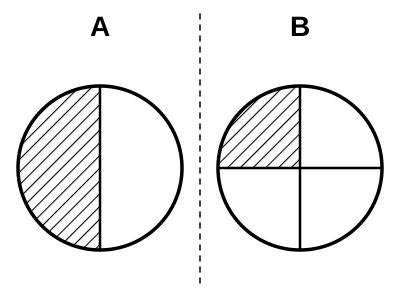
      Picture A: a circle split into halves with 1 half shaded; picture B: the same size circle split into fourths with 1 fourth shaded.
      • A
      • B
    2. 2.
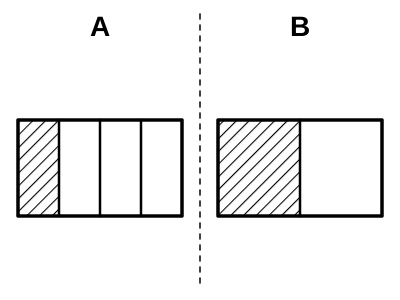
      Picture A: a rectangle split into fourths with 1 fourth shaded; picture B: the same size rectangle split into halves with 1 half shaded.
      • A
      • B
    3. 3.
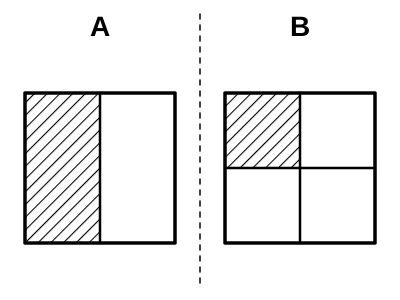
      Picture A: a square split into halves with 1 half shaded; picture B: the same size square split into fourths with 1 fourth shaded.
      • A
      • B

    Write or circle.

    1. 4.
      How many people can share a cracker cut into fourths? ____
    2. 5.
      How many fourths fit on one half of the same shape? ____
    3. 6.
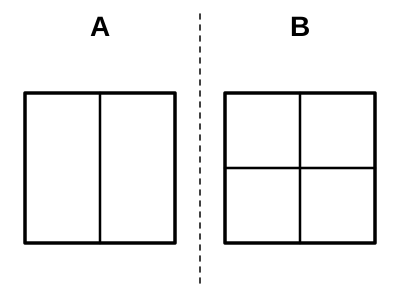
      Picture A: a square cut into 2 equal shares; picture B: the same size square cut into 4 equal shares. Circle the square with more equal shares.
      • A
      • B
    4. 7.
      Look at the same 2 squares. Circle the square with the smaller shares.
      • A
      • B

    Challenge (optional)

    Two same-size pancakes: one is cut into halves and one into fourths. You get 2 fourths. Your friend gets 1 half. Who gets more pancake?

    You need: Pencil

    Reading & Writing · Week 33 Day 4

    I can work with someone to publish a page.

    Look: publishing with a partner

    1. Listen to what your partner says.
    2. Add on to it: Kim said, Rabbits eat grass. I can add on: And they eat at dusk.
    3. Take turns: one types, one checks, then switch.

    Our Sheet

    Kim and I made a sheet on rabbits. Kim said, "Rabbits eat grass." I said, "And they eat at night!" Then Mom printed it.

    Read what Kim said. Circle the line that adds on to it.

    1. 1.
      Kim: Rabbits eat grass.
      • And they eat weeds.
      • I like red.
    2. 2.
      Kim: A rabbit can run fast.
      • My hat is big.
      • It zigs and zags, too.
    3. 3.
      Kim: Rabbits rest in the day.
      • They hide in the grass.
      • The sun is hot.
    4. 4.
      Kim: A rabbit has soft fur.
      • It has a white tail, too.
      • We had ham.

    Make a page with a partner. Each of you tells one thing.

    1. 5.
      I say: Rabbits ____.
    2. 6.
      My pal says: Rabbits ____.
    3. 7.
      Our sheet is on ____.

    Read the word. Circle the part you see.

    1. 8.
      thimble
      • le
      • oi
    2. 9.
      porch
      • or
      • le
    3. 10.
      moist
      • oi
      • le

    Challenge (optional)

    Rabbits can hop, and ____.

    Social Studies · Week 33 check

    Weekly check

    How to give it: Read every question and choice aloud, and point to each picture as you name it. This week the check is an oral question-and-source task. Your child answers by talking, pointing, circling, acting it out or drawing; write their words exactly on the line. It is not timed; stop and finish later if your child is tired. Do not show the page ahead of time. Have the Question chart from Day 4 nearby. If stuck on a part, point to one supporting question and ask "Where did we find the answer to this one?" Make a check mark next to each part your child shows on their own.

    Secure when: 6 of 7 correct, with at least one right on each goal

    • I can find a problem in our community and tell why it matters to me.
    • I can ask questions and find facts to learn more about our problem.
    1. 1.
      Tell the problem we picked for our project and why it matters to you.
    2. 2.
      Litter in our park. Circle the house for near us or the globe for the whole world.
      • A house.
      • A globe.
    3. 3.
      Tell one of our supporting questions.
    4. 4.
      How does that small question help answer our big question?
    5. 5.
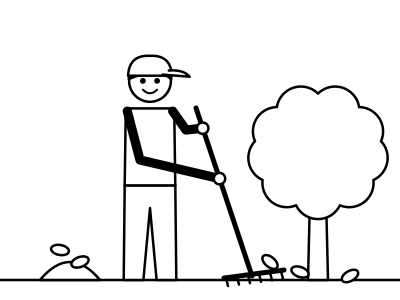
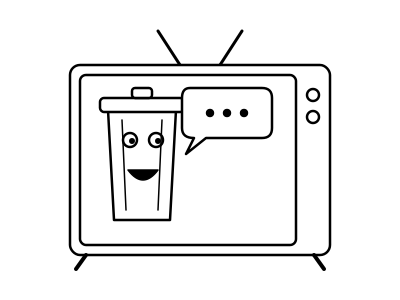
      You want facts about our town's park. Which source is better?
      • A park worker raking leaves in a park.
      • A cartoon about a talking trash can.
    6. 6.
      Who made the source we used? Why does that make it a good source?
    7. 7.
      What is one true thing our source told us?